Managing shipments efficiently remains a persistent challenge for many businesses, often leading to inflated costs and logistical headaches. A consolidated warehouse is specifically designed to address these issues by merging smaller deliveries into larger, more cost-effective loads.
This article delves into the world of consolidation warehousing, offering insights into how it can streamline your shipping process and cut down expenses significantly. Stay with us to uncover how you can transform your logistics operations for better efficiency and customer satisfaction.
Key Takeaways – Consolidated Warehouse
Consolidation warehouses merge multiple smaller shipments into full lorryloads, maximising transport efficiency and reducing costs.
Employing a consolidation strategy lowers inventory levels, thus decreasing storage expenses and handling risks while improving shipping frequency and customer satisfaction.
Advanced warehouse management systems (WMS) and technologies like Automated Guided Vehicles (AGVs) play a vital role in optimising operations within consolidation warehouses.
While offering significant advantages, utilising consolidation warehousing requires careful planning to avoid potential issues such as inaccurate fulfilment or delays in delivery.
Automation technologies are transforming consolidated warehouses by enhancing the speed of operations and positioning businesses for future growth amidst an increasingly digital economy.
Definition of a Consolidation Warehouse

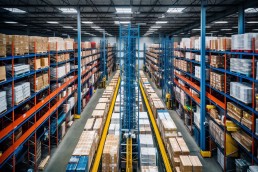
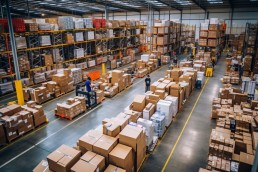
A consolidation warehouse plays a crucial role in the efficiency of supply chains by merging smaller, less-than-lorryload (LTL) shipments from various suppliers into full lorryloads.
This smart strategy not only ensures that goods destined for similar locations are shipped together but also significantly maximises transportation costs and space utilisation. Typically operated by third-party logistics (3PL) providers, these warehouses serve as strategic hubs where inventory from multiple origins is temporarily stored, sorted, and consolidated.
These dynamic centres thrive on coordination – carefully orchestrating the incoming cargo to create optimally loaded freight bound for distribution centres or direct delivery to customers.
Through this meticulous process of combining shipments, businesses can leverage economies of scale to achieve lower shipping rates and reduce their carbon footprint due to fewer trips required.
The effective management of these warehouses requires an advanced warehouse management system (WMS), which supports precise tracking and smooth execution across complex logistics operations.
The Role of a Consolidated Warehouse in Logistics

A consolidation warehouse serves as a critical nexus in logistics, strategically positioned to merge smaller shipments into larger, more cost-effective loads. It’s the linchpin that streamlines transportation flows and curtails excess spending across supply chains, fostering operational efficiency and competitive advantage.
Streamlining Shipments
Streamlining shipments through a consolidated warehouse means turning multiple smaller loads into one larger, more efficient delivery. This method offers an effective way to manage inventory levels while ensuring goods reach their destination promptly.
By grouping together items that are heading in the same direction, you can make full truckloads out of what would otherwise be partial ones. Such consolidation reduces the number of trips needed and paves the way for significant savings on shipping costs.
Leveraging geographic similarities between suppliers also plays a crucial role in shipment streamlining. Consolidation warehouses adeptly handle the sourcing, combining, and dispatching of products according to customer demands.
This approach not only lowers holding costs by reducing inventory but also minimises handling issues and claims associated with freight damage or loss. Streamlined logistics lead directly to enhanced satisfaction for your customers as they receive their orders quickly and without error.
Reducing Costs
Consolidated warehousing plays a pivotal role in optimising both space and financial expenditure. By lowering inventory levels, you eliminate excess storage costs that can weigh heavily on your company’s budget.
Investing in advanced warehouse management software and automated guided vehicles enhances operational productivity. This investment is not a mere cost; it’s an opportunity to drive substantial savings by cutting down on labour-intensive tasks.
Demand forecasting tools are essential for keeping just the right amount of stock, avoiding unnecessary surpluses or dreaded stockouts. Well-implemented technology within your consolidation warehouse means smarter inventory management and leaner operations – a direct path to reducing overheads.
Standardisation across workflows mitigates errors, further slashing expenses associated with waste or rework. Efficient audit systems ensure processes stay streamlined without compromising quality or service speed – key aspects that uphold customer satisfaction while pulling down operational costs.
Benefits of Utilising a Consolidated Warehouse

Adopting consolidation warehouse practices can significantly enhance your logistics operations, offering multiple strategic advantages that extend beyond mere cost savings. From the smoother flow of goods to elevating customer contentment, these facilities act as pivotal hubs in propelling your business’s operational efficiency and competitive edge.
Reduced Shipping Costs
Consolidation warehouses are at the forefront of slashing shipping expenses. By merging smaller shipments into a single larger one, businesses can significantly cut down on transportation costs.
This practice not only reduces the number of trips required but also maximises utilisation of available cargo space. Economies of scale come into play here, lowering the cost per unit and providing a competitive advantage in terms of pricing.
Employing consolidation strategies leads to direct savings for companies by decreasing freight charges. These consolidated shipments move through logistics networks more efficiently, avoiding needless stops and starts that drive up fuel usage and costs.
Careful planning ensures that each shipment reaches its destination via the most economical route available. Managers can pass these savings on to customers or reinvest them in other areas of their business to drive growth and innovation.
More Frequent Shipping
Utilising a consolidation warehouse enables businesses to increase the frequency of their shipments, offering greater flexibility in meeting freight shipping requirements. Frequent shipments translate into swifter restocks and an ability to respond nimbly to market demands or customer needs.
Directors seeking efficient supply chain management understand that streamlining transport not only improves logistics but also fosters robust customer relations by ensuring products arrive faster and more reliably.
Embracing this model allows for rapid adjustments to inventory levels, avoiding overstocking or stockouts which can be costly. eCommerce retailers, in particular, benefit from more frequent shipping as it aligns with consumer expectations for timely delivery.
An effective consolidation strategy reduces energy consumption and overall costs through optimised unit loads, leading to competitive advantages in sales and performance metrics – critical factors directors must consider when evaluating warehousing services for their operations.
Improved Customer Satisfaction
As shipping becomes more frequent and efficient, customer contentment naturally follows suit. Happy customers often stem from the reliability and expediency that consolidation warehouses provide.
Shipping goods in fewer, larger batches ensures products reach their destination promptly, greatly enhancing the consumer’s experience with a brand. With over 89% of consumers likely to make repeat purchases following a positive experience with consolidated freight services, it’s clear how crucial these logistics solutions are for maintaining customer loyalty.
Consolidation not only streamlines operations but also dramatically lowers the occurrence of handling errors and claims – two common pain points for customers. This smoother process helps foster trust as clients receive their orders intact and on schedule.
These benefits directly contribute to improved satisfaction levels; an essential factor in building long-term relationships between businesses and their clientele by consistently meeting expectations through effective consolidation logistics strategies.
Minimised Handling and Claims
Delivering satisfaction to customers also paves the way for operational efficiency, particularly in reducing handling and claims. Consolidation warehouses contribute significantly here, as they enable businesses to combine multiple shipments into one full load.
This streamlined approach not only simplifies logistics but also dramatically lowers the risk of damage during transit due to less frequent loading and unloading.
Directly shipping consolidated loads minimises touchpoints throughout the supply chain, resulting in fewer opportunities for errors. Consequently, this leads to a decrease in customer claims against damaged or missing items – a vital factor in maintaining a positive brand reputation and enhancing profitability.
By optimising these elements within the supply chain, directors can witness tangible improvements that reflect well on both service quality and bottom lines.
Lower Levels of Inventory
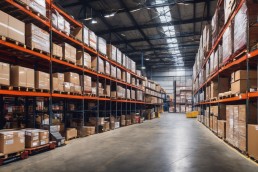
Minimised handling and claims naturally lead to lower levels of inventory, a core advantage that consolidation warehouses offer. Keeping inventory at optimum levels allows companies to reduce warehousing costs significantly.
It frees up capital that would otherwise be tied in stock, offering firms flexibility to respond to market demand without the burden of excess goods.
Efficient use of storage space in consolidation warehouses also streamlines the entire supply chain. With advanced inventory management systems, these facilities maintain leaner inventories while ensuring products are available for shipping consolidation when orders come through.
This balance reduces holding costs and lessens the risk of overstocking or stock-outs – both critical factors in maintaining a competitive edge in today’s fast-paced marketplaces.
Drawbacks of Utilising a Consolidated Warehouse

While consolidation warehouses present numerous benefits to streamline operations and lower costs, they are not without their own set of challenges. Certain complexities such as the potential for inaccurate order fulfilment or the additional time investment required for meticulous planning can pose significant setbacks in an otherwise efficient supply chain model.
Inaccurate & Delayed Order Fulfilment
Mistakes in order processing or delays in shipping can tarnish a company’s reputation. Directors must acknowledge that such errors stem from poor coordination within consolidation warehouses.
Disruptions and human error compound the problem, leading to customer dissatisfaction and potential financial loss.
Ensuring precise and prompt fulfilment is crucial for maintaining consumer trust. Directors should focus on establishing robust digital systems, optimising inventory, and implementing strict quality control measures.
These steps can dramatically reduce the risks associated with inaccurate or late deliveries, safeguarding a firm’s standing with its clientele.
More Time Spent Planning & Organising
Efficiently managing a consolidation warehouse demands more than just moving boxes and goods; it involves meticulous planning and organising. Directors need to recognise that this additional time invested upfront can lead to smoother operations down the line.
Progressing through workflows requires auditing current methods, identifying bottlenecks, and deploying strategies for improvement. This granular approach ensures that each step in the shipping process is optimised for both speed and accuracy.
Direct engagement with planning stages allows warehouses to operate like well-oiled machines. Leaders must allocate resources towards analysing and refining these processes regularly.
It’s not simply about storage space or handling freight – it’s crafting a system where inventory management software, conveyor systems, robots, and human expertise converge to streamline logistics.
Without robust organisation at every level, even the most advanced technological advancements cannot deliver their full potential on the warehouse floor.
Automation in Consolidated Warehouses
The incorporation of cutting-edge automation technologies within consolidated warehouses is revolutionising the logistics landscape, enhancing efficiency and paving the way for intelligent operations management.
This strategic integration not only accelerates processes from order picking to shipment but also positions businesses at the forefront of innovation, ready to meet the ever-evolving demands of an increasingly digital economy.
Automation Integration
Integrating automation into a consolidated warehouse transforms operations, offering directors like you the tools for real-time stock tracking and seamless communication. With an automated storage and retrieval system in place, your business gains improved inventory visibility, essential for meeting e-commerce demands and ensuring same-day delivery promises are kept.
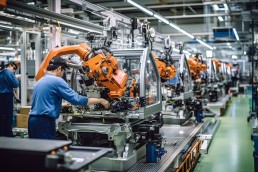
Embracing warehouse robotics such as conveyors and AGVs (Automated Guided Vehicles) dramatically streamlines routine tasks. Forklifts operated by advanced artificial intelligence efficiently move pallets around, while innovative machine learning algorithms optimise inventory levels.
These technologies not only boost productivity but also contribute to significant energy savings – paving the way for a more sustainable operation in today’s environmentally conscious market.
Warehouse AGV Technology
Warehouse AGV technology is revolutionising the way goods are moved within consolidation warehouses. These automated guided vehicles operate without direct human control, boosting efficiency and slashing labour expenses.
Employing AGVs ensures that products glide through the warehouse with precision, their paths illuminated by advanced sensors and mapping technologies.
The strategic application of AGVs translates into swifter, more reliable shipments. Warehouse management systems coordinate these robots to refine the entire logistics cycle. As a result, businesses witness cost reductions along with heightened customer satisfaction – two objectives at the heart of successful warehouse operations.
The integration of this smart machinery not only propels productivity but also carves a pathway for eco-friendly practices by minimising energy use and carbon emissions in day-to-day tasks.
Conclusion
Embracing a consolidated warehouse approach marks a savvy step for businesses aiming to optimise their distribution networks. It unlocks the potential for streamlined shipments, cost savings, and an enhanced customer experience.
Directors must weigh the strategic benefits against the planning required but can rest assured that cutting-edge innovations in warehouse automation are set to make these facilities even more efficient and responsive to market needs.
Mastering this logistics strategy could well become a cornerstone of competitive advantage in our fast-moving, ecommerce-driven world.
FAQs
1. What is a consolidation warehouse?
A consolidation warehouse is a place where shipments are combined to optimise freight movement, helping ecommerce businesses save money and enhance customer experience.
2. How does consolidating shipments reduce costs for businesses?
By grouping together items in shipment, businesses can streamline logistics, use space more efficiently on delivery trucks and cut down on shipping fees and packaging waste.
3. Can technology improve the way consolidated warehouses operate?
Yes, innovations like the Internet of Things (IoT), machine learning (ML), and artificial intelligence (AI) can automate storage systems, predict stock needs with predictive analytics, leading to smarter inventory optimisation.
4. Is it possible to outsource warehouse operations while maintaining good customer service?
Absolutely! Outsourcing your warehousing means you can rely on experts to manage your goods with advanced systems like automated storage and retrieval systems (AS/RS) that ensure quick checkout processes for grocery retailers and convenience stores alike.
5. Do consolidated warehouses contribute to environmental sustainability?
Consolidated warehouses aim for energy-efficient operations using sustainable design principles; employing things like augmented reality for training reduces packaging materials needed and helps scale up sustainable business practices.
6. How secure are my products in a consolidated warehouse?
With state-of-the-art security systems in place, including cybersecurity measures enhanced by AI application, insurance options available plus robust physical security protocols assure the safety of stock.
And there's more...