Understanding the nuts and bolts of the manufacturing business can be a challenge when diving into manufacturing industry examples of its complexity. It’s fascinating to learn that in 2021, approximately 12.1 million Americans were employed in this vital sector.
Our guide simplifies the world of manufacturing, breaking down its definitions, processes, and their impact on society for you. Discover how it shapes our daily lives and powers economies – let’s start exploring!
Key Takeaways
Manufacturing is the transformative process of converting raw materials into finished products, contributing 10.8% to the U.S. GDP in 2020.
There are various manufacturing processes like discrete and process manufacturing, with technology playing a key role through advancements like 3D printing and automation.
In 2021, the sector employed approximately 12.1 million Americans, emphasising its importance as an employment driver despite a shift towards more specialised and technical roles.
Manufacturing strategies such as Make to Stock (MTS), Make to Order (MTO), and Assemble to Order (ATO) help companies align production with consumer demand while managing inventory effectively.
Lean manufacturing principles enhance production efficiency by reducing waste and focusing on customer value creation, highlighted by Toyota’s goal to sell 3.5 million battery electric vehicles by 2030.
Defining Manufacturing: More Than Just Making Things
As we delve into the essence of what is product manufacturing itself, it becomes clear that this field stretches far beyond mere assembly and production. Manufacturing embodies the transformation of raw materials into valued products through a series of systematic processes, which include design, fabrication, and finally hitting mass markets or tailored niches.
It’s a complex network where innovation meets tradition; automated machinery works alongside skilled artisans to create everything from essential daily items to groundbreaking technologies.
The sector’s breadth is vast: encompassing heavy industry manufacturing, with its large scale production-scale operations as well as neighbourhood businesses crafting bespoke solutions. Consider how local bakeries meticulously bake bread in ways no factory can replicate – here lies the artistry within manufacturing.
Today’s manufacturers juggle efficiency with creativity to meet evolving demands and maintain relevance in competitive markets. They optimise supply chains to ensure seamless delivery of goods while navigating intricate regulatory landscapes and environmental considerations.
This dynamic environment challenges professionals at all levels, demanding adaptability and continuous learning within what is truly an ever-expanding universe far more multifaceted than just making things.
The Evolution of Manufacturing

The evolution of manufacturing has been a tale of transformative change, where manual craftsmanship met the tides of mechanisation and innovation. This transition not only moulded the structures within which we produce goods but also set off ripples that reshaped society’s very fabric, forever altering how we live and work.
From Handcraft to Industrial Revolution
Craftsmen once shaped the manufacturing landscape, laboriously turning raw materials and creating goods with simple tools and skilled hands. These artisans produced everything from woven textiles to intricate metalworks, each piece unique and time-consuming to make.
Their methods rooted in centuries of tradition, they represented an economy of small-scale production that catered to local needs.
Yet, this scene transformed dramatically as the Industrial Revolution heralded a new era of manufacturing. Steam power and mechanisation propelled factories into existence, where assembly lines churned out items faster than any craftsman could.
Mass-produced products became the norm, drastically reducing costs and making goods widely accessible for the first time in history. Iron and steel forged modern industries while electrification spurred further growth – ushers in an age where industry efficiency reached unprecedented heights.
Next came “The Impact of Technological Advancements“, signalling another transformative leap forward for manufacturers worldwide.
The Impact of Technological Advancements
Emerging from the Industrial Revolution, technological advancements have propelled manufacturing into a new era. Innovations like additive manufacturing, better known as 3D printing, break traditional barriers by enabling the fabrication of intricate designs that were once impossible to create.
These breakthroughs not only boost efficiency but also slash time-to-market for products eager to meet consumer demands.
The introduction of advanced manufacturing technologies is reshaping the landscape with unprecedented speed and precision. Production lines are becoming smarter and more adaptable, thanks to automation and cutting-edge engineering solutions.
The sheer leap in output capabilities reflects in the robust employment figures – with over 12 million Americans actively employed in this evolving sector – showcasing technology’s vital role in bolstering economic growth within the manufacturing realm.
Various Types of Manufacturing Processes

The manufacturing landscape is characterised by a diversity of processes, each tailored to the unique requirements of the products being created. Understanding these distinct approaches is crucial for maximising efficiency and quality in the production lifecycle.
Discrete vs. Process Manufacturing
Understanding the distinctions between discrete manufacturing and process manufacturing is crucial for directors aiming to optimise operations and allocate resources efficiently. Both types definition manufacturing carry unique characteristics and are suitable for different kinds of products.
| Discrete Manufacturing | Process Manufacturing |
|---|---|
| Involves creating individual, distinct items such as automobiles or electronics. | Focuses on formulas and recipes to produce goods by combining ingredients, often resulting in products such as chemicals or food. |
| Items can be disassembled into their constituent parts. | Products are inseparable and cannot be broken down into raw materials again. |
| Production runs can be easily changed to produce different products. | Switching production usually requires a significant changeover process. |
| Quality control focuses on each unit or batch. | Quality assurance is critical in the mixing process to ensure consistent product composition. |
| Inventory management involves tracking numerous parts and assemblies. | Requires careful monitoring of the condition and shelf life of ingredients or materials. |
| Typically uses bills of materials (BOMs) to track components. | Employs formulas or recipes as a guide for production. |
| Suitable for make-to-order (MTO) and assemble-to-order (ATO) strategies. | Often aligned with continuous or batch production methods. |
Comprehension of these differences empowers directors to implement targeted strategies, enhancing productivity and fostering innovation in manufacturing practices.
Job Shop and Repetitive Manufacturing
Job shop manufacturing caters to bespoke orders, crafting unique or limited-run items tailored for individual clients. This process relies on flexible setups and skilled workers who can adapt to a variety of custom tasks.
It provides high customisation but typically operates with lower production efficiency due to varied operations and frequent setup changes.
Repetitive manufacturing, on the other hand, focuses on creating large quantities of identical products. Its success hinges on streamlined workflows and minimal setup changes between runs.
This model builds upon predictable patterns, using continuous or assembly line methods to enhance speed and cut costs per item.
Repetitive processes benefit from economies of scale, making the per-unit cost significantly lower as production volumes increase.
Both models are integral for driving economic growth, as they serve different customer demands and contribute varied advantages to the manufacturing sector.
Technological advancements have transformed these processes, infusing them with automation and sophisticated software to improve output and reliability.
Directors can leverage these respective manufacturing approaches to align with business goals, customer needs, and market demands effectively.
Contemporary Manufacturing Techniques

In the landscape of modern industry, contemporary manufacturing techniques stand as a testament to human ingenuity and technological progress. These methods revolutionise how products are created, combining efficiency with innovation to meet the evolving demands of global markets.
Additive Manufacturing
Additive manufacturing stands at the forefront of technological innovations shaping the future trajectory of the production industry. This modern technique, widely known as 3D printing, revolutionises how we create objects by meticulously stacking material layers until a final product emerges.
Its precision allows for complex geometries and custom designs that traditional methods struggle to replicate.
Directors should take note: embracing additive manufacturing paves the way for reduced waste, increased efficiency, and unparalleled design flexibility within your operations. This approach is redefining economies of scale by making small-batch production economically viable.
With its ability to seamlessly turn digital blueprints into tangible goods, it arms businesses with a powerful tool to stay competitive in an ever-evolving market landscape.
Advanced Manufacturing
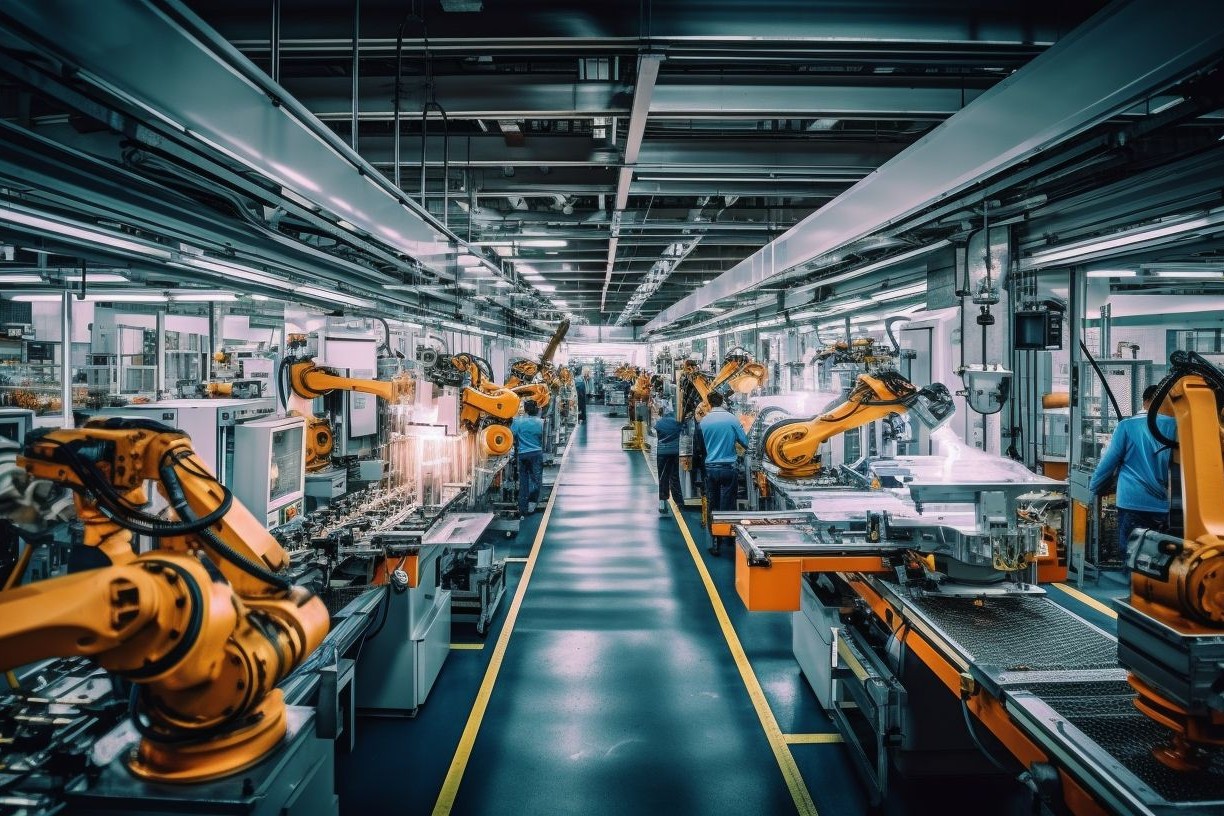
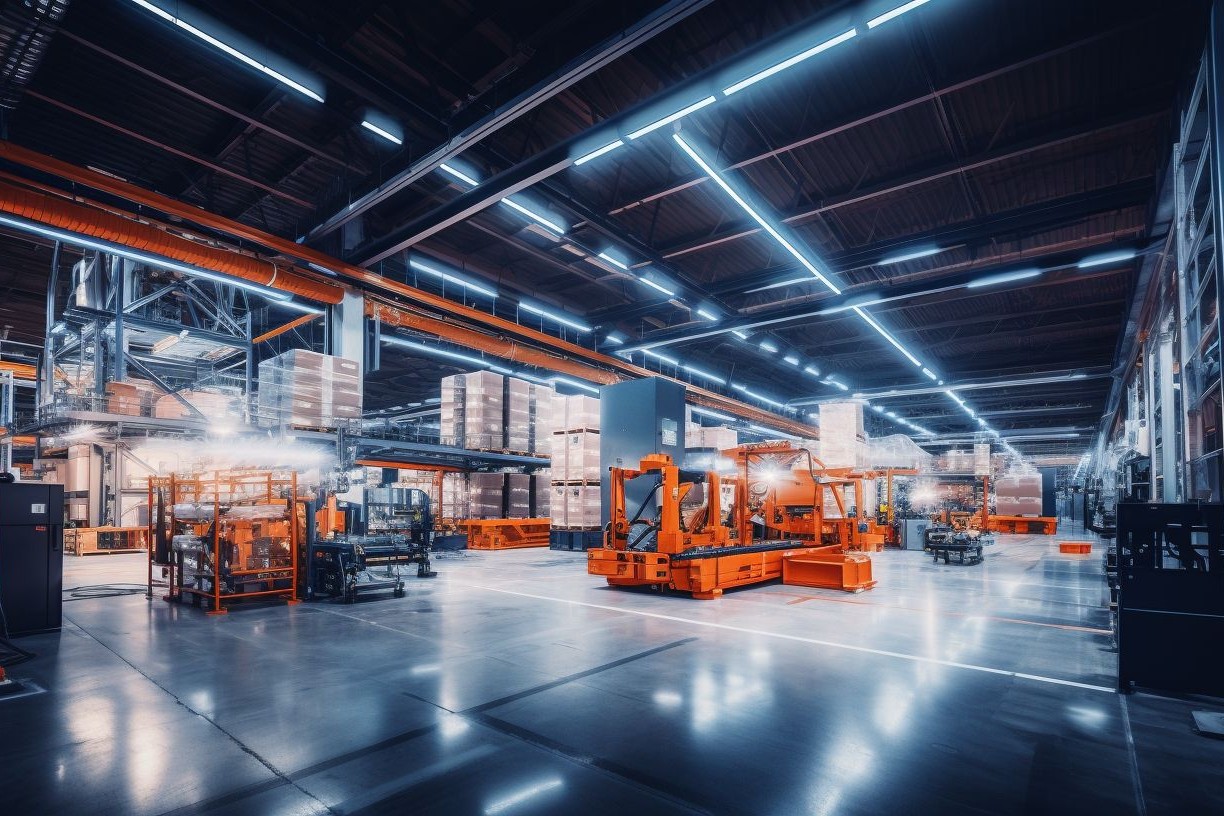
Building on the foundation laid by additive manufacturing, advanced manufacturing takes production to new heights through cutting-edge technologies and process enhancements. This approach integrates the power of robotics, artificial intelligence, and the Internet of Things to transform factory floors into high-tech arenas where efficiency reigns supreme.
Manufacturers harness these innovations not just for speed, but also for adding value at every stage of production.
Employing cloud-based applications becomes a game-changer in this realm, offering real-time management of intermediate processes, increasingly complex supply chains and faster product delivery timelines. Such advancements position manufacturers at the forefront of industry evolution, allowing them to respond swiftly to market demands while maintaining reduced labour costs and minimal waste.
High-level directors overseeing this digital transformation find that advanced manufacturing strategies yield substantial productivity gains – ushering in a new era where smart factories become standard bearers for economic growth and competitiveness in the global marketplace.
Lean Manufacturing
Lean manufacturing stands as an examples of a manufacturer transformative approach, honed by the prowess of Toyota Motor Corporation. This methodology focuses on streamlining production processes by relentlessly pursuing waste elimination and enhancing workflow efficiency.
It does so without sacrificing quality or worker satisfaction; instead, it safeguards resources and optimises value for both the manufacturer and customer.
Embracing lean principles propels companies towards meeting ambitious targets like Toyota’s goal to sell 3.5 million battery electric vehicles by 2030. Firms adopt tools such as Just-in-Time manufacturing to tighten inventory control and reduce overheads significantly.
By cutting out non-value-adding activities, manufacturers can redirect their efforts towards innovation, sustainability, and competitive advantage in today’s dynamic market landscape.
Lean strategies are not just about cost reduction – they re-engineer thinking patterns across industries to focus sharply on customer value creation while promoting a culture of continuous improvement amongst workforces worldwide.
Manufacturing Strategies and Systems
In the mosaic of manufacturing, strategies and systems serve as the critical pieces that align operational efficiency with market demands, revealing insights that can elevate a business to new heights in productivity.
Make to Stock (MTS)
Make to Stock (MTS) is a well-established strategy in the manufacturing industry, focusing on producing goods for inventory based on predicted customer demand. Companies employing this method benefit from having products ready for immediate dispatch, which can be crucial in markets where delivery speed is a competitive edge.
It’s an approach that aligns with customers’ expectations of quick service and can lead to higher satisfaction if managed effectively.
With MTS, manufacturers rely heavily on accurate forecasts and historical data to inform their production schedules. Such a system requires robust demand planning and inventory management practices to prevent overstocking or stockouts.
Aligning production volumes closely with market trends ensures that capital isn’t tied up unnecessarily in unsold inventory and helps maintain a fluid supply chain operation.
Make to Order (MTO)
In the realm of manufacturing strategies, Make to Order (MTO) stands out for its customer-centric approach. With MTO, production commences only after a client places an order, providing a distinct advantage in delivering highly customised products tailored to specific requirements.
This method contrasts sharply with traditional mass production techniques by focusing on individualised orders rather than forecasting demand.
Companies like Corkcicle and Saddleback Leather exemplify success with MTO by leveraging advanced ERP systems and inventory planning. They manage resources effectively to craft unique offerings for each customer without overstocking their inventories.
Meanwhile, giants such as Toyota Motor Corporation adapt lean manufacturing principles within an MTO framework, demonstrating remarkable agility in responding to fluctuating market needs whilst maintaining minimal waste throughout the production process.
Assemble to Order (ATO)
Assemble to Order (ATO) is a dynamic manufacturing product inventory management technique that aligns closely with the need for product customisation and efficient resource use. This method hinges on assembling products specifically based on individual customer orders, offering significant flexibility and responsiveness in manufacturing processes.
By adopting ATO, companies can sidestep the pitfalls of overstocking or understocking, ensuring they meet consumer demand without excess expenditure on storage and inventory handling.
Manufacturers operating in sectors ripe with product variations benefit greatly from ATO systems. . Industries in manufacturing ranging from computing to automotive find this approach invaluable as it allows them to provide customisable options to their clientele while maintaining lean operations.
With an emphasis on timely assembly rather than having a surplus stock of pre-assembled goods, ATO strategy helps firms avoid unnecessary waste and streamline their supply chain manufacturing, leading to enhanced overall effectiveness in meeting market needs.
The Role of Manufacturing in the Economy
Manufacturing acts as the backbone of economic stability, playing a pivotal role by contributing significantly to national GDP and facilitating continuous employment growth. It is what is the manufacturing of this sector that often serves as both a measure and a driver of economic health, shaping the prosperity and advancement of societies across the globe.
Contribution to GDP
Manufacturing stands as a colossal pillar in the economic landscape, injecting vitality and robustness into manufacturing important to the overall health of manufacturing define a nation’s economy. In 2020 alone, this sector contributed an impressive 10.8% to manufacturing value of the U.S. GDP, reflecting over $2.2 trillion in value.
This substantial figure underlines manufacturing in business’s critical role as not just a producer of goods but also as a driver for broader economic prosperity.
The industry extends its influence by accounting for 15% of America’s economic output, testifying to its importance in maintaining industrial strength and competitiveness on a global scale.
It goes beyond mere numbers; manufacturing acts as a bedrock for other sectors, fueling innovation and providing the foundations that uphold countless jobs across supply chains and services linked intricately with production industries.
Employment and Growth
Building on its significant contribution to GDP, the manufacturing sector stands as a pivotal driver of employment and economic expansion. In 2021, around 12.1 million Americans were forecast demand be employed in manufacturing, showcasing the industry’s capacity to create jobs.
Despite projections indicating a decline in job numbers, the evolving nature of these roles underscores an upward trend in specialisation and skills required. This metamorphosis within the sector suggests that future positions will command higher wages due to increased technical complexity.
The landscape of industrial employment is changing, reflecting broader economic trends and technological advancements. With over $2.2 trillion contributed by manufacturers in 2020 alone, it is clear that growth within this sphere supports both local economies and national prosperity.
As such, directors should note that investment in high-skilled talent is essential for sustaining innovation and maintaining a competitive advantage within the global marketplace.
The Steps Involved in Manufacturing
The journey from a mere concept to a tangible product is much like an orchestrated symphony, with meticulous steps ensuring each note resonates perfectly. Delving into these stages reveals the precision and innovation that fuel the heartbeat of the manufacturing world.
Idea Development and Market Research
Effective idea development in manufacturing hinges on comprehensive market research. This initial phase is pivotal as it informs strategy, shapes product design, and identifies customer needs that drive the industry forward.
By scrutinising current trends using tools like the ISM Manufacturing Report, directors can gauge economic health and adjust their approach accordingly. Market research also uncovers crucial data about efficiency levels which may lead to enhanced productivity and reduced costs – key components for staying competitive.
Conducting thorough investigations into various production methods such as discrete or batch process of manufacturing goods could provide essential insights for shaping innovative ideas. Discovering what works best in job shop versus repetitive and manufacturing production scenarios could dictate how a new concept is brought to life.
Similarly, understanding contracts with suppliers and exploring outsourcing through contract manufacturing companies are vital steps that contribute significantly towards robust idea development processes.
With over 12 million Americans involved in this sector, tapping into human resources also presents an opportunity for fresh perspectives during the market research phase of product development.
Design, Prototyping, and Testing
Having honed your product concept through thorough market research, it’s time to bring the idea into tangible form. Design is where creativity meets functionality, and careful planning paves the way for a prototype that defines aesthetics, ergonomics, and usability of the final product.
During this stage of industrial process, manufacturing engineers collaborate with designers to ensure that not only does the finished product look good but can be made efficiently within cost parameters.
Prototyping then turns these designs into working models using techniques from 3D printing to CNC machining. This step is crucial as it uncovers potential issues in design before entering mass production.
Manufacturers must engage in rigorous testing of prototypes to assess durability and performance under various conditions. Feedback collected during this phase guides iterative improvements, ensuring any investment in full-scale production yields a market-ready product poised for success.
Full-Scale Production and Quality Control
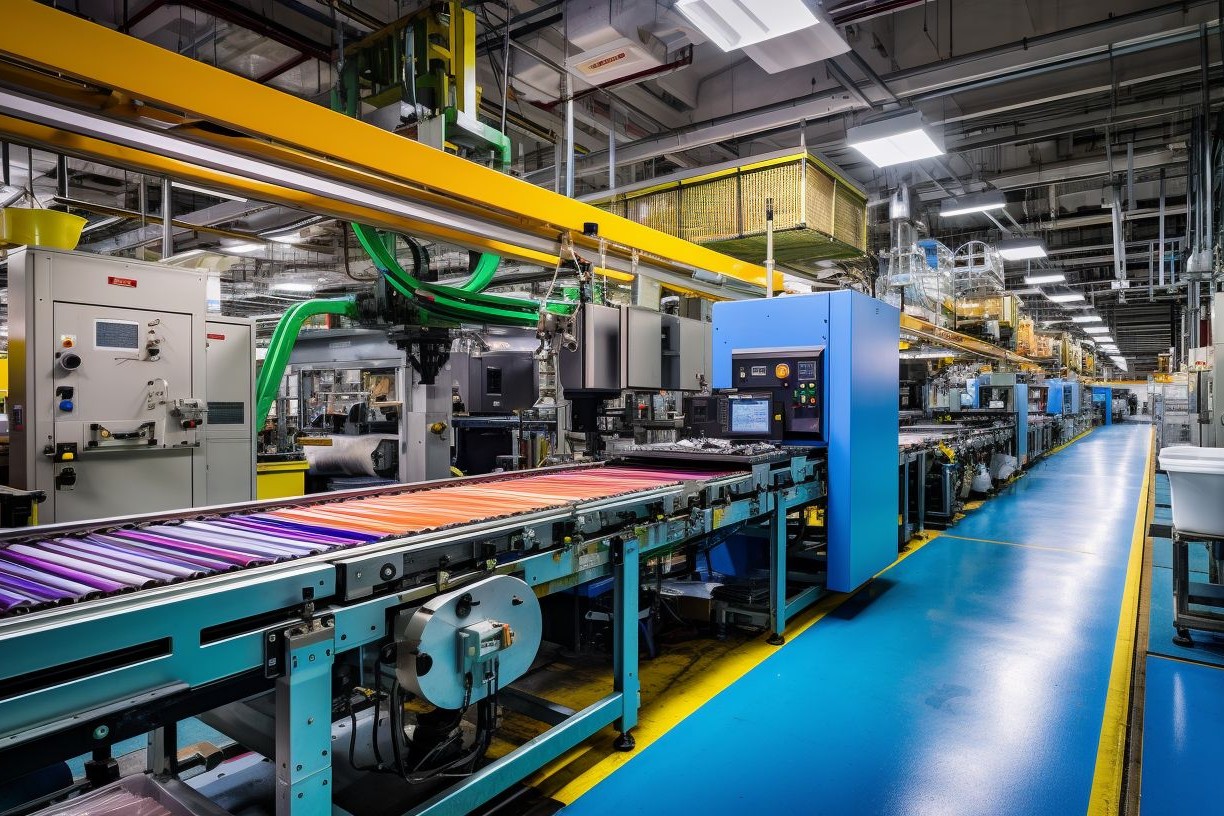
Full-scale production transforms raw materials into finished goods through a streamlined assembly process, aiming to meet demand, reduce costs and elevate efficiency. Manufacturers deploy sophisticated machinery to meet the high demands of mass-production while adhering to stringent quality standards.
This phase is critical as it sets the rhythm for product output and overall market responsiveness.
Quality control acts as the guardian of brand reputation, meticulously checking products against established benchmarks. It plays a pivotal role in preventing recalls, ensuring regulatory compliance, and maintaining consumer trust.
With advances like IoT and AI integration shaping modern manufacturing landscapes, companies leverage these technologies to enhance their quality assurance protocols. Cloud-based platforms such as Microsoft’s ERP software have become indispensable tools in managing this integral aspect of production seamlessly.
Key Differences: Manufacturing vs. Production
Manufacturing involves the process of transforming raw materials into finished products using machinery, labour, and efficient processes. Production encompasses a few component parts and broader definition of manufacturing spectrum that includes not just goods manufacturing but also the creation of services.
- Manufacturing specifically, refers mostly to the physical process of creating tangible items such as cars, furniture or electronics through various techniques like cutting, shaping, and assembling.
- Production can cover intangible outputs as well; for the example of manufactured something, it may include generating electricity or providing educational services which do not result in a physical product.
- The goal in many manufacturing industries is often to produce items on a large scale for consumer markets whereas production might focus on meeting specific needs irrespective of volume – such as bespoke tailoring or custom software development.
- Quality control is typically more stringent in manufacturing because standardised products must meet certain specifications before entering the market; conversely, production quality standards may vary based on individual client requirements and project scope.
- Technology plays an integral role in modern manufacturing with automation and AI integration streamlining processes; however, technology’s role in production varies greatly depending on industry type – from high-tech fields like online platform development to low-tech domains such as agriculture.
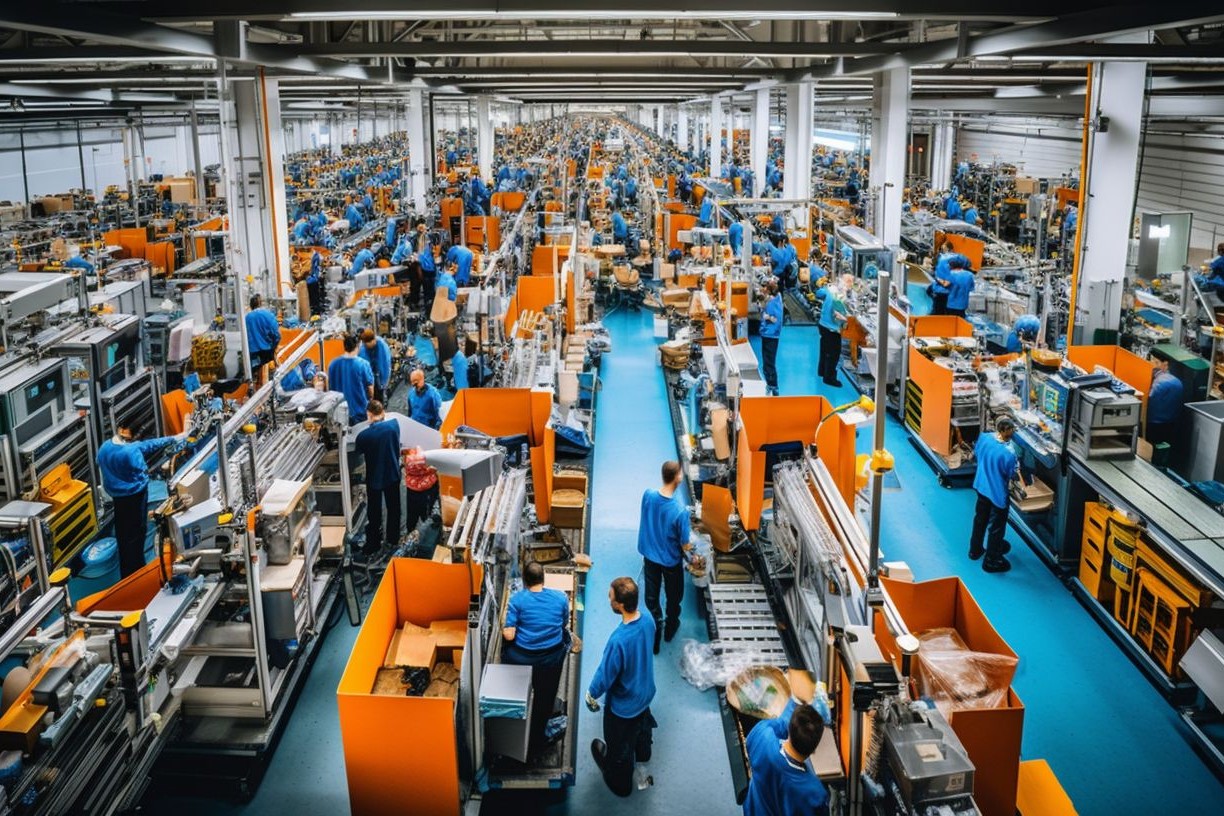
- Employment patterns differ between these sectors too: manufacturing jobs are usually found within factories where repetitive tasks are common while production jobs might be spread across diverse settings including offices, farms or remote workspaces for digital service producers.
- In terms of economic contribution, industries centred around manufacturing have traditionally been seen as vital for national GDP growth due to their export potential and scaling capabilities compared to many purely service-based productions which might play more localised economic roles.
Real-World Examples of Manufacturing
Discover how entities from local artisans producing bespoke furniture to colossal automotive companies and factories churning out thousands of cars exemplify the breadth and impact of manufacturing on our world, inviting you to delve further into the stories that shape this dynamic industry.
Small and Large Scale Success Stories
Across the manufacturing landscape, businesses of varying sizes are carving out their own success stories through innovation and strategic partnerships. Additive manufacturing has revolutionised the playing field, allowing small enterprises to deliver customised solutions that rival those of industry giants.
This shift in capability demonstrates how technology levels the competitive arena; intricate product designs previously exclusive to large-scale operations now emerge from modest workshops.
Contract manufacturers have become a linchpin for growth among smaller firms aiming to scale quickly without sacrificing quality or efficiency. By leveraging outsourced production capabilities, these nimble companies expand their reach with products that meet diverse consumer needs while maintaining lean operations.
On the other end of the spectrum, behemoths in the field harness cutting-edge tech like IoT and robotics – efficiency surges as a result, driving down costs and keeping them at industry vanguards.
Whether it’s a bespoke item from a boutique manufacturer or mass-produced goods from an established factory system, these triumphs illustrate how both small scale initiatives and colossal corporations contribute significantly to the dynamic manufacturing sector.
Impact on Daily Life
Manufacturing touches almost every aspect of our lives, from the cars we drive to the phones in our hands. It shapes our daily routines, influencing how and what products we use to eat, work, and relax.
This industry not only drives innovation but also provides us with countless conveniences that define modern living.
The reality is stark; a world without manufacturing would look vastly different. Imagine starting your day without any manufactured goods – it’s simply unthinkable in today’s society.
Every item you interact with has at some point come through a production line, highlighting manufacturing’s deep embeddedness in the fabric of daily life.
Future Trends in Manufacturing
Exploring the horizon of manufacturing, we uncover trends set to revolutionise the industry, such as the integration of AI and sustainable practices that promise to redefine productivity and environmental responsibility – innovations directors need to stay abreast of for future-proofing their strategies.
Sustainability and Eco-Friendly Practices
Manufacturers are stepping up to integrate cutting-edge technologies like IoT and robotics into their processes, keenly aware of the pivotal role sustainability plays in today’s global market.
These innovations promise not just streamlined operations but also significant strides in eco-friendliness, from reducing waste to boosting energy efficiency. Driven by a mission to minimise environmental impact, the fashion industry is rapidly transforming production practices, ensuring they’re as green as they are lean.
Leaders across sectors recognise that adopting sustainable methods isn’t merely about compliance or branding – it’s crucial for survival and success. Robotics are lending a hand in automating tasks which leads to reduced labour costs and a marked increase in productivity while simultaneously enhancing eco-friendly manufacturing protocols.
Meanwhile, cloud-based applications offer manufacturers new pathways to manage convoluted supply management chains more effectively and accelerate product delivery without sacrificing the ecosystem’s health.
Automation and AI Integration
Robots and intelligent systems are revolutionising the manufacturing field. They streamline complex tasks, cut down on errors, and boost overall efficacy. Picture a factory where machines learn from their experiences, anticipate equipment failures before they occur, and adapt to new processes rapidly.
This is not science fiction but today’s reality in advanced commercial production environments.
Embracing automation and artificial intelligence propels companies into the future of manufacturing. Leaders who integrate these technologies can see dramatic improvements in speed and quality of output.
The integration of AI enhances process optimisation and provides valuable analytics for better decision-making while keeping costs under control.
The Significance of Manufacturing Overheads
Understanding manufacturing overheads is crucial, as they significantly affect the overall cost and price competitiveness of produced goods; delving into how these costs are calculated and managed can be a game-changer for any director aiming to optimise efficiency in their operations.
Calculating and Managing Costs
Calculating and managing costs is a critical aspect of a manufacturing strategy that directly impacts profitability. Directors must pay close attention to overheads as they can make or break a company’s financial health.
Identify all indirect manufacturing expenses such as salaries, depreciation of machinery, rent for factory space, and utility bills. These costs do not include direct material expenditures but are essential for maintaining production capabilities.
Implement cost accounting systems to allocate overhead accurately across various products. This ensures each item carries its fair share of indirect expenses, providing clarity on true product costs.
Use software solutions like Microsoft’s cloud-based ERP to streamline cost management processes. Such platforms help in planning, procurement, supply chain coordination, and product data oversight.
Regularly review overheads for any changes or inefficiencies. Adjusting operations based on these reviews can lead to significant savings and more accurate cost projections.
Negotiate better rates with suppliers and utility providers whenever possible. Locking in lower prices can reduce the overall burden of indirect costs on the manufacturing process.
Employ energy – efficient technologies and practices within facilities to cut down on utility costs. Energy conservation also aligns with sustainable manufacturing trends.
Train staff in lean manufacturing techniques like identifying ‘muda’ (waste) to eliminate unnecessary steps that consume time and resources but do not add value.
Monitor the market for new tools or methods that could lead to more efficient operations. Staying ahead with innovative practices positions a company favourably against competitors.
Understanding the Risks in Manufacturing
Manufacturing, a sector pivotal to economic vibrancy, is not without its perils; understanding these risks is crucial for any director seeking to navigate this field successfully. From the volatility of market demands to the complexities of global supply chain networks, manufacturers must stay vigilant and adaptable to maintain their competitive edge and operational continuity.
Market Fluctuations
Market fluctuations present continuous challenges, yet they also offer opportunities for manufacturing firms to display agility and innovation. An effective strategy employs advanced manufacturing technologies, which can swiftly adapt to changing demands, reducing the risk of excess inventory from make-to-stock (MTS) approaches.
Harnessing these technologies ensures that new products reach the market expeditiously, keeping pace with consumer interests and emerging trends.
Directors should consider make-to-order (MTO) models as a versatile response to unpredictable markets. Tailoring production processes to specific customer requirements not only enhances client satisfaction but also minimises waste by producing what is needed when it’s needed.
This approach transforms potential volatility into a competitive edge by aligning supply closely with real-time market demand – a critical factor in optimising resource allocation during uncertain economic periods.
Supply Chain Vulnerabilities
Supply chain vulnerabilities often stem from unforeseen disruptions in contract manufacturing. Unexpected events like natural disasters, political unrest, or even a global pandemic can halt production at partner companies crucial to your product’s assembly line.
These interruptions could lead to significant delays, putting entire projects at risk and potentially affecting the company’s bottom line.
Lean manufacturing systems are particularly exposed due to their just-in-time inventory approach which relies on precise delivery schedules. A minor hiccup upstream can cause considerable downstream effects, leading to stockouts and hampering production continuity.
Companies employing make-to-order strategies must remain vigilant about sourcing materials; any delay in obtaining critical components directly impacts their ability to fulfill customer orders promptly.
Manufacturing directors need robust contingency plans that account for these vulnerabilities and enable swift adaptation to changing circumstances in the supply chain.
Conclusion
Understanding the meaning of manufacturing is key to grasping how manufacturing makes the backbone of our global economy. It’s an intricate process of human labour that transforms imagination into tangible products, fueling innovation and employment worldwide.
This guide has illuminated the vast landscape of manufacturing – from its historical roots to cutting-edge techniques shaping tomorrow’s industries. Embrace the knowledge shared here to navigate this dynamic field with confidence and foresight.
Keep exploring; each step in manufacturing unlocks potential for new discoveries and advancements.
FAQs
1. What does manufacturing mean in business?
In business, manufacturing is the process of producing goods. It involves the chemical processing and the process involves turning materials into finished products what is manufacturing goods on a large scale, using various production methods and machinery within the manufacturing industry.
2. Can you give some examples of different types of manufacturing businesses?
There are many types of manufacturing businesses; they include many manufacturing examples: making cars in an automotive factory, assembling electronics in a mass production system, or crafting furniture with woodworking tools.
3. How do supply chains fit into the manufacturing process?
Supply chains are essential as they manage the flow of materials needed for production. Manufacturer involvement in supply chain management helps to ensure that factories receive everything they need to make their products efficiently.
4. What role did historical events like the Industrial Revolutions play in modern-day manufacturing?
The Industrial Revolutions significantly changed how we manufacture by introducing new technologies such as industrial abbreviations (like T/O meaning turnover). This led to electrified heavy machinery and more efficient mass-produced products.
5. Are there any modern advances or case studies showing where the field of manufacturing is heading?
Yes! There are plenty of examples of factories and case studies like General Electric’s which detail advances in modular BOMs (Bill Of Materials), configurable BOMs, and improvements in engineering techniques utilised by contemporary industries across countries well known for their high manufacturing output.
And there's more...