In today’s fast-paced market, businesses are grappling with the challenge of managing inventory and ensuring timely delivery to customers. Distribution warehouses stand at the heart of this process, bridging the gap between products storage services and people.
Our article delves into these vital hubs, offering clarity on their role in supply chain efficiency, management process efficiency and customer satisfaction. We’ll guide you through understanding their operations, benefits, and how they can streamline your business logistics.
Read on for insights that could reshape your own distribution centre strategy.
Key Takeaways
Distribution warehouses are vital links in the supply chain, focusing on efficiently processing and dispatching goods rather than long-term storage.
Advanced technologies like automated storage systems and warehouse management software are utilised in distribution centres to speed up operations and reduce errors.
These facilities enable cost savings through streamlined logistics, optimising inventory management to balance supply with demand effectively.
Quick delivery services from distribution warehouses enhance customer satisfaction by meeting expectations for rapid order fulfilment.
Specialised distribution facilities cater to specific product needs such as temperature control or handling high-value items, ensuring quality preservation and compliance with industry standards.
Defining Distribution Warehouses

Distribution warehouses serve as pivotal nodes within the supply chain, streamlined to facilitate the smooth transition of goods from suppliers to end-users. They encompass distinct characteristics and operational tasks that differentiate them from traditional storage spaces, underpinning their crucial role in ensuring efficiency and responsiveness in product distribution networks.
The Role of a Distribution Centre in the Supply Chain
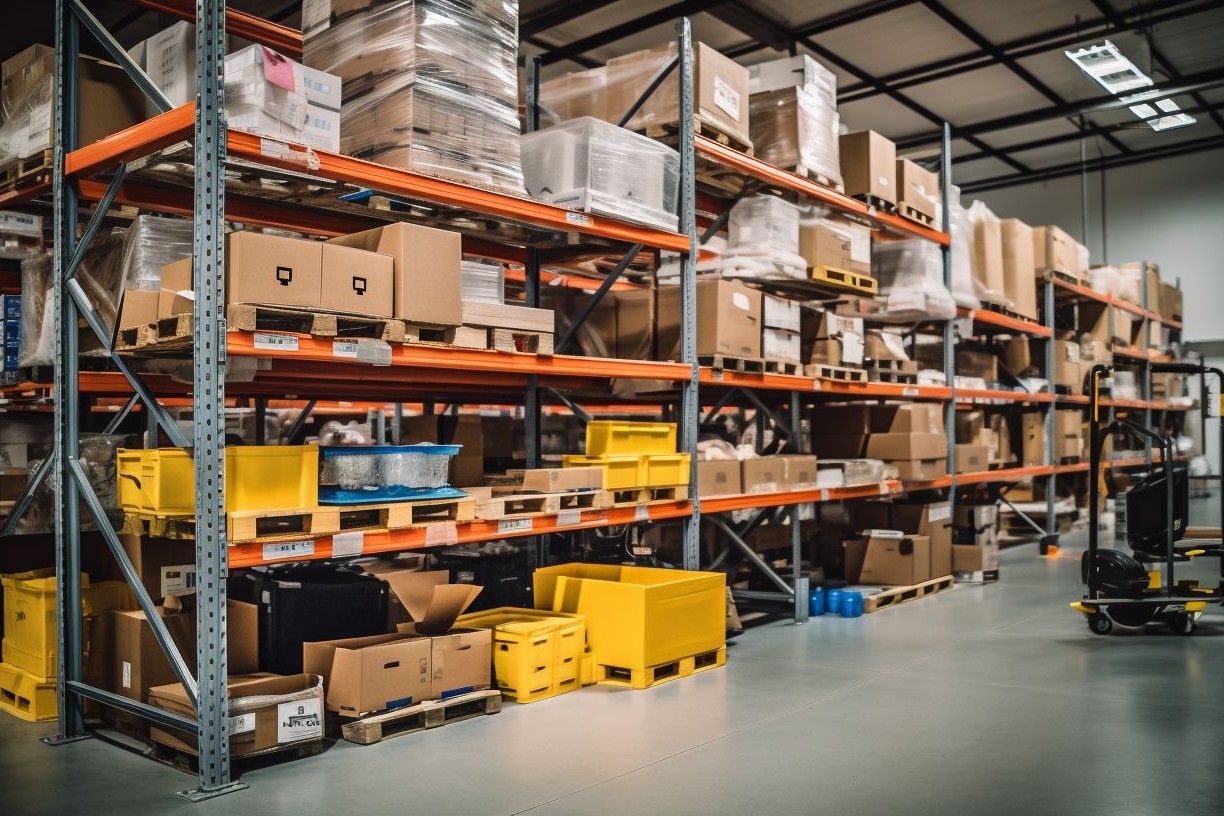
A distribution centre stands as a pivotal hub within the supply chain, managing the delicate balance of inventory levels while ensuring that products are readily available for shipment.
Their strategic storage locations so close to delivery points sharpen the edge of shipping efficiency, making it both faster and more cost-effective. Through meticulous facility organisation and planning, they expedite the journey from supplier to retailer or end consumer, embodying a critical link in connecting various parts of this complex network.
These centres not only store vast quantities of goods but also specialise in order fulfilment processes that are fundamentally anchored on speed and accuracy. Utilising advanced tools like automated storage and retrieval systems (AS/RS) or warehouse management systems (WMS), they orchestrate every movement – from receiving shipments to sorting items onto pallets – with precision.
This optimises operations and slashes down time spent on handling individual items, pivoting swiftly from accumulation to the distribution process as customer demand dictates.
Key Differences Between a Warehouse and a Distribution Centre
Understanding the distinctions between a warehouse and a distribution centre is crucial for directors looking to optimise their supply chain. These facilities may seem similar at first glance, but they serve different functions within logistical operations.
| Warehouse | Distribution Centre |
|---|---|
| Primarily focuses on the storage of goods for longer periods. | Concentrates on processing and fulfilling customer orders efficiently. |
| Operates as a static point in the supply chain for inventory. | Acts dynamically to ensure the swift movement of products. |
| Fewer inventory turns; products may remain stationary until sold. | High turnover rates with goods being received, processed, and shipped rapidly. |
| Location based on cost savings and not necessarily on proximity to customers. | Strategically located to minimise shipping time and costs, often closer to consumer hubs. |
| Less emphasis on advanced technologies for order processing. | Utilises advanced systems such as automated storage and retrieval systems. |
| May not have the infrastructure for cross-docking. | Often incorporates cross-docking to expedite delivery processes. |
| Maximises space utilisation for storage. | Focuses on maximising efficiency in order fulfilment. |
With this delineation in mind, we now move towards understanding the core functions of a warehouse distribution centre or warehouse and how they refine the supply chain’s efficiency.
Core Functions of a Distribution Warehouse

At the heart of a distribution warehouse lies its core functions, essential cogs in the supply chain machine that facilitate the smooth transition of goods from supplier to consumer.
These operations not only preserve product integrity but also streamline processes to meet the high-speed demands of modern commerce, ensuring products are received, managed, and dispatched with precision.
Receiving and Sorting Goods
Distribution centres handle large shipments with attention to detail; they check quantities and inspect for damage immediately upon arrival.
Employees use scanning tools to log goods into inventory management systems, tracking their movement from reception to shipment.
Sorting activities kick off once items are verified. Workers categorise products based on their destination, streamlining future handling.
Advanced machinery often assists staff members. Conveyor belts, forklifts, and automatic guided vehicles expedite the sorting process.
Clear labelling is crucial during this stage; barcode scanners read these labels, informing systems about item locations and movements.
Handling must be careful yet swift to prevent stockouts and ensure that inventory is ready for order processing without delay.
Quality control measures accompany this phase, as damaged goods can reflect poorly on customer satisfaction metrics.
Staff training is continuous, aiming to enhance efficiency and accuracy in receiving and sorting protocols.
Storing and Inventory Management
Effective storing and inventory management are the backbone of any successful warehouse or distribution centre anywhere. They enable rapid access to products, ensuring that goods move seamlessly from shelves to shipping areas.
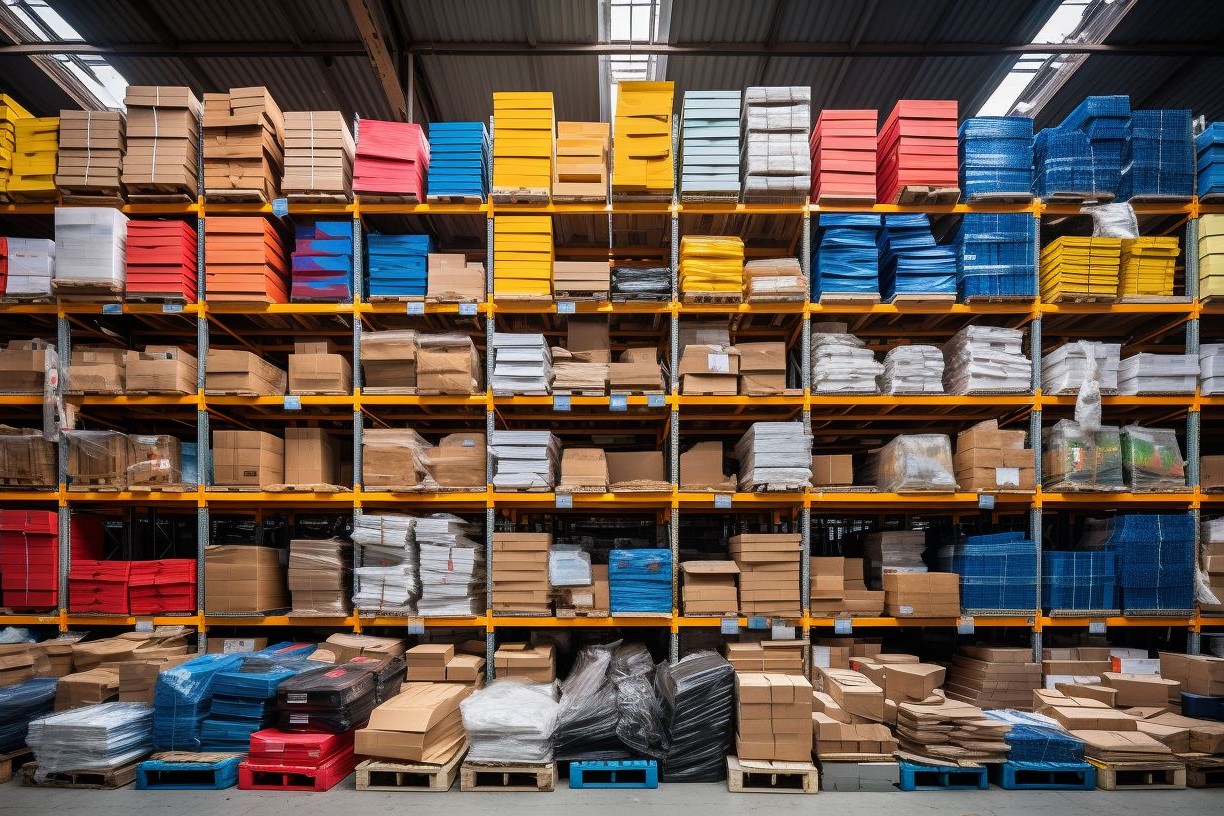
Managers use advanced inventory management software and automation technology to track stock levels in real time. This minimises errors and maximises storage space, leveraging systems like pallet racking for optimal organisation.
High-density and storage system solutions also come into play, designed for quick retrieval that cuts down on processing times.
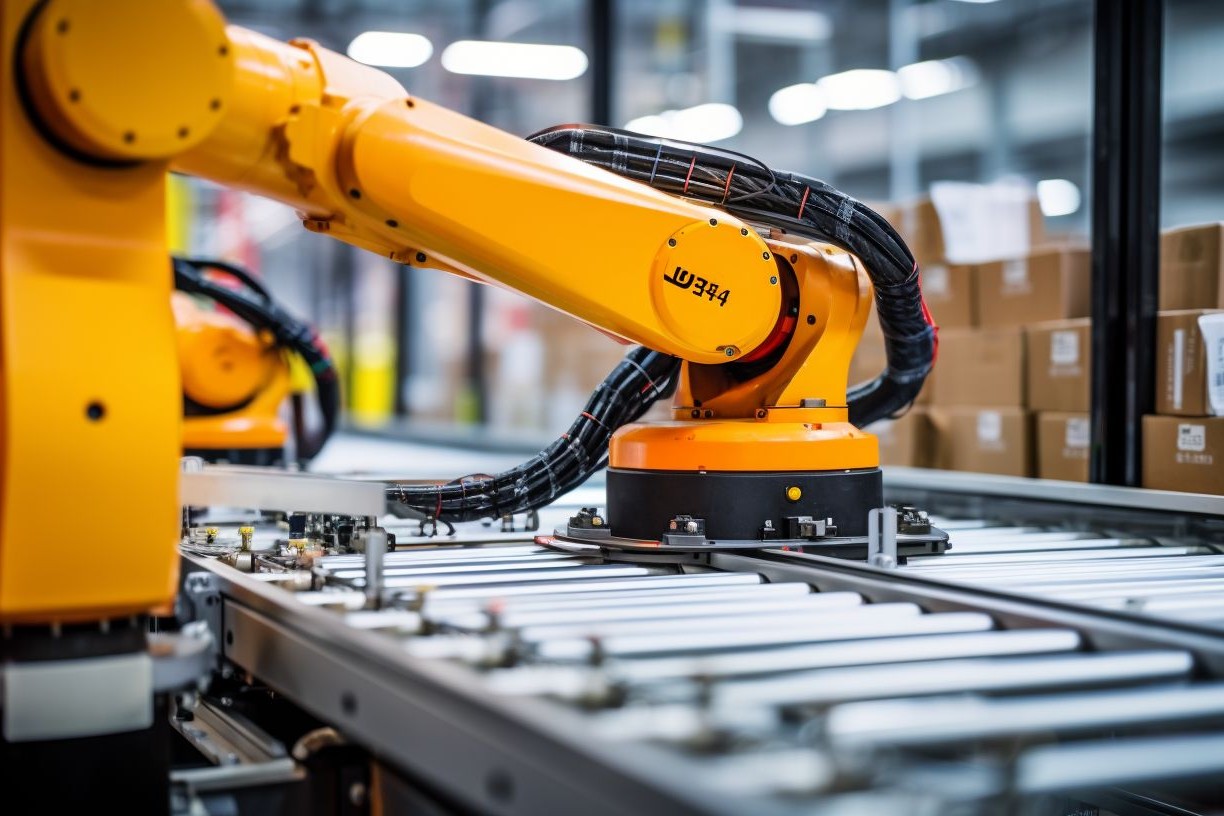
Warehouse automation stands out as a game-changer in this sector. Automated systems and robotics work around the clock, sorting goods with precision far beyond manual capabilities.
These innovations reduce labour costs while boosting accuracy – an essential factor in maintaining a competitive edge within the supply chain network. With well-executed inventory control procedures backed by cutting-edge tech, many distribution centres and warehouses ensure they can meet customer demands swiftly and effectively without unnecessary delays or financial waste.
Order Fulfilment
Order and fulfilment centre stands at the heart of distribution centre operations, ensuring that customer orders are processed timely and accurately. Workers swiftly pick products from shelves using advanced systems that track inventory levels in real-time.
They then pack these items securely, preparing them for shipment to customers or retail outlets. Throughout this process, meticulous attention is paid to order details and to quality assurance and control standards to uphold service quality.
Efficient order fulfilment not only boosts customer satisfaction but also strengthens supply chain management by reducing errors and speeding up delivery times. Distribution centres leverage state-of-the-art technology, such as barcode scanners and automated conveyors, to streamline the picking and packing stages.
This integration of machinery and human skill strikes a balance between productivity gains and maintaining effective oversight over each order’s journey from warehouse shelf to customer’s doorstep.
Shipping and Transportation Management
Efficient shipping and transportation management is pivotal in linking distribution warehouses to the global supply chain. Coordinating the movement of products from pallet racks in warehouses to the final customer requires meticulous planning and the selection of the most effective transport modes.
Whether leveraging trucks, railways or airports, managers ensure goods arrive on time while optimising costs.
Adopting advanced technology solutions like automated sorting systems and robust transportation management systems can streamline this process. These technologies assist managers in overseeing vast networks of freight forwarders and third-party logistics providers, dealing with complex tasks ranging from route planning to real-time tracking of shipments.
Their goal: seamless delivery that synchronises with the ever-accelerating pace of retail and e-commerce demands, ensuring a constant flow through multiple distribution centres and hubs without compromising quality or efficiency.
Advantages of Utilising Distribution Warehouses

Harnessing the strategic benefits of distribution warehouses enables businesses to streamline their logistics, elevating operational performance and delivering superior service to customers; explore these transformative advantages in depth within our discussion.
Cost Efficiency
Distribution warehouses serve as strategic tools for achieving cost efficiency in the supply chain, providing significant savings on inventory carrying costs. These specialised facilities streamline operations to reduce waste and excess stock levels, resulting in more favourable financial outcomes over time.
Companies can invest in advanced technologies like warehouse automation and ERP solutions that further cut down operational expenses. Such investments pay off by enhancing overall distribution centre logistics, making them leaner and more responsive to market demand.
Choosing a single distribution centre or warehouse approach transforms fixed costs associated with running numerous local storage sites into variable costs that flex with business activity levels. This shift in storage costs means companies only pay for space and services they use, preventing funds from being tied up in unused inventory or facility overheads.
Embracing accumulation vs distribution strategies tailored to their products allows businesses to optimise sales while minimising risks of overstocking or stockouts – key contributors to maintaining profitability within competitive markets.
Enhanced Operational Efficiency
Distribution warehouses are powerhouses of efficiency, streamlining the journey from product receipt to dispatch. They harness advanced warehouse automation technologies like automated storage and retrieval systems, barcode and RFID systems, and automatic guided vehicles.
These intelligent solutions work round the clock to speed up operations, minimise errors, and drive down costs associated with manual labour. It’s a swift shift toward optimised processes that keeps pace with growing customer demands.
Leaders in distribution understand that operational agility translates into competitive advantage. By integrating enterprise resource planning (ERP) solutions into their workflows, they gain real-time insights into inventory levels, order status, and shipping schedules.
This empowers quick decision-making and adaptability in a rapidly changing market landscape while ensuring that products move efficiently through supply chains without delays or bottlenecks.
Investment in such tech-driven efficiency is not just smart; it’s essential for any modern distribution centre aiming to thrive.
Quicker Delivery Services
Building on the foundation of enhanced operational efficiency, quicker delivery services stand out as a key advantage offered by how distribution centres work of warehouses. Customers today expect fast shipping, and these distribution centres focus deliver by cutting down transit times significantly.
Employing strategies like cross-docking, where goods are rapidly transferred from inbound to outbound trucks with minimal storage time, they streamline the shipping process from warehouse to customer doorstep.
Distribution centres pivot on agility and speed to fulfill larger orders containing many SKUs without delay. This robust capability ensures that retailers can promise their customers shorter waiting periods for their purchases – boosting satisfaction and competitive edge in an increasingly impatient market landscape.
By focusing on swift order fulfilment, these hubs play a pivotal role in keeping supply chains fluid and responsive to demand fluctuations.
Improved Customer Satisfaction
Moving from the swift delivery services that distribution centres enable, improved customer satisfaction becomes a key measurable outcome. Distribution warehouses play a pivotal role in enhancing the overall customer experience by ensuring orders are fulfilled accurately and dispatched promptly.
With capabilities for centralised order fulfilment and the efficiency to handle large quantities of orders with various SKUs swiftly, businesses can meet consumer expectations more effectively.
Harnessing cutting-edge warehouse automation and smart enterprise resource planning (ERP) solutions allows these centres to streamline their operations further. This results in fewer errors, quicker response times, and more personalised service – factors that directly contribute to higher levels of customer satisfaction.
In turn, satisfied customers are likely to become repeat buyers and recommend your services to others, driving growth through positive word-of-mouth.
Varieties of Distribution Warehouses

The landscape of distribution warehousing is as diverse as the industries it serves, each tailored to meet specific logistical demands and market dynamics. Whether streamlining operations for sprawling e-commerce platforms or ensuring just-in-time delivery for manufacturing lines, these dedicated facilities reflect a bespoke approach to storage and supply chain management.
Retail Distribution Centres
Retail distribution centres tend to stand as a vital cog in the gears of modern commerce, particularly for companies aiming to streamline their supply chain. These bustling hubs manage an impressive array of tasks from sorting incoming goods to efficiently storing inventory.
Demand pulsates through these distribution centres vary well; staff pick and pack products with precision, readying them for the journey to stores or direct to customers’ doors.
Investments in technology elevate retail distribution centre operations to new heights. Robotic systems whir alongside human warehouse workers, while advanced warehouse management software ensures that each item is tracked and inventoried.
Employers are harnessing these tech solutions not only to boost speed but also accuracy, meeting consumers’ expectations for rapid delivery without compromising quality control. As markets evolve and consumer demands sharpen, retail distribution centres consistently adapt by integrating such innovations into their everyday workflows.
E-commerce Fulfillment Centres
E-commerce fulfilment centres are vital cogs in the machinery of online retail, ensuring products swiftly move from shelves to customers’ doorsteps. They manage everything from storage to packaging and dispatch, relentlessly working behind the scenes to deliver a seamless shopping experience for countless consumers across various regions.
These specialised warehouses embrace modern tools like Microsoft Dynamics 365 Inventory Management and Warehouse Management systems, integrating technology to streamline operations and support the growing demand of e-commerce.
Meeting customer expectations requires constant innovation within these hubs, often involving challenges such as space optimisation and adapting quickly to shifts in consumer behaviour.
E-commerce fulfilment centres not only fulfil orders but also play an essential role in brand loyalty by ensuring timely deliveries – crucial for maintaining a competitive edge in today’s fast-paced digital marketplace.
Next up is understanding how manufacturing distribution centres contribute differently within the supply chain ecosystem.
Manufacturing Distribution Centres
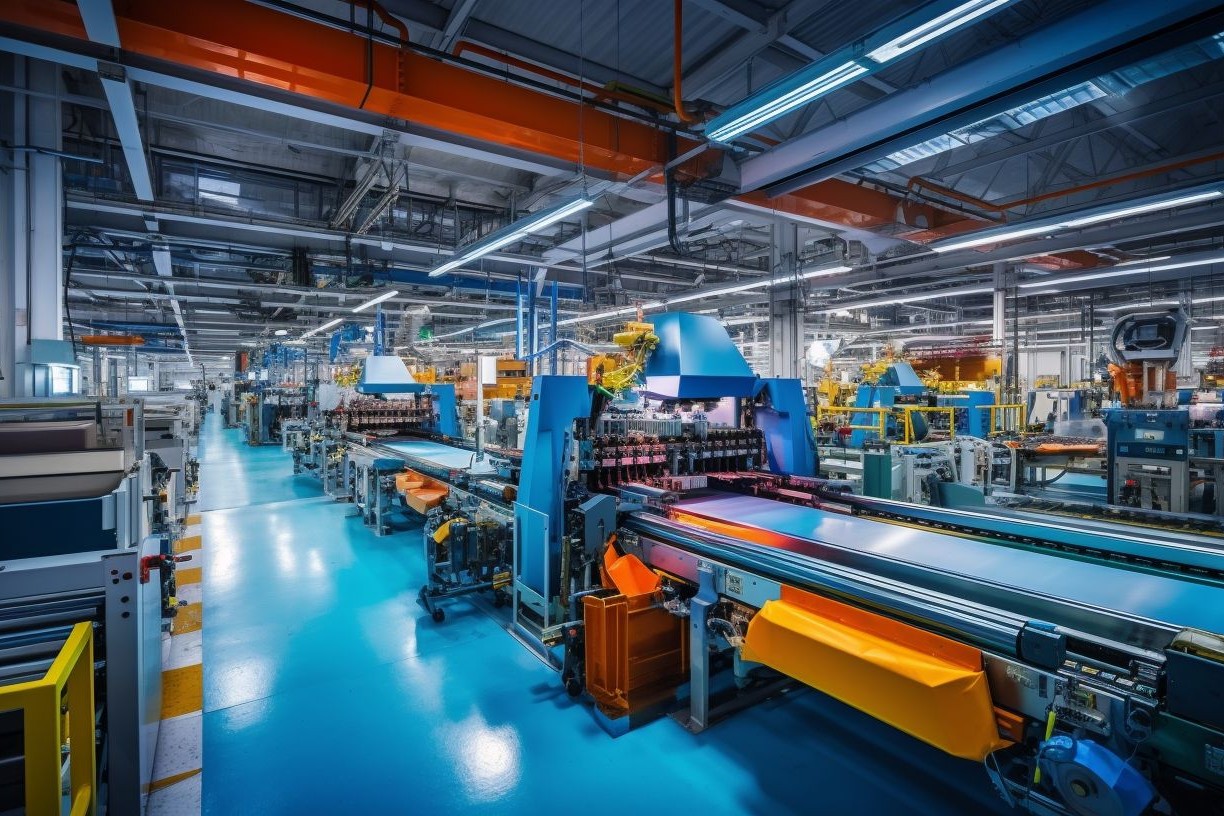
Manufacturing distribution centres stand at the forefront of modern supply chain, orchestrating the flow of products from production lines to end customers. These pivotal hubs take charge of warehousing massive quantities of merchandise, ensuring items are stored safely and efficiently until they’re ready for dispatch.
A linchpin in supply chain dynamics, these facilities streamline operations with state-of-the-art materials-handling equipment and advanced robotics, bolstering throughput and slashing response times.
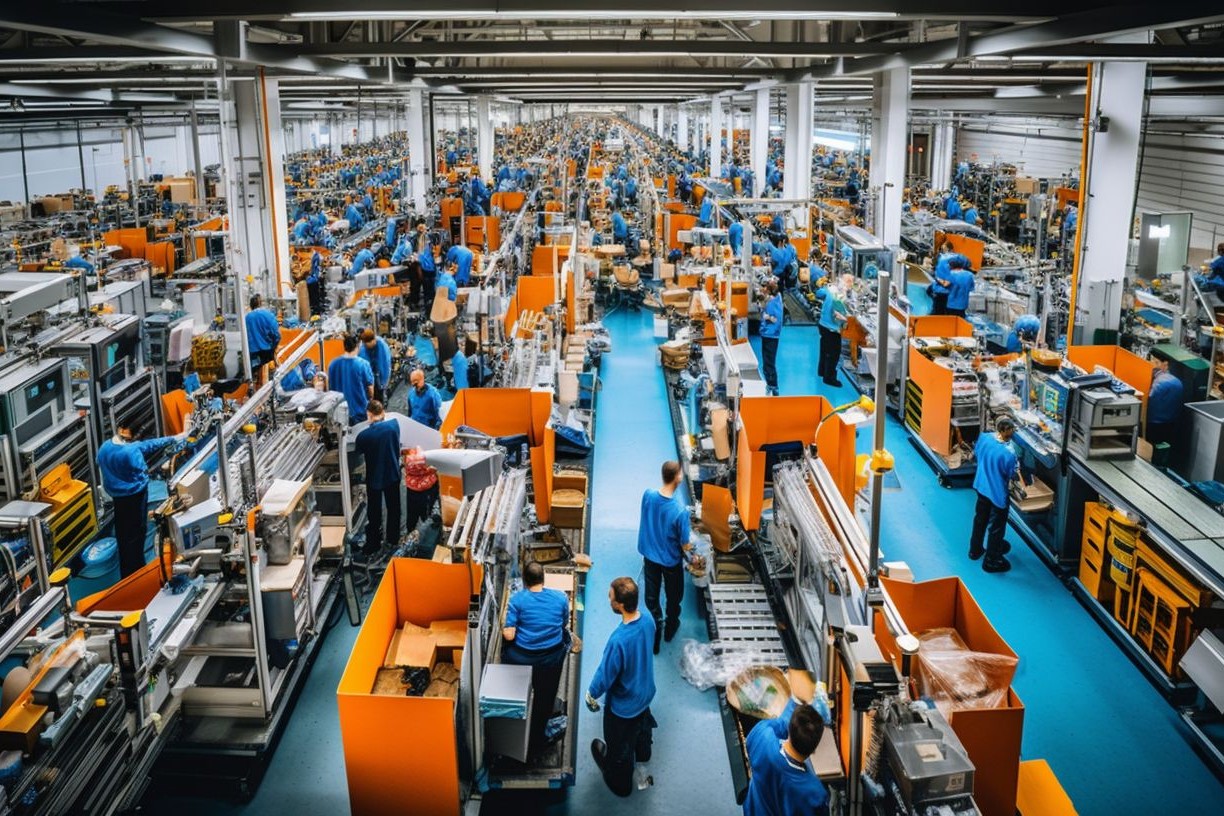
Investments in technology have revolutionised how these centres operate, enabling them to sort, process, and ship goods with unprecedented speed and accuracy. From automated conveyor systems that whizz products across vast spaces to intelligent software managing inventory levels in real-time -every innovation is geared towards maintaining a seamless link between manufacturers and markets.
By leveraging this sophisticated machinery coupled with meticulous inventory management strategies, manufacturing distribution centres excel in delivering value on both ends: reinforcing manufacturer efficiencies while satisfying market demands swiftly.
Specialised Distribution Facilities
Shifting focus to specialised distribution facilities, these centres are designed with particular products and market needs in mind. They stand out because they provide bespoke solutions for delicate or high-value items that require extra care during handling and storage.
For instance, pharmaceutical distribution centres employ advanced climate controls to maintain the integrity of medications, while food distribution centres leverage unique refrigeration systems to ensure produce stays fresh from farm to table.
Employing cutting-edge technology and specialised equipment, is a hallmark of these specialised hubs. Cranes may move heavy machinery in an industrial parts facility, whereas clean rooms ensure the sterile environment necessary for sensitive electronic components.
Each facility operates by enforcing rigorous standards tailored to their specific inventory – all aimed at preserving quality, extending shelf life, and upholding health and safety laws dictated by their industry’s regulatory bodies.
Challenges in Distribution Warehouse Management
Managing distribution warehouses involves confronting complex obstacles that can significantly affect their efficacy. Key issues include optimising labour efficiency amidst shortages, ensuring accuracy and rapidity in order fulfilment, and seamlessly integrating new technologies to stay ahead in an increasingly automated industry landscape.
Addressing Labour Shortages and Staff Retention
Combatting labour shortages in the distribution warehousing sector often means going beyond traditional hiring tactics. Innovative training and development programs are crucial investments that can attract new employees and enhance the skills of current staff, fostering a more capable and loyal workforce.
Distribution centres adopting these strategies position themselves as desirable workplaces that support growth and learning.
Embracing technology and automation also plays a significant role in mitigating staffing challenges. Automated systems improve efficiency while allowing workers to engage with more skilled tasks, reducing the strain of manual labour.
Companies may also form partnerships with third-party logistics providers to further streamline operations, thereby retaining valuable employees by offering them a technologically advanced environment where their contributions have meaningful impact.
Meeting Demands for Speed and Precision
Distribution centres face the continuous challenge of speeding up operations while maintaining top-tier accuracy in processing orders. This dual demand for speed and precision drives the need for sophisticated warehouse automation technologies.
Systems such as automated storage and retrieval, coupled with advanced barcode and RFID tracking, play crucial roles in enhancing efficiency. Distribution centres warehouses that excel at this keep customer satisfaction high and stay ahead in competitive markets.
Leveraging enterprise resource planning (ERP) solutions also bolsters a distribution centres ability to meet these demands effectively. Real-time data from ERP systems guide decision making, optimising each step from receiving goods to final shipment.
The implementation of automatic guided vehicles reduces manual errors and accelerates movement within facilities. Such integration ensures orders are picked accurately and delivered swiftly, aligning with consumer expectations for rapid service without compromising on quality or reliability.
Implementing Technological Advances and Automation
To bridge the gap between demands for speed and precision, directors are turning to technology and automation within their own distribution networks and centres. Advanced solutions such as warehouse management systems (WMS) and transportation management systems (TMS) offer a leap in productivity.
These advancements streamline operations, forging paths toward more efficient sorting, handling, and shipping processes.
Embracing robotics and automated systems not only enhances accuracy but also minimises reliance on manual labour. This transformation taps into economies of scale, caters to mass-market needs quicker, and elevates customer satisfaction levels by delivering orders with greater reliability than ever before.
With these technological strides in place, a distribution centre planning a warehouse becomes an engine of efficiency that powers the supply chain towards a future where smart tech integration is no longer optional but essential for staying competitive.
The Impact of Location on Distribution Warehouse Effectiveness
Distribution centres must be placed strategically to serve their role in the supply chain optimally. Close proximity to major motorways, rail networks, and seaports can drastically reduce transit times and shipping costs, contributing to a leaner operation.
Central locations also enable companies to reach larger markets within shorter timeframes, which is essential for businesses that promise rapid delivery services. The right retail location nearest distribution centre helps meet quick turnaround expectations without inflating operational expenses.
Choosing a warehouse site goes beyond mapping transport routes; labour availability plays a pivotal role too. Warehouses require skilled staff for various roles from inventory management to order fulfilment.
Areas rich in potential employees can lower recruitment costs and minimise labour shortages that hinder productivity. Additionally, local regulations around zoning and taxes influence the long-term financial sustainability of any distribution centre setup.
Smart selection of warehouse sites balances these critical factors, ensuring efficient flow of goods from supplier to customer while optimising cost efficiency for companies.
Conclusion: The Integral Role of Distribution Warehouses in Modern Supply Chains
Distribution warehouses stand at the heart of today’s agile supply chains, acting as a critical nexus point between production and delivery. They streamline processes, ensuring goods reach customers swiftly and in top condition.
Embracing these hubs helps businesses stay competitive in a demanding marketplace where speed converges with reliability. Operational triumph hinges on their strategic use, marking them as indispensable assets to thriving companies worldwide.
Their meticulous management shapes the landscape of global trade, making specialised distribution centres and warehouses pivotal for ongoing commercial success.
FAQs
1. What exactly is a distribution warehouse?
A distribution warehouse is a key part of the supply chain where goods are stored and organised for efficient shipping to stores, other warehouses or directly to customers.
2. How does distributed warehousing work?
Distributed warehousing involves multiple storage facilities that keep products closer to the end customer, which helps in faster delivery for both the retail store and online shops.
3. Why do retail companies use distribution centres?
Retail companies use distribution centres as central points where they can manage stock, manage inventory, deal with trucking and shipping containers, maintain customer service quality, and process orders quickly for their supermarkets or ecommerce platforms.
4. Are there different types of goods handled by distribution warehouses?
Yes! Distribution warehouses handle all sorts including corrugated cardboard packaged items, intermodal containers from trucking deliveries, and more bulky goods like intermediate bulk containers – all managed under strict housekeeping rules to ensure working conditions are safe.
5. What role does technology play in modern distribution facilities?
Technology plays a crucial role; it’s used to track inventory with barcodes, manage traffic within the facility using cloud-based systems or specialised software like CRM (Customer Relationship Management), ensuring efficiency boosts profits while maintaining strong vendor relationships.
And there's more...