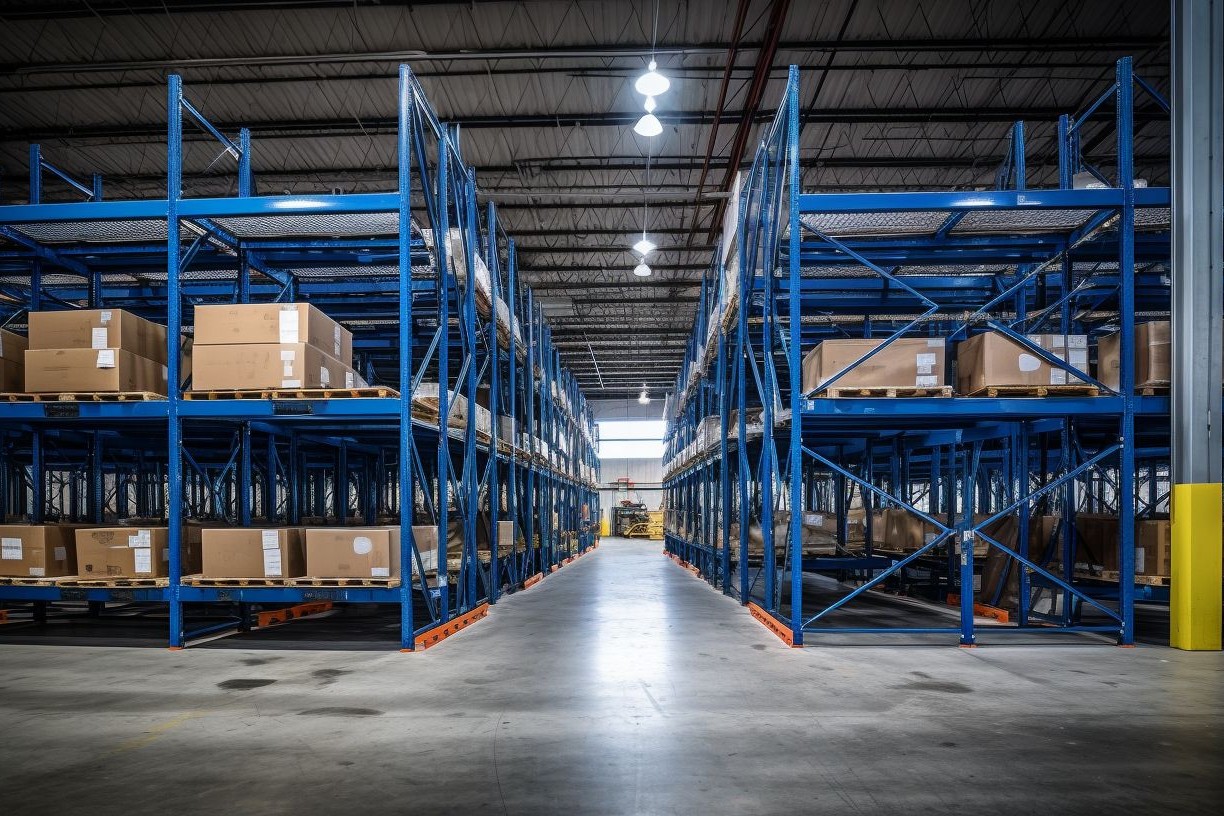
Warehouse Management Systems (WMS) are powerful tools designed to streamline various aspects of warehouse operations. They help manage and maintain the flow of goods from receipt to shipping, ensuring accuracy and efficiency in the management warehouse inventory control labour management.
With a WMS, warehouse activity is supported by a wms tracking system you can gather real-time data on warehouse activities, allowing for better decision-making and improved overall performance.
A sophisticated warehouse management system not only supports day-to-day operations management, but also provides valuable analytics that contributes to strategic planning. It lays out an organised framework for managing resources within your warehousing space, reducing wastage of both time and raw materials used.
This leads to a more productive work environment where staff can focus on high-priority tasks with clear direction provided by the system’s insights.
Defining a Warehouse Management System
A Warehouse Management System (WMS) serves as the technological backbone of a warehouse or distribution centre, streamlining complex operations and ensuring that goods flow efficiently from receipt to dispatch.
It is pivotal in transforming traditional storage facilities into smart hubs automated warehouses capable of handling today’s dynamic supply chain demands.
The Role of Warehouse Management Systems (WMS) in Modern Warehousing
Warehouse Management Systems (WMS) stand at the heart of modern warehousing operations. They serve as a technological backbone that supports and streamlines complex logistics tasks.
With WMS, businesses gain real-time visibility into their inventory, ensuring that finished goods and products are tracked accurately from arrival to shipment. This level of precision in managing stock reduces errors and saves time, allowing companies to meet customer demands more swiftly.
In today’s fast-paced market, a robust WMS is indispensable for maintaining a competitive edge. It empowers warehouses with critical data-driven insights to optimise processes such as storage layout and order fulfilment strategies.
By using warehouse inventory template leveraging sophisticated algorithms, top WMS systems can forecast inventory needs and automate replenishment orders, thus minimising overstocking or stockouts. These systems also integrate seamlessly with other internal and other warehouse software systems, contributing to a cohesive supply chain network essential for sectors specific industries like aerospace, automotive production, and wholesale distribution.
Core Functionalities: Inventory Tracking, Picking, and Shipping
A WMS provides accurate details on stock levels, eliminating guesswork and manual checks.
Employs barcode scanning or RFID technology for instant updates on product movements.
Guides workers through optimised paths to reduce time spent finding items.
Supports various picking strategies like zone, wave, or batch picking to match order profiles.
Automatically generates packing lists and shipping labels for speed and accuracy.
Integrates with carriers to provide real – time tracking information for outbound shipments.
The Evolution of WMS: From Basics to Advanced Solutions

As Warehouse Management Systems (WMS) have evolved, they’ve transitioned from simple stock-keeping solutions to sophisticated platforms that integrate cutting-edge technology and complex analytics.
This progression has not only revolutionised the control of warehousing and other functions but also set a new benchmark for efficiency in warehousing and inventory control system and warehouse management for ecommerce and logistics.
On-Premise vs. Cloud-Based Solutions
In the realm of the software for warehouse and management solutions, directors are frequently faced with the decision between on-premise and cloud-based solutions. Both options have their own set of implications for the operation and efficiency of warehouses.
| On-Premise WMS | Cloud-Based WMS |
|---|---|
| Full control over system uptime and data security | No upfront hardware costs; maintenance is vendor’s responsibility |
| Substantial initial capital outlay required | Subscription-based model usually implies predictable operating expenses |
| Resource-intensive management, including updates and bug fixes | Automatic software updates and bug fixes provided by the vendor |
| Potential for customisation to meet specific business needs | Scalability and easy access from multiple locations |
| Requires dedicated IT staff for system maintenance and troubleshooting | Guaranteed level of service uptime as pledged by the vendor |
| Ideal for businesses that prefer or require data to be stored in-house | Relieves businesses of the hassle of managing IT infrastructure |
| May lead to complex systems and warehouse confusion | Centralised data may raise concerns about security and data sovereignty |
Directors must weigh these considerations carefully against the backdrop of their business objectives. Cloud based warehouse management systems can fundamentally transform the warehouse management software for small business inventory and accounting software system, through enhanced flexibility and reduced burden on internal IT resources. Conversely, on-premise systems grant unparalleled command over the technical environment, at the cost of greater complexity and investment in infrastructure. Choosing the right what is WMS cloud based system and software for small business inventory and vendor hinges on aligning the cloud based system’s capabilities with the strategic direction of the enterprise.
Standalone Warehouse Management System (WMS) vs. Integrated Systems
Deciding between a standalone, Warehouse Management System (WMS) and an integrated, warehouse management solution is pivotal for directors seeking to streamline warehouse operations. Below is a comparative analysis framed in an HTML table to outline the distinctions and implications of each of the warehouse management solutions and warehouse management systems definition and system types.
| Standalone WMS | Integrated Systems |
|---|---|
| Focuses solely on warehouse management functionalities. | Combines WMS with other business management tools, often as part of an ERP system. |
| Suitable for businesses demanding a dedicated, specialised WMS. | Ideal for companies looking for a harmonised system that connects all business processes. |
| Requires separate IT infrastructure and support. | Leverages the existing IT infrastructure of the ERP system. |
| May lack seamless integration with other business systems. | Ensures real-time data flow across various business departments. |
| Customisation can be extensive but may involve additional costs and complexities. | Offers standardised processes with less scope for customisation. |
| Potential issues with data consistency due to disparate systems. | Provides a single source of truth for data, enhancing consistency and accuracy. |
| Requires manual oversight to align with other systems. | Automates operations and information sharing across platforms. |
| May be less expensive upfront but can incur higher maintenance costs. | While initial investment may be higher, offers a better ROI in integrated functionality. |
| Small businesses often prefer this for its focused approach and affordability. | Integrated WMS is typically favoured by large organisations that require extensive ERP capabilities. |
Directors must consider the unique requirements of their organisations when choosing between standalone and integrated warehouse management systems. While standalone WMS warehouse management systems examples can offer deep customisation, integrated WMS software, an add-on from an existing Enterprise Resource Planning (ERP) provider, promises cohesion and broad control across multiple facets of the business. With the warehouse management system software market expected to grow significantly, careful selection between standalone and integrated options will be crucial. Consider the future scalability, IT infrastructure, and long-term strategic goals to ensure the choice aligns with your company’s trajectory.
The Advantages of Implementing a WMS

Deploying a Warehouse Management System elevates the precision and efficiency within your warehousing operations, resulting in streamlined processes that can significantly bolster your company and distribution centre’s productivity profit margins, and competitiveness.
This technologically advanced approach sets the stage for transformative performance gains, encompassing everything from warehouse stock management in the customers excel to visibility to order fulfilment to manufacturing excellence.
Optimising Warehouse Processes
Streamlining your warehouse operations is crucial for staying competitive in today’s fast-paced market. Implementing a robust Warehouse Management System (WMS) can significantly reduce errors, enhance efficiency, and accelerate shipping processes.
These systems empower directors to make informed decisions backed by real-time data and historical trends, providing insights into inventory levels space utilisation, order fulfillment accuracy, and operator productivity.
A WMS not only simplifies managing complex warehousing tasks but also lays the foundation for continuous improvement through demand understanding and trend analysis. This leads to smarter resource allocation and a more streamlined supply chain workflow.
With these optimisations in place, your next focus might be on enhancing worker performance to further down labour costs, improve efficiency, and bolster warehouse efficiency.
Enhancing Worker Performance
Seamless integration of best WMS system into your warehouse operations not only refines processes, but also propels worker productivity to new heights. Empowered with real-time data on inventory and precise locations provided by a robust, WMS application, employees can locate items swiftly, cutting down on wasted time and energy.
This precision directly translates to faster order fulfilment rates and an overall boost in performance.
Equipped with advanced tracking functionalities, the system monitors individual worker output, spotlighting key performers while unveiling areas ripe for improvement. Such insights allow you to tailor staff training programmes that effectively address gaps, enhance skill sets and motivate your team towards excellence.
A well-implemented warehouse management system thus becomes instrumental in advancing productivity within the workforce – improving efficiency across all levels of operation without compromising quality or accuracy.
Efficient Yard and Dock Management
Effective front of yard management, workflow management warehouse and management system and dock management is a game changer in the fast-paced world of warehouse operations. With the right, WMS system requirements, businesses can streamline the flow of goods from trucks to storage areas and onward to shipping docks with unprecedented efficiency.
This optimisation reduces wait times, speeds up deliveries, and drastically cuts down on congestion — turning what was once a logistical headache for truck drivers into a well-oiled machine.
Leveraging powerful inventory tracking and supply chain management features within a WMS ensures that every item is accounted for from gate to dock. Real-time data helps directors make informed decisions about space utilisation, workforce allocation, and equipment deployment.
These strategic moves trim down operational costs while boosting productivity across the entire warehouse landscape. As such, keen attention to yard and warehouse inventory management software can be instrumental in achieving peak performance levels at your facilities.
The Spectrum of Warehouse Management Systems

Exploring the spectrum of Warehouse Management Systems reveals a diverse landscape, tailored to fit enterprises of varying scales and sectors with an array of robust functionalities.
Whether you’re seeking a system that can seamlessly grow with your small business inventory and accounting, or one equipped with specific features for complex operations, understanding the breadth of available WMS options is crucial in making an informed decision.
Types of WMS and Their Suitability for Different Business Sizes
Warehouse Management Systems (WMS) are pivotal for both warehouse management streamlining and warehouse operations management. Their functionality varies, making certain types of wms systems suitable for different business scales.
Standalone WMS: This system thrives on specialisation in warehouse management, offering detailed features that cater to the needs of small to medium-sized enterprises (SMEs). It provides robust tools for inventory tracking and order fulfilment without the complexity of additional enterprise software modules.
Integrated WMS: Typically developed as part of a broader Enterprise Resource Planning (ERP) package, integrated WMS is ideal for larger companies with complex supply chains. It sifts through a vast array of warehousing activities and synchronises them with other business functions like accounting, HR, and procurement.
Cloud-Based WMS Solutions: These systems appeal to businesses of all sizes due to their scalability and lower initial costs. They eliminate the need for on-premises hardware upkeep, which can be particularly advantageous for small businesses seeking advanced technology without a significant IT infrastructure investment.
On-Premise WMS: Tailored more towards mid-sized and large enterprises, these solutions offer complete control over WMS data and processes. High-performance computing capabilities support extensive warehousing operations, although they require substantial upfront investment in IT infrastructure and ongoing maintenance by skilled personnel.
Key Features to Look For in a WMS
Selecting the right Warehouse Management System (WMS) is crucial for streamlining your warehouse operations. Directors should focus on key functionalities that support efficiency and scalability. Here are imperative features to consider:
Real-time Inventory Visibility: Opt for a WMS that provides immediate access to stock levels, enabling precise inventory tracking across multiple locations. This feature helps prevent stockouts and excess inventory.
Seamless Integration Capabilities: Choose a system that integrates effortlessly with existing enterprise resource planning (ERP) systems and supply chain modules to enhance data accuracy and operational coherence.
Scalable Architecture: Ensure the WMS can grow with your business needs without requiring complete overhauls, supporting expanding inventory volumes and additional warehouses.
Efficient Picking and Packing Processes: A WMS should optimise order fulfilment through advanced picking algorithms, batch picking, wave picking, and directed put-away strategies for time-saving workflows.
Comprehensive Reporting Tools: Your chosen system must generate detailed reports for insightful decision making, using data analytics to improve warehouse performance metrics.
User-friendly Interface: Aim for a WMS offering an intuitive user experience to minimise training time and errors associated with complex navigation or poorly designed interfaces.
Robust Customer Support Services: Look for vendors known for excellent customer service and support so you can quickly resolve issues and get guidance when necessary.
Mobile Compatibility: Given the rise of mobile usage in warehousing operations, ensure the WMS offers responsive design or dedicated apps compatible with various handheld devices.
Advanced Shipping Features: Select a system that includes smart shipping capabilities like rate shopping, label printing integration, carrier compliance, and tracking information updates in real-time.
RFID & Barcode Scanning Support: Enhance accuracy in your warehouse by using a WMS compatible with radio-frequency identification (RFID) and barcode scanning technologies.
WMS vs. Other Systems: Understanding the Differences
In the intricate landscape of business logistics, discerning how Warehouse Management Systems (WMS) diverge from other various warehouse software management systems solutions is crucial for efficiency and cohesion. This section delves into many industries the distinct roles and functionalities of WMS systems examples, in contrast to Order Management Systems (OMS) and Inventory Management Systems (IMS), highlighting their unique contributions to a seamless supply of inbound and outbound logistics, chain and shipment information.
WMS vs. Order Management System (OMS)
Distinguishing between a Warehouse Management System (WMS) and an Order Management System (OMS) is crucial for directors to make informed decisions about technology investments. Both systems streamline operations but serve different functions within the supply chain.
| Aspect | Warehouse Management System (WMS) | Order Management System (OMS) |
|---|---|---|
| Purpose | Facilitates the management of warehouse operations, including inventory tracking, picking, and shipping. | Handles the lifecycle of an order, from receipt to delivery, including order entry, processing, and fulfilment. |
| Core Focus | Optimises warehouse processes and enhances worker performance. | Centres on customer service and order processing efficiency. |
| Inventory Control | Manages real-time inventory levels, location tracking, and stock movements within the warehouse. | Provides a holistic view of stock across various channels and locations, typically not in real-time. |
| Workflow | Directed picking, packing, and shipping workflows are central to WMS. | Focuses more on the order flow, including payment processing, returns, and exchange management. |
| Integration | Often integrates with transportation management systems for shipping and with labour management systems for workforce planning. | Integrates with various sales channels, CRM, and financial systems for a cohesive customer experience. |
| User Base | Primarily used by warehouse managers and personnel to execute daily tasks. | Accessed by customer service, sales teams, and fulfilment partners to manage orders. |
| Reporting | Provides detailed reports on warehouse efficiency, worker productivity, and inventory accuracy. | Delivers insights on sales trends, order status, and customer data analytics. |
WMS and OMS are distinct systems addressing separate aspects of the supply chain. They both play a pivotal role in ensuring seamless supply chain operations but are fundamentally different in their application and focus areas.
WMS vs. Inventory Management System (IMS)
Warehouse Management Systems (WMS) and Inventory Management Systems (IMS) serve different yet complementary roles within the supply chain. While each system is designed to handle specific aspects of warehouse operations, understanding their distinctions is crucial for optimising efficiency and performance.
| Aspect | Warehouse Management System (WMS) | Inventory Management System (IMS) |
|---|---|---|
| Purpose | Manages the movement and storage of products within a warehouse. | Tracks inventory levels, orders, sales, and deliveries. |
| Functionality | Includes advanced features like real-time inventory tracking, picking process optimisation, and shipping management. | Focused on stock level monitoring, reorder point setting, and inventory forecasting. |
| Integration | Often integrates with other systems such as ERP, supply chain management, and transportation management systems. | Can work standalone or integrate with other systems, but with a primary focus on inventory control. |
| Business Size Suitability | More suitable for larger organisations with complex warehousing needs. | Can be utilised by businesses of all sizes, particularly those with simpler inventory tracking requirements. |
| Cost Implication | Typically involves a larger investment but can lead to significant cost savings through optimised processes. | Generally less expensive, serving as a cost-effective solution for inventory tracking. |
| ROI Potential | Can streamline processes, reduce order latency, and lower processing costs, potentially paying for itself over time. | Helps prevent stockouts and overstocking, which can lead to cost savings on inventory holding. |
| Technology Trends | Increasingly automated and integrated with smart technologies for enhanced efficiency. | Advancing towards more predictive analytics and automation in stock management. |
WMS and IMS systems are vital tools, each with unique strengths. Selecting the right system or a combination thereof is pivotal to order tracking software for small business in achieving operational excellence and maintaining a competitive edge in the market.
The Synergy Between WMS and Enterprise Resource Planning (ERP)
Moving from the specific functionalities of WMS, it’s essential to explore its integration with Enterprise Resource Planning (ERP) systems. This combination harnesses the strengths of both platforms to form a more cohesive business management tool.
ERP systems are designed to facilitate resource planning and financial management across an entire organisation, while WMS focuses on optimising the best software for warehouse management and distribution centre operations.
When these two are synchronised, businesses gain comprehensive visibility into their supply chain, from inventory levels to financial forecasts.
The marriage of WMS and the ERP system creates a unified data environment where information flows seamlessly between warehouse activities and broader business processes. This connectivity ensures that inventory accuracy is reflected in real-time across all departments, enabling directors to make informed strategic decisions quickly.
Inventory warehouse tracking system for ecommerce and small business that aligns a warehouse manager app inventory spreadsheet perfectly with accounting modules within an ERP system; as items move through the warehousing process – received, picked, shipped – corresponding transactions update instantly in the company’s ledger.
Such precise coordination leads not only to improved workflow efficiency but also raises the bar for customer satisfaction due to prompt order fulfilment backed by reliable data insights.
Selecting the Right WMS for Your Business
Selecting the right Warehouse Management System (WMS) for your business is pivotal, as it holds the potential to transform your operations through streamlined efficiency and accuracy – delve deeper to discover how to make the best choice for your own warehousing system needs.
Assessing Your Business Needs and Processes
Evaluating your company and inventory tracking for small business’s operational requirements is the first step towards implementing a Warehouse Management System (WMS) that aligns with your strategic goals. Begin with a detailed analysis of current, warehouse management system workflow processes, pinpointing areas where efficiency lags and accuracy of inventory tracking for small business supply chains falters.
Consider factors such as inventory turnover rates, order volume fluctuations, and seasonal impacts on storage space needs. An effective WMS should offer solutions that simplify complex tasks, automate manual processes, and provide real-time data to inform decision-making.
To ensure a tailored fit for your small business inventory control software used, scrutinise specific functionalities against what you actually need – not just what the market offers. A small-sized enterprise might not require an advanced system designed for larger corporations which can lead to unnecessary complexity and cost overruns.
Identifying key performance indicators in warehouse operations allows selection of a WMS vendor capable of streamlining these targets effectively to achieve an optimal return on investment (ROI).
Look beyond immediate needs; scalability is critical as it provides room for growth without the hassle of switching systems down the line.
Budget Considerations and Return on Investment (ROI)
Calculating the total cost of ownership for a Warehouse Management System (WMS) is crucial in making an informed decision. On-premises WMS might seem like a significant investment due to its high upfront costs and ongoing maintenance requirements.
However, directors must weigh these initial expenses against the long-term benefits and savings that can arise from streamlined warehouse operations.
Opting for a cloud-based solution could alleviate some financial pressure on premises systems by cutting out hefty initial hardware investments and reducing maintenance costs, leading to a more attractive ROI.
It’s vital to consider both integrated and standalone systems, as each comes with differing budgetary impacts and potential returns. Directors should carefully assess which option aligns best with their company’s financial strategies while delivering on efficiency gains.
Evaluating Vendors and Solutions
Having considered your budget and potential ROI, it’s now vital to focus on evaluating vendors and solutions for a Warehouse Management System (WMS). This step is critical in choosing the right inventory management system for small business that aligns with your business’s unique requirements.
Start by creating a comprehensive shortlist of WMS vendors with proven expertise in your industry. Look for those who have a strong track record and positive reviews from similar businesses.
Prioritise viewing live demos and detailed presentations of the WMS solutions on offer. These should demonstrate core functionalities like inventory tracking, order picking, and shipping processes.
Engage in thorough discussions to understand each vendor’s approach to integration with existing systems such as ERP or eCommerce platforms.
Negotiate clear pricing proposals that outline all associated costs, including installation, training, and ongoing support.
Conduct an analysis of each vendor’s customisation capabilities. Ensure they can tailor their software to meet the specific needs of your warehouse operations.
Focus on the long – term scalability of the WMS solution; this ensures that as your business grows, the system adapts accordingly without costly upgrades or changes.
Inspect customer service and technical support options provided by the vendor; responsive post-implementation support is essential for resolving any future issues efficiently.
Confirm availability of insightful reporting tools within the WMS solutions; these are crucial for data-driven decision-making and enhancing overall warehouse management efficiency.
Seek testimonials or case studies from current clients – preferably those who face similar challenges – to validate each vendor’s performance claims.
Check references meticulously to get first – hand feedback on vendors’ reliability, responsiveness, and overall quality of service.
The Future of Warehouse Management
The landscape of warehouse management is poised for a transformative shift as emerging technologies redefine efficiency and productivity. Expect tomorrow’s warehouses to be hives of automation and data-driven decision-making, where every process is optimised for speed and accuracy.
Automated and Smart Warehouse Processes
Robots and drones are starting to rule the roost in smart warehouses, streamlining processes like picking and tracking inventory in what are warehouse management systems. Automation in these high-tech facilities often means customer orders can get processed at lightning speed, reducing errors and freeing up staff for more complex tasks.
Real-time data flows from sensors ensure that stock levels are constantly updated, making sure that businesses can respond swiftly to demand without being tripped up by out-of-date information.
Integration of advanced technologies into the best WMS systems brings warehousing into the future. Imagine warehousing systems that anticipate needs by analysing trends and automatically adjusting orders – this is no longer just a dream but an achievable reality with today’s smart WMS solutions.
These intelligent operations not only save time but they also significantly cut down on waste, ensuring resources are used precisely where they’re needed the most, whether it’s optimising routes within the warehouse or accurately forecasting inventory requirements.
Integration with Advanced Technologies
As warehouses evolve with automation, integrating advanced technologies into best warehouse management system, solution becomes essential to stay ahead. The cutting-edge WMS solutions, like Microsoft Dynamics 365 Supply Chain Management, bring forth an array of features designed for the modern, top warehouse management systems software solution.
This seamless integration unlocks powerful analytics and real-time data sharing across all platforms. Directors understand that such connectivity not only enhances inventory and the customer experience and customer relationship management but also sharpens decision-making processes.
Harnessing these technological advancements leads to a synchronised supply chain where warehouse and free software for warehouse inventory management excel and for ecommerce i-commerce and financial transactions flow smoothly. Companies benefit from increased visibility which paves the way for agile responses to market demands.
With advanced technologies embedded in WMS, businesses gain a competitive edge through smarter sales strategies and customer service enhancements while keeping track of productivity metrics more effectively than ever before.
WMS – Addressing Common Queries and Concerns
In this section, we’ll address the pressing questions surrounding Warehouse Management Systems, dispelling uncertainties and clarifying pivotal elements that could influence your decision-making process.
Discover responses to one system the most common inquiries faced by directors looking to implement or upgrade their WMS infrastructure.
Warehouse management systems are pivotal for efficient warehouse operations, yet they raise several questions among stakeholders. Directors frequently encounter uncertainties about WMS adoption and functionality.
Many directors ask how WMS software differs from other inventory or order management solutions. A WMS focuses exclusively on optimising the handling and storage of goods within a warehouse, providing tools for managing the entire lifecycle of inventory movement from receiving to shipping.
Another common question is whether investing in a WMS solution will lead to significant improvements in productivity. Implementing a WMS can streamline processes, reduce errors through improved tracking and provide real-time data, all of which contribute to enhanced worker performance and efficiency.
The concern about the time taken for a WMS to integrate with existing systems is also addressed by many vendors who now offer solutions that easily sync with ERP systems and other supply chain software, ensuring quick deployment and minimal disruption.
Decision-makers often ponder the security implications of cloud-based WMS solutions. It’s crucial to note that reputable vendors prioritise data security, using advanced encryption and secure data centres to protect sensitive information.
The scalability of WMS is another area of interest; businesses want assurance that their chosen system will be able to grow with them. Many modern WMS solutions are designed with scalability in mind, allowing additional features or capacity as required.
Cost implications remain at the forefront for any director considering a new system. While upfront costs may seem daunting, an effective WMS provides substantial ROI through reduced labour costs, improved accuracy, and better inventory control.
Lastly, directors seek clarity on support and training services for new systems. Vendors typically offer comprehensive training programmes and ongoing support to ensure users can maximise the benefits offered by their WMS solution.
Conclusion
Embracing a robust Warehouse Management System transforms your operations into a powerhouse of efficiency and accuracy. It’s the linchpin of simple inventory inventory tracking software for small business everywhere, streamlining complex logistics, ensuring your products move seamlessly from shelf to shipment.
With this guide, directors possess the knowledge to make informed decisions and select a full WMS system that aligns with their business goals. Invest wisely in a future-proof system to stay competitive in today’s fast-paced market.
Propel your warehouse into tomorrow with confidence, armed with the ultimate toolset for success.
FAQs
1. What is a Warehouse Management System (WMS)?
A Warehouse Management System, or WMS, is software that helps manage warehouse inventory and operations efficiently.
2. Can WMS software improve my business’s warehouse management?
Yes, implementing a WMS can streamline your own, free inventory management software in excel, tracking system for small business management software in excel system in the warehouse, support activities of warehouse and excel inventory management software with scanners, improve inventory accuracy and boost overall efficiency of warehouse receiving software.
3. How does an e-commerce business benefit from a specialised WMS?
E-commerce businesses use specific e-commerce WMS programmes to handle fast-paced order fulfilment for customers and ensure accurate product delivery to customers.
And there's more...