Managing a warehouse can be like trying to solve a complex puzzle where every piece must fit perfectly. Warehousing is not just about storing goods; it’s a critical cog in the supply chain machine that ensures products are delivered on time and in perfect condition.
In this guide, we’ll delve into the essential functions of warehousing, reveal its numerous benefits, and explore innovative solutions that keep your operations running smoothly. Discover how to transform your warehousing strategy and stay ahead of the curve.
Key Takeaways
Warehousing is crucial for efficient supply chain management, not just storage. It enhances responsiveness to market demands by ensuring products are available and prevents inventory loss.
Innovative warehousing solutions use technology like IoT and RFID to automate processes, improve tracking from arrival to dispatch, and reduce costs while speeding up market delivery.
Effective warehouses manage inventory with precision through advanced systems, support shipping by optimising operations for quick distribution, and maintain product quality via rigorous controls.
There are various types of warehousing solutions tailored to different needs: traditional warehouses provide systematic storage; smart warehouses automate operations with IoT; flexible warehouses offer scalable space based on demand.
Strategic warehousing benefits include better control over inventory, accelerated delivery times due to proximity to markets or centralised locations, reduced risks through meticulous management practices, task delegation that ensures efficiency and clear objectives that align with business goals.
Defining Warehousing: More Than Just Storage

Warehousing goes far beyond simple storage; it’s an intricate component of supply chain management that enhances operational efficiency and responsiveness to market demands. Effective warehousing ensures products are readily available for order fulfilment, prevents inventory loss, and maximises the use of space through organised storage solutions.
Sophisticated warehouse management systems track goods from arrival to dispatch, enabling real-time updates on stock levels and facilitating swift responses to customer orders.
These dynamic facilities often incorporate cutting-edge technology such as Internet of Things (IoT) devices and radio frequency identification (RFID) for advanced monitoring and automation.
By optimising operations within modern warehouses, businesses reduce costs associated with holding inventory while increasing speed-to-market capabilities. In essence, state-of-the-art warehousing propels companies towards achieving leaner supply chains, greater control over their products, and ultimately leads to a stronger competitive edge in today’s fast-paced markets.
Core Functions of an Effective Warehouse

An effective warehouse goes beyond basic storage; it’s a pivotal hub that ensures the seamless operation of the supply chain. It entails meticulous control over inventory, tactical support for shipping activities, and quality management – each function working in concert to bolster organisational efficiency and customer satisfaction.
Streamlining the Shipping Process
Efficient shipping is a cornerstone of successful warehousing. It ensures products reach their destination quickly, reducing wait times and cutting down on transportation costs. To achieve this, a warehouse must be optimally organised with the right equipment – packing tables, materials, computers with easy access to inventory management systems like WMS – all in place to make packaging and dispatching as smooth as possible.
Every step from order processing to loading pallets for transport must work like clockwork; technology is pivotal here. Utilising barcode scanners and printers helps maintain accuracy while managing stock levels seamlessly.
An alert system integrated into the warehouse management software promptly notifies managers about low inventory levels, enabling quick replenishment and thus preventing delays in shipment schedules.
This proactive approach keeps the supply chain moving without interruption or costly hold-ups.
Supporting the Supply Chain
Warehouses play a crucial part in supporting the supply chain by providing a strategic point where goods can be collected, stored, and distributed with precision. They act as vital nodes that ensure products move from suppliers to customers seamlessly.
This integration is especially critical for e-commerce businesses that promise fast delivery times. Warehousing solutions enhance operational efficiency, allowing directors to keep pace with consumer demands and fluctuating markets.
Effective warehouses utilise advanced Warehouse Management Systems (WMS), optimising inventory management and minimising shipping costs through organised storage strategies. These systems are essential for maintaining high-volume order fulfilment without compromising quality or accuracy – they’re the backbone of an adept supply chain network ready to tackle challenges head-on.
Next on our agenda is understanding how accurate inventory management fortifies warehouse operations further.
Accurate Inventory Management
Managing your inventory with precision is essential to the smooth operation of any warehouse. It’s not just about knowing what you have and where it’s located, but also anticipating the ebb and flow of demand.
Accurate management keeps costs down and extends the life of your products by avoiding excess stock or shortages that can disrupt sales.
Training staff thoroughly in organisational processes empowers them to maintain this level of accuracy consistently. With proper systems in place, such as a Warehouse Management System (WMS), directors can ensure efficient tracking across all touchpoints in the supply chain.
Embracing technologies like real-time analytics further refines this process, allowing for responsive strategies that meet both current requirements and future growth projections.
Providing Climate Control Solutions
Warehouses equipped with climate control solutions offer businesses the ability to manage sensitive goods effectively. This capacity ensures products stay in optimal condition, preventing spoilage and maintaining quality from storage to delivery.
High-tech systems are deployed for monitoring temperature and humidity levels, crucial elements in preserving the integrity of perishable items such as food, pharmaceuticals, and plants.
Robust warehouse management technology integrates seamlessly with these systems to keep conditions stable around the clock. Refrigeration services within warehousing facilities ensure that even during fluctuating external temperatures or seasonal changes, your inventory remains unaffected.
These advancements allow for greater flexibility in inventory management while minimising risks associated with climate variability – a key factor for directors strategising on efficient resource allocation and supply chain resilience.
Ensuring Quality Control
Implementing stringent quality control is vital in warehousing to maintain product integrity and uphold brand reputation. As directors, it’s essential that you enforce rigorous inspection protocols throughout your warehousing operations.
These measures protect against the inclusion of defective items and ensure that only goods meeting the highest standards reach your customers. With smart warehousing technologies, such as IoT devices and automation tools, real-time monitoring of inventory becomes a reality.
This advanced approach allows for immediate identification of inconsistencies or defects, enabling quick corrective action.
Quality assurance in the warehousing industry also extends beyond simple inspections; it encompasses a comprehensive process that includes everything from receiving goods to final shipment preparations.
Staff should be well-trained in handling items with care and precision while utilising reliable scanning equipment for accurate tracking. Automation facilitates this process by minimising human error, streamlining tasks like order picking, packing, raw materials selection, labelling, and inventory control into seamless operations.
Your commitment to rigorous quality control not only preserves customer trust but also solidifies your position as a leader in distribution excellence.
Different Types of Warehousing Solutions

Navigating through the diverse spectrum of warehousing solutions is crucial for businesses looking to optimise their logistics and fulfilment strategy. From high-tech smart warehouses with IoT integration to flexible, on-demand storage spaces, each type brings distinct advantages that cater to varying industry demands and operational scales.
Traditional Warehousing
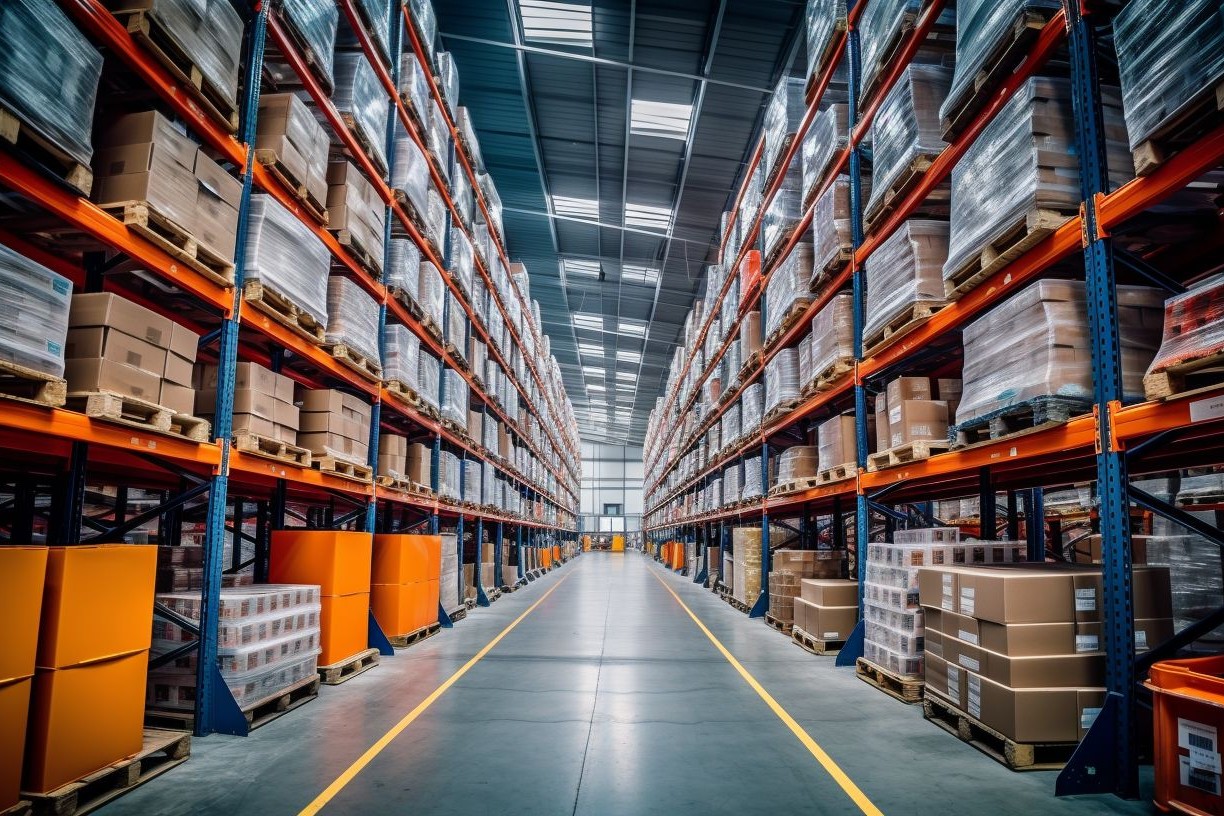
Traditional warehousing serves as the backbone of logistics, ensuring a systematic approach to storing, tracking inventory levels and managing goods. These warehouses range from private facilities dedicated to a single company’s stock to public spaces where various businesses can store their products.
Co-op warehouses offer shared space options for smaller companies, while distribution centres focus on moving goods more swiftly through the retail store and supply network. This type of warehousing manages inventory effectively, thus supporting retailers and manufacturers in maintaining an organised and efficient flow of products.
In traditional warehousing environments, operations are centred around key functions such as pick and pack services, accurate inventory management, order fulfilment processes, and making strategic use of warehouse management systems (WMS) to optimise storage layouts.
By providing these essential services, businesses can achieve significant cost savings and ensure that product life is extended through proper care and handling. The role it plays goes beyond mere storage; it’s about creating streamlined purchase experiences and developing processes that keep goods secure until they reach their final destination.
Smart Warehousing and IoT Integration
In the sphere of warehousing, the integration of Smart Warehousing and IoT is revolutionising how inventory management and operations are conducted. This cutting-edge approach harnesses the power of both information technology (IT) and operational technology (OT), merged with Internet of Things (IoT) components, to optimise warehouse services from the ground up.
Sensors track goods in real-time, providing precise data that facilitate razor-sharp stock control and efficient space utilisation – key factors for enhancing supply chain productivity.
IoT devices enable seamless communication between machines and systems within smart warehouses, leading to automation that boosts speed while slashing costs associated with manual labour.
Robotic forklifts can move products around safely; smart shelves monitor stock levels autonomously, triggering restocking processes proactively. These innovations not only drive down errors but also pave the way for predictive maintenance strategies to reduce downtime significantly.
Advanced analytics give directors comprehensive visibility over their operations, enabling smarter decision-making based on robust data insights.
On-Demand and Flexible Warehousing
On-demand and flexible warehousing is revolutionising how businesses handle inventory. It offers a nimble approach to storing goods, with the ability to scale space up or down based on current demands.
This dynamic solution allows companies to adapt quickly to market changes, avoiding wasted warehouse space, and reducing storage costs significantly. Without long-term commitments, directors can optimise their warehousing strategy, responding rapidly to seasonal trends and fluctuating customer demand.
This model of warehousing ensures that products are accessible the moment they’re needed for dispatch. The strategic placement of warehouses closer to distribution points means faster shipping times – a critical advantage in today’s fast-paced market where customers expect quick delivery.
Security measures safeguard both merchandise and employees while providing peace of mind for all stakeholders involved in the supply chain process. With on-demand options, investing in oversized facilities becomes unnecessary as you pay only for what you use, ensuring operational efficiency without sacrificing quality service or speed.
Advantages of Strategic Warehousing
Strategic warehousing optimises your inventory flow, enhances efficiency and catapults your business closer to market demands; delve deeper to harness these transformative benefits.
Enhanced Control Over Inventory
Effective warehousing significantly boosts your command over inventory, reducing the likelihood of stockouts or funds tied up in an excess inventory of goods. Smart warehouse management systems enable real-time tracking and insights into stock levels, providing directors with a powerful tool to make informed decisions about inventory replenishment and optimisation.
This control ensures that inventories stay lean yet sufficient to meet customer demand without delay.
Inventory management becomes more precise with warehousing solutions that facilitate accurate forecasting and responsive decision-making. Clarity on product availability empowers businesses to promise realistic and timely delivery timelines to their customers, enhancing reputation and reliability in the market.
A well-organised warehouse is pivotal for maintaining this balance between supply chain efficiency and customer satisfaction, proving essential for business agility in a competitive landscape.
Streamlined Workflow and Operations
Streamlined workflow and operations in warehousing maximise efficiency, reduce waste, and enhance productivity. They encompass the use of advanced warehouse management systems (WMS) to track inventory with precision, set timely restock alerts, and minimise manual errors.
This integration leads to a smoother flow of goods from storage areas to delivery points.
Optimised warehousing solutions contribute heavily to supply chain fluidity. Adopting smart technologies such as IoT devices can further refine the processes involved by providing real-time data analytics for informed decision-making.
These innovations support businesses in staying ahead of market demands while keeping costs down and service quality high. With every process fine-tuned, from receiving goods to picking, packing and shipping them out, companies experience a significant uptick in overall operational effectiveness.
Accelerated Shipping and Delivery
Streamlining workflow and operations in warehousing naturally leads to the next step: accelerating shipping and delivery. This is where strategic warehousing plays a significant role in e commerce business, enabling quicker dispatch of goods to meet customer expectations.
By selecting warehouses located centrally to major markets or end-users, businesses can drastically cut down on transportation time and costs. This centralisation ensures that products are closer to customers, facilitating faster order fulfilment.
Warehouses equipped with advanced logistics support can process orders at breakneck speeds, providing an edge in today’s competitive market where delivery times are often a deciding factor for purchasers.
Integration with warehouse logistics helps streamline the entire supply chain, from inventory management straight through to the final mile of delivery. Each product stored is ready for rapid distribution, leveraging systems engineered for efficiency and speed – essential components in making sure your business keeps pace with ever-increasing consumer demands for swift service.
Proximity to Key Markets
Choosing a warehouse that’s close to your main customer bases, fulfilment centres and distribution channels can greatly enhance operational efficiencies. This strategic location means you’re able to deliver products faster, cutting down on delivery times which is crucial for keeping customers happy.
A central position also reduces transportation costs significantly, providing a competitive edge by lowering the overall cost of goods sold.
Having warehousing facilities near key markets plays a critical role in supporting robust supply chains. It allows businesses to respond rapidly to market demands and scale operations up or down as necessary without incurring prohibitive expenses.
Moreover, it facilitates tighter store inventory control, ensuring that stock levels match consumer demand while reducing the risk of overstocking or stockouts.
Long-Term Storage Capabilities
As we consider the proximity to key markets for strategic positioning a distribution centre, it’s also crucial to discuss the long-term storage capabilities that warehouses offer a business owner. These facilities enable your company to keep a large stock of products, ensuring you can meet customer demand without delay.
With warehousing, increased inventory lifespan scores high on your list of logistical advantages. This ensures that goods remain in optimal condition over extended periods, thanks to climate control and advanced inventory management systems.
Warehouses aren’t just stopping points; they’re pivotal in maintaining product integrity and availability for future market opportunities. The ability to store products long-term aids in stabilising prices by balancing supply with demand fluctuations.
It provides room for bulk purchases which can lead to significant cost savings and supports steady supply chain operations even during off-seasons or unexpected market shifts. Your business stands firm against volatility with robust warehousing solutions safeguarding your inventory investments over time.
Minimising Risks
Effective warehousing hinges on reducing risks to safeguard assets and ensure consistent operation. Implementing state-of-the-art warehouse management software enables precise tracking of inventory levels, timely stock ordering, and accurate demand forecasting.
This strategic approach not only prevents stockouts and overstock but also streamlines business processes, heightening operational efficiency.
Quality control stands as a critical line of defense in risk minimisation within storage warehousing. By rigorously verifying that products align with stringent standards, warehouses are better equipped to avoid the circulation of defective items, maintaining a robust brand reputation.
These measures collectively function as integral components for risk reduction in warehousing logistics, keeping both safety incidents and financial losses at bay.
Delegation of Tasks
Empowering your warehouse team to manage and execute specific tasks streamlines operations and boosts overall efficiency. Task delegation in the warehousing sector isn’t just about assigning responsibilities; it’s a strategic move that enhances customer service by speeding up shipping and simplifying returns handling.
Through effective training of staff members and warehouse personnel, businesses can ensure a smooth process for managing organisational workflows, leading to more centralised warehousing practices and preparation for future expansion.
Utilising advanced warehouse management systems (WMS), companies are now delegating complex tasks such as inventory control, order fulfilment, and stock replenishment with greater ease.
These tools provide a clear overview of demand patterns and aid in precise stock ordering through data-driven methods like ABC analysis. Smart delegation not only frees up resources but also allows directors to focus on core business strategies while the day-to-day business operations are optimised for maximum effectiveness.
Principles of Efficient Warehousing and Distribution
Mastering the principles of efficient warehousing and distribution sets the foundation for a resilient, responsive supply chain. This section delves into how businesses can uphold robust organisational objectives while maximising accuracy and operational efficiency to meet customer expectations with unerring precision.
Establishing Clear Objectives
Establishing clear objectives in warehousing is vital for success. This means setting specific, measurable goals that focus on efficiency and customer satisfaction throughout the supply chain.
Effective objectives should align with broader business strategies while ensuring that every aspect of warehouse operations contributes to these aims. They might target accelerated shipping, minimising risks, or maximising storage organisation and inventory tracking – all crucial components for maintaining a competitive edge.
Crafting these objectives requires precise planning and an understanding of your warehousing needs, both current and future. Directors must consider factors such as cost-effectiveness, security measures, centralised locations for faster distribution store goods to customers, and overhead reduction potentials when defining their warehousing goals.
Once set, these targets drive operational decisions across the board – from technology adoption to staff training. Now let’s turn our attention to maintaining accuracy in warehouse functions to further enhance operational performance.
Maintaining Accuracy
To maintain accuracy in warehousing operations, implementing advanced warehouse management software is crucial. This technology ensures that stock levels are meticulously tracked and provides timely alerts when inventory runs low.
Accurate data capture across all touch points prevents costly errors in order fulfilment and bolsters efficiency throughout the warehousing order fulfilment process itself.
Maintaining precision within your warehouse directly influences the supply chain’s performance. Frequent audits combined with real-time reporting from warehouse management systems streamline inventory management, allowing for swift identification and rectification of any discrepancies.
This enhances not only operational efficacy but also fortifies customer trust by guaranteeing orders are processed correctly and delivered on time, thereby reinforcing your brand’s reliability in a competitive market.
Achieving Operational Efficiency
Maintaining accuracy is a critical step that paves the way towards operational efficiency. Streamlining warehouse operations to achieve peak performance requires more than just meticulous inventory control; it demands leveraging advanced Warehouse Management Systems (WMS) and smart warehousing technologies.
These systems provide real-time insights into every aspect of warehousing – a crucial advantage for directors seeking to optimise logistics and supply chain management.
Integrating IoT technology within warehousing solutions transforms operations from reactive to proactive, ensuring that resources are used optimally and workflows are as smooth as possible.
Smart planning combined with automated tools leads to faster order processing, reduction in human error, and ultimately, a significant boost in overall productivity. Implementing these cutting-edge strategies not only propels warehouses towards operational excellence but also reinforces the competitive edge of businesses in today’s fast-paced market.
Prioritising Speed
In the warehousing and distribution sector, speed separates the leaders from the pack. With a surge in customers expecting faster deliveries, your warehouse operations must focus on rapid order fulfilment and swift shipping.
Efficient picking processes are vital for this; training staff to swiftly measure items and selecting appropriate packaging materials speeds up dispatch times significantly.
Optimising each warehouse function for quickness ensures that goods move seamlessly from storage shelves to delivery trucks. Investing in sophisticated inventory management systems can also slash processing times, as they enable real-time tracking of products within the same warehouse facility.
This immediacy not only meets modern market demands but also builds trust with clients relying on you for efficient logistics solutions.
Ensuring End-to-End Customer Satisfaction
Speed in warehousing boosts performance but customer satisfaction hinges on the entire experience. Warehouses play a pivotal role by providing not just swift delivery, but also accurate and secure handling of products from start to finish.
Smart use of technology streamlines processes, ensuring that customers receive their orders promptly and in perfect condition. This builds trust and loyalty, which are crucial for sustaining long-term relationships with clients.
Directors understand the importance of every interaction in shaping customer perceptions. Warehousing solutions that leverage smart technologies provide invaluable support to this end, enhancing everything from inventory management to order fulfilment.
A warehouse focused on end-to-end satisfaction is more than a storage space – it’s a key player in delivering value to the end consumer, reinforcing brand reputation and driving business success.
Implementing Effective Tracking and Reporting
Building on the foundation of customer satisfaction, effective tracking and reporting become crucial elements in a well-oiled warehousing operation. To maintain this high level of service, directors must leverage warehouse management software that not only tracks inventory accurately but also provides comprehensive reports on stock levels, order status, and movement within the facility.
This technology is key to avoiding understocking or overstocking scenarios which can lead to costly operational hiccups.
Directors should focus on implementing systems that deliver real-time insights across their warehousing network. Such capabilities empower swift decision-making and an agile response to market demands while enhancing transparency in logistics operations.
Real-time data gathered from these systems helps pinpoint inefficiencies and allows for immediate corrective action – ensuring no detail goes unnoticed in the quest for operational excellence within the warehousing realm.
Selecting the Right Warehousing Solution for Your Business
Exploring the unique demands of your enterprise is key to pinpointing a warehousing solution that seamlessly aligns with your business objectives, propelling efficiency and growth; read on to uncover how to navigate this decision with precision.
Assessing Storage Cost and Capacity
Evaluating the cost of a storage facility and its capacity is a critical step for any director aiming to make cost-effective decisions for their warehousing needs. Consider both immediate expenses, like rent or purchase price, and long-term costs such as maintenance, security, and energy efficiency.
Balancing these against the warehouse’s size, scalability, and its ability to handle your inventory can reveal if a facility meets financial constraints while supporting operational demands.
It’s essential to analyse how storage solutions align with business growth projections. A warehouse that fits current requirements but lacks room for expansion may lead to increased costs down the road.
Directors should look at not only square footage but also how space is utilised – efficient racking systems and vertical storage can maximise capacity without inflating costs. Explore options like shared warehousing or on-demand spaces which offer flexibility along with potential savings compared to traditional, warehousing warehousing models.
Evaluating Organisational Processes
Moving beyond assessing costs and capacities, a thorough look at your organisational processes is key in selecting the most suitable warehousing solution. It’s crucial to understand how each component of your supply chain impacts overall performance and efficiency.
Delve into training methods for team members, as these can significantly influence warehouse operations. Ensure that procedures are in place to support a flexible, responsive and efficient warehousing operations environment.
Scrutinise your current Warehouse Management System (WMS) choice; it’s fundamental for coordinating inventory seamlessly across all channels of distribution. Centralising your warehouse location also plays an integral role by optimising transport infrastructure and reducing lead times to market.
Careful examination of these facets will refine your shipping process, ultimately reinforcing the backbone of an effective supply chain management strategy.
Considering Location and Accessibility
Choosing the right location for your warehousing operations is critical. It directly impacts delivery times and transportation costs, which in turn affects overall customer satisfaction.
Proximity to major transportation hubs like ports, railways, and highways can reduce transit times and help meet customer expectations for rapid delivery. Factoring in where your customers are based will also enable you to provide quicker service.
Accessibility goes beyond just a strategic position on the map; it involves ease of access for suppliers and distribution vehicles too. Ensuring there is adequate infrastructure to support large trucks or other transport modes is essential for smooth operations.
Warehouses that are easy to reach from various transport routes can significantly enhance logistical efficiency, making sure products move smoothly from storage facilities to end-users without unnecessary delay or expense.
Anticipating Future Business Needs
Understanding your warehousing location and how it impacts accessibility naturally leads to looking ahead, planning for what’s on the horizon. As eCommerce continues to boom, forward-thinking directors recognise the strategic significance of anticipating future business needs in warehouse management.
This foresight involves being ready for evolving market demands, integrating smart warehousing technology and staying agile in response to industry trends. A well-prepared warehouse is equipped with scalable solutions that can easily adapt to increasing volumes of online shopping or sudden shifts in consumer behaviour.
Directors must ensure their warehouses are primed not just for today’s requirements but also for tomorrow’s challenges. Opting for a flexible WMS becomes non-negotiable as it streamlines inventory across multiple channels and prepares you for real-time adjustments in a dynamic market environment.
Sustainable practices are another key aspect that will future-proof your operations; eco-friendly initiatives reduce waste while potentially lowering costs and catering to green-minded buyers.
In essence, successful warehousing hinges on an infrastructure robust enough to support growth yet adaptable enough to pivot as new technologies remodel the logistics landscape.
Addressing Common Warehousing Challenges and Solutions
Warehousing can present a complex array of challenges, from seasonal demand spikes to inventory accuracy issues, but with the right strategies and advanced systems in place, these obstacles can be transformed into opportunities for increased efficiency and improved service delivery.
Delve into the tailored solutions that cater to overcoming these hurdles, ensuring your warehousing operations are optimised for resilience and growth.
Managing Seasonal Fluctuations
Seasonal fluctuations in demand can pose significant challenges for businesses. Effective warehousing strategies enable companies to scale their inventory up or down accordingly, providing a buffer during quieter times and ensuring product availability when customer demand surges.
Storing extra stock in warehouses in anticipation of peak seasons prevents stockouts and lost sales, while also allowing for more streamlined supply chain operations.
Warehouses not only store this additional inventory but safeguard it against potential risks such as damage or theft. They serve as secure facilities where goods are protected until demand dictates distribution.
Smart planning around these seasonal trends helps maintain consistent service levels and customer satisfaction throughout the year, leveraging warehousing as a tool to absorb the ebb and flow of market demands without disrupting daily operations.
Risk Mitigation Strategies
Transcending the challenge of seasonal fluctuations, a robust risk mitigation strategy ensures operability and competitiveness. Setting up additional warehousing in strategic locations can act as a buffer, granting businesses the agility to provide rapid shipping responses and maintain high customer service levels.
These expansions are indeed essential for securing uninterrupted supply chains and delivering on promises to target markets.
Implementing warehouse management software aids significantly in preemptively identifying potential inventory shortfalls, enabling timely replenishment actions. This technology stands at the forefront of mitigating operational risks by optimising stock visibility.
Outsourcing logistics to third-party providers also offers an added layer of security, leveraging their expertise in streamlined distribution and warehousing processes – further safeguarding your operations from unpredictable market changes.
Adopting Warehouse Management Systems (WMS)
After tackling the hurdles of risk mitigation, turning to technology can provide a robust solution for your warehousing needs. Warehouse Management Systems (WMS) are pivotal in orchestrating an efficient inventory flow and ensuring products reach their destinations swiftly.
By integrating a WMS into your operations, you equip your facility with the tools to monitor stock levels constantly and issue automated alerts before items run low. This real-time reporting empowers decision-makers with actionable data, avoiding costly overstocking or stockouts.
Embracing WMS also opens doors to optimisation opportunities within your supply chain. These systems streamline warehouse tasks by prioritising shipping queues and guiding staff through optimised picking routes, increasing overall operational efficiency.
The software supports seamless coordination between receiving docks, storage areas and shipment points – a boon for maintaining high productivity rates in today’s fast-paced market demands.
With these improvements, warehouses transform into strategic assets that improve service quality while cutting unnecessary waste and delays from logistics processes.
Warehousing FAQs
Delve into our expertly curated FAQ section to uncover answers to the most pressing warehousing inquiries, illuminating best practices and innovative insights for thriving in today’s dynamic logistical landscape.
The Role of Warehousing in eCommerce
Warehousing plays a critical role in the success of eCommerce businesses, acting as the strategic hub where goods are effectively stored and managed before reaching customers. It’s all about precision; from tracking inventory to ensuring products are readily available, warehousing solutions help streamline ecommerce operations and support the supply chain.
For online retailers, having a reliable warehousing system means they can promise speedy deliveries to their customers, maintain accurate stock levels, and manage returns efficiently.
Fulfilment centres have become synonymous with modern ecommerce warehousing, allowing for rapid processing of orders – something that’s now expected by consumers globally. These centres optimise storage space while employing advanced technologies such as robotics or inventory management software to speed up picking processes and minimise errors.
Optimised warehouses give eCommerce companies an edge by providing quicker access to products for shipment and reducing overall delivery times.
Moving beyond just storing and shipping products also allows these businesses to meet market demands swiftly without compromising on quality or customer satisfaction – key factors for maintaining competitiveness in today’s fast-paced digital marketplace.
Moving forward through this guide we’ll explore understanding smart warehousing technologies.
Understanding Smart Warehousing Technologies
As the ecommerce platform i-commerce continues to expand, smart warehousing technologies are taking centre stage in revolutionising inventory management and logistics. These define warehousing systems blend automation with the Internet of Things (IoT) to create a synergistic environment that propels warehouse efficiency.
They empower directors to make data-driven decisions by providing real-time insights into stock levels, movement, and handling processes. Implementing such tech allows businesses to maximise space utilisation, speed up order fulfilment, and reduce errors significantly.
Smart warehousing isn’t just about hardware like robots and drones; it also involves sophisticated software solutions that integrate seamlessly with existing ERP systems. Warehouse management systems (WMS), for instance, can orchestrate operations from receiving goods to shipping them out, ensuring that every item is traceable throughout its journey within the facility.
This level of orchestration helps prevent bottlenecks in supply chains and enables more responsive customer service by keeping all parties informed about the status of their goods in transit or at various logistical points.
Types of Warehouse Solutions Available
In the dynamic sphere of warehousing, a variety of solutions are ready to meet diverse business needs. Fulfilment by Amazon (FBA) presents a streamlined option of fulfilment centres for online sellers, offering end-to-end handling from storage to shipment and customer service.
Meanwhile, third-party logistics (3PL) providers deliver comprehensive services including inventory management and transport coordination. Such partnerships enable businesses to concentrate on their core competencies while experts handle logistical complexities.
Those seeking more control may turn to private warehouses or consider co-warehousing for sharing space and resources – ideal for cost savings without sacrificing accessibility. Hybrid models blend in-house operations with outsourced elements, providing flexibility and scalability as demand shifts.
With warehouse management systems (WMS), businesses stay ahead, monitoring stock levels accurately through real-time data analytics – a must-have tool in today’s fast-paced market.
Moving forward from traditional setups to advanced warehousing requires embracing smart technologies that integrate IoT devices for enhanced operational efficiency across the supply chain network.
Embracing these evolving options maximises workflow productivity, safeguards quality control, and ensures quick delivery – keeping pace with consumers’ rising expectations. Next up: exploring the strategic advantages offered by these sophisticated warehousing approaches.
Emerging Trends in Warehouse Operations
Moving beyond traditional warehousing solutions, recent advancements are shaping the future of warehouse operations. Innovations such as smart warehousing have surged forward, integrating automation and IoT technologies to streamline every aspect of an inventory management system.
Companies now adopt advanced Warehouse Management Systems (WMS), harnessing real-time data to fine-tune their storage efficiencies and boost overall productivity.
The landscape is also witnessing warehouses evolving in response to the burgeoning eCommerce sector. This growth triggers a shift towards more agile and scalable storage solutions that can adapt quickly to changing market demands.
Energy-efficient practices are being implemented to reduce operational costs while ensuring a lower environmental impact. Furthermore, artificial intelligence is playing an increasingly central role, crafting predictive analytics that preemptively shapes stocking strategies according to anticipated consumer behaviour trends.
Conclusion
Warehouses stand as the backbone of a well-oiled supply chain, pivotal in today’s fast-paced markets. They ensure that products are safe, organised and ready for dispatch at a moment’s notice.
Efficient warehousing solutions propel businesses forward by enhancing inventory control and streamlining operations. Companies harnessing these strategies effectively can enjoy robust growth and customer satisfaction.
The guide provided arms decision-makers with the insight to optimise their storage systems and achieve logistical excellence.
FAQs
1. What is the function of warehousing in logistics?
Warehousing in logistics is all about storing goods securely, managing inventory, packing materials and preparing products for delivery to retail stores or directly to customers.
2. How does warehousing benefit a business?
Good warehousing improves efficiency by organising product storage, reducing waste, speeding up packaging and labelling processes, and ensuring perishable goods are stored correctly.
3. Can third-party logistics providers offer warehousing solutions?
Yes! Third-party logistic providers often have their own warehouses offering storage and other services like inventory management and distribution centres which can support both brick-and-mortar stores and ecommerce platforms.
4. Why is proper inventory storage important for retailers?
Proper inventory storage helps retailers keep track of their products in real-time; it ensures that items are undamaged and accessible when needed which can lead to wage growth due to increased efficiency.
5. Do warehousing solutions only apply to physical items?
While primarily focusing on physical goods, effective warehousing also includes digital aspects such as integrating with apps for smooth operations within an ecommerce platform’s supply chain management system.
And there's more...