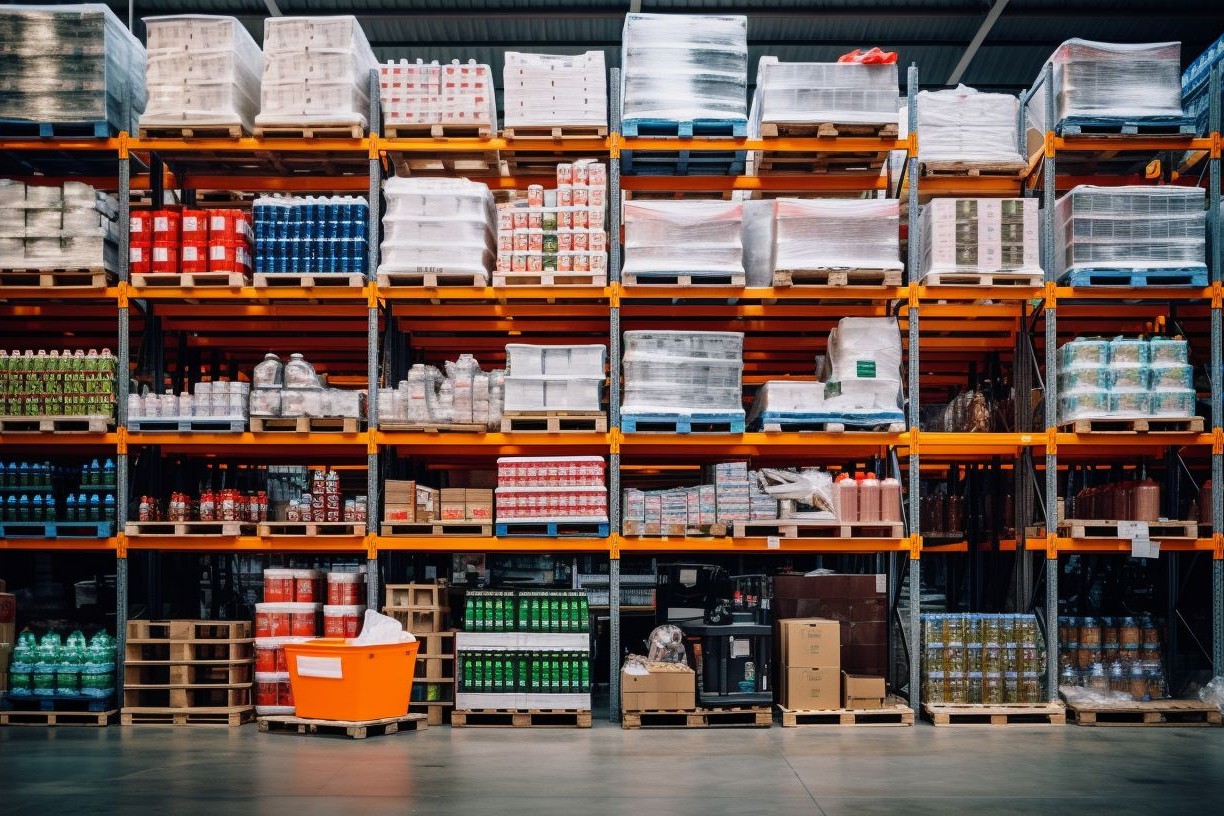
Managing a warehouse can often feel like juggling multiple balls at once, each representing tasks from inventory control to fulfilling customer orders efficiently. With global ecommerce on the rise, an organised, warehouse management solution has never been more critical – where even small improvements can lead to significant competitive advantages.
This article offers a deep dive into the world of warehouse management, presenting processes and benefits that streamline operations and boost performance across the board. Discover how mastering this domain could be your ticket to operational excellence.
Key Takeaways
Warehouse management is essential for linking production with customer fulfilment in a supply chain, involving coordination of processes such as inventory control, labour scheduling, and goods monitoring.
A robust Warehouse Management System (WMS) brings significant benefits by automating tasks, providing real-time data analytics to enhance productivity, and improving inventory accuracy to prevent overstocking or stockouts.
Effective warehouse management leads to streamlined operations which can result in cost savings through optimised space utilisation and reduced errors. It also ensures better customer service by delivering orders more quickly and accurately.
Key components like shipping and receiving, order fulfilment, put-away and storage are paramount in ensuring smooth warehouse operations that meet the increasing demands of global e-commerce efficiently.
Investing in workforce management is crucial for warehouses to stay competitive; this includes offering fair wages, investing in staff training programmes for safety compliance and using technology to maximise efficiency.
Defining Warehouse Management

Warehouse management stands at the heart of an integrated supply chain, serving as the crucial bridge between production and to meet customer demand and fulfilment. It encompasses a series of precisely coordinated manual processes, designed to control and oversee all operations within a warehouse environment, ensuring that goods flow efficiently from arrival to dispatch.
Warehouse Management Definition
Warehouse management systemises the day-to-day operations in a warehouse. It streamlines complex processes from receiving goods to shipping them out, ensuring that every item is accounted for and stored efficiently.
This aspect of supply chain management boosts accuracy to fulfil customer orders and speeds up order fulfilment, significantly enhancing overall productivity.
Effective warehouse and distribution centre management touches on various vital tasks; it integrates labour scheduling, space organisation and detailed monitoring of goods within a distribution centre. Ultimately, it ensures that customers receive their orders swiftly and accurately while keeping costs down – a top priority in any thriving business strategy.
Inventory Management vs Warehouse Management
Moving from the overarching definition of warehouse management, let’s delve into the distinction between inventory management and warehouse management. Both are critical for seamless operations, yet they serve unique roles within the supply chain.
| Aspect | Inventory Management | Warehouse Management |
|---|---|---|
| Focus | Deals with the optimisation of ordering, storing, and using inventory. | Encompasses the wider operational aspects, such as organisation, workforce, and order fulfilment. |
| Scope | Limited to tracking and managing stock levels, reorder points, and inventory turnover. | Broader scope including warehouse layout planning, staff management, and compliance with regulations. |
| Objective | Aims to maintain optimal stock levels and minimise carrying costs. | Strives for overall operational efficiency and fast, accurate order processing. |
| Activities | Monitoring stock, forecasting demand, replenishing inventory, and managing suppliers. | Coordinating receiving, storage, picking, packing, shipping, and handling returns. |
| Challenges | Dealing with overstocking or stockouts and accurate demand forecasting. | Space utilisation, workforce management, and integrating new technologies. |
| Technology | Inventory management systems for tracking stock levels and order management. | Warehouse management systems that automate tasks and provide real-time data analytics. |
| Benefits | Reduced holding costs and improved cash flow through efficient inventory turnover. | Streamlined operations lead to cost savings and enhanced customer satisfaction. |
It’s evident that inventory management is a subset of the broader warehouse management discipline. Implementing effective, warehouse optimisation and inventory management deals directly impacts the bottom line, ensuring customer orders are fulfilled swiftly and accurately, thereby keeping costs in check.
Core Benefits of Effective Warehouse Management

The implementation of robust warehouse management practices is pivotal, revolutionising the logistical backdrop of enterprises by enhancing operational fluency and customer satisfaction.
This strategic approach not only precipitates significant cost reductions but also primes businesses for a trajectory of sustained growth and market competitiveness.
Streamlined Operations
Efficient warehouse management software is a game-changer for speeding up all aspects of warehouse operations. Streamlined processes lead to faster product flow, from receiving to shipping, and ensure that items are stored and retrieved with pinpoint accuracy.
This efficiency reduces the time products spend in the warehouse, minimises handling costs, and accelerates delivery times. Enhanced inventory tracking systems keep tabs on stock levels in real-time, enabling swift response to demand changes without overstocking or running out.
Warehouse optimisation through streamlining not only boosts productivity but also fortifies the foundation for scalability. It allows warehouses to handle increasing volumes of orders without compromising service quality or delivery speed.
Optimised warehousing operations provide firms with a competitive edge by improving customer satisfaction through reliable order fulfilment. As we progress toward enhanced productivity, let’s delve into how precise inventory management plays a crucial role in maintaining an organised and effective warehouse environment.
Enhanced Productivity
Building on the foundation of streamlined operations, effective warehouse management directly contributes to enhanced productivity. By leveraging advanced technologies and implementing fulfilment strategies that optimise processes like batch picking and zone picking, warehouses can significantly increase output.
Automation plays a crucial role here; systems equipped with real-time data capabilities ensure that tasks are completed more swiftly and with fewer errors. Mobile devices assist in accelerating picking speed while software recommends the most efficient packing methods, all of which serve to expedite order fulfilment.
Tracking KPIs allows for continuous monitoring and improvement of warehouse operations, turning insights into action that boosts overall warehouse performance. Anticipating growth prompted by global e-commerce trends requires not only space expansion but also scaling up productivity measures to meet rising demands efficiently.
With precise coordination between material handling and logistics management, warehouses can ship products faster than ever before – satisfying customers and outpacing competition through superior operational efficiency.
Improved Inventory Accuracy
Increased productivity in warehouse operations often leads to a critical outcome – improved inventory accuracy. A well-oiled warehouse not only speeds up processes but also ensures that stock levels are meticulously monitored and recorded.
Accurate inventory tracking prevents overstocking, reduces instances of stockouts, and maintains the right balance of products. Employing best practices like First Expired First Out (FEFO) or First In First Out (FIFO), alongside robust warehousing technology, keeps your inventory precise.
Investing in an advanced Warehouse Management System (WMS) can transform how you track and manage your stock. Real-time data provided by such systems creates visibility into every aspect of your inventory, ensuring that each item is accounted for at every stage – from receiving to shipping out orders.
This real-time insight allows for better forecasting, informed decision-making, and minimises costly errors – ultimately leading to tighter quality control, over the entire management warehouse process while consistently meeting customer expectations with accurate order fulfilment.
Cost Savings
Effective warehouse management serves as a catalyst for cost savings by streamlining the flow of goods and optimising storage space. Utilising industry best practices ensures that both operating costs and expenses are reduced, thanks to more efficient use of resources and energy.
Optimised processes result in faster turnaround times, cutting down on costly delays and errors that can impact the bottom line. Automation technology, when used correctly after establishing standardised procedures, further drives down costs by replacing manual tasks with quicker and more accurate automated solutions.
Directors will note that investing in a robust warehouse management system (WMS) is key to unlocking these savings. Such systems not only lower operational costs but also enhance inventory control and accuracy – vital components for any business logistics strategy aiming to reduce waste and redundancy.
Improved transparency across the supply chain also means better visibility into expenditures and potential areas for additional savings. As we shift our focus towards customer experience, it’s essential to understand how streamlined warehousing operations contribute significantly to satisfying client expectations – a topic explored next under ‘Better Customer Service’.
Better Customer Service
Ensuring customers receive their purchases promptly and without errors is essential for any business aiming to thrive in today’s competitive landscape. Optimised warehouse management plays a pivotal role in achieving this, resulting in customer satisfaction that sets companies apart.
Warehouses equipped with advanced WMS technology can promise quicker turnaround times by streamlining inventory storage and tracking and reducing the risk of shipping errors.
As directors, it’s clear that investing in robust warehousing strategies and systems is not just about storing products; it’s about fostering loyal customer relationships through dependable service.
Smoothly running warehouse operations translate directly into positive customer experiences, from the speed of order processing to the precision of deliveries reaching their destination on time.
A focus on these areas within your warehouse management approach serves as a springboard for exceptional service levels that strengthen your market position.
Key Components of Warehouse Management
At the heart of effective warehouse management lie several critical elements that shape the day-to-day operations, ensuring a fluid and efficient supply chain. These components are essential for maintaining order within the bustling environment of modern warehouses, contributing to enhanced overall performance and customer satisfaction.
Inventory Control
Inventory control is the backbone of a well-oiled warehouse, ensuring that every product’s journey from arrival to dispatch is tracked and optimised. It involves managing stock levels effectively to manage inventory and avoid excess or insufficient inventory that can tie up capital or delay order fulfilment.
This crucial process demands precision; meticulous record-keeping paired with real-time insight provided by systems like WMS ensures your warehousing operations stay agile and responsive.
By leveraging technology, businesses gain visibility over their entire inventory landscape, reducing errors, and making informed decisions about stocking and other inventory location reordering raw materials.
Efficient inventory management not only saves time but also cuts costs by preventing the accumulation of obsolete stocks. Implementing strategies such as FEFO (First Expired First Out) picking ensure products are moved through the system in an optimal manner for maximum freshness – particularly crucial for perishable goods.
With these processes in place, companies pave the way for smooth order fulfilment – an essential component poised to take centre stage in warehouse management discussions.
Order Fulfilment
Order fulfilment is the linchpin of warehouse management, where speed and accuracy dictate customer satisfaction and higher profit margins. It’s a multifaceted process starting with picking items from their storage locations, navigating through packing procedures that safeguard products during transit, and culminating in dispatching orders to meet delivery timelines.
Emphasising strategies like batch picking or FEFO ensures not only pace but also precision, ultimately enhancing the customer experience.
Harnessing technology such as Warehouse Management Systems (WMS) plays a critical role in orchestrating order fulfilment seamlessly. It enables real-time tracking and optimised inventory flows within warehouses.
Directors can leverage these tools to ensure that each package leaves the dock primed for prompt delivery while keeping costs under control – a testament to a well-oiled warehouse operation driven by strategic management and cutting-edge solutions.
Shipping and Receiving
Seamless order fulfilment hinges on the pivotal role of shipping and receiving – a critical juncture in warehouse operations. The process rapid order fulfilment kicks off with meticulous verification of goods as they arrive, ensuring that what was ordered matches what is received.
Then items are checked for quality, recorded accurately, and readied for storage or dispatch; this serves as the backbone for streamlining subsequent warehousing tasks.
Effective management here means smart coordination between docks, delivery schedules, and staff assignments. Trucks roll in and out smoothly when well-managed dock scheduling aligns with staff availability to handle loads.
Utilising WMS capabilities can optimise these processes further by predicting peak times for receiving goods or preparing shipments. This precision keeps inventory moving efficiently through the facility and directly contributes to better customer satisfaction with timely deliveries – all while keeping your warehousing KPIs on target.
Workforce Management
Efficiently transitioning from the logistics of shipping and receiving, it’s crucial to address the backbone of warehouse operations: workforce management. This aspect is pivotal in ensuring that every process runs smoothly, as a well-coordinated labour management team directly enhances productivity and maintains operational excellence.
Warehouse managers must stay attuned to industry trends such as increasing wages for skilled workers due to intense market competition for talent retention. Optimal staffing strategies are imperative in countering shortages like the significant 80,000 truck driver shortfall in the United States or the HGV driver scarcity faced by the UK.
Creating an environment where workers can thrive involves more than just competitive pay; it means investing in training programmes that foster expertise and ensure safety compliance.
It also involves leveraging technology such as WMS functions that streamline tasks and allow staff to focus on complex problem-solving instead of repetitive actions. With such systems providing real-time data, managers can better monitor warehousing KPIs and make informed decisions about resource allocation and performance incentives – key areas where strategic workforce management intersects with overall efficiency gains within a managed warehouse setting.
Warehouse Management Processes Explained

In our comprehensive overview of warehouse management, we delve into the intricacies of essential processes that contribute to a seamless operational workflow; continue reading to uncover how these practices can revolutionise your warehousing strategy.
Receiving Goods
Receiving goods is the crucial first step in effective warehouse management. It sets the stage for maintaining accurate inventory levels and ensures that operations commence without hitches.
Staff meticulously count each item, conduct thorough inspections to catch any defects, and diligently record all details about the incoming merchandise. This level of precision plays a significant role in managing warehouse efficiency and avoiding costly errors down the line.
Utilisation of cutting-edge Warehouse Management Systems (WMS) transforms this process by automating it, allowing for real-time insights into stock levels upon receipt. With these systems in place, directors can rest assured that warehousing KPIs are met consistently.
They also guarantee that every piece of inventory is accounted for from the moment it arrives – streamlining subsequent processes such as storage, picking, and shipping.
Put-Away and Storage
Following the critical task of receiving goods, the put-away process efficiently transports items from the docks to their optimum storage spaces. This transition is not merely about moving inventory; it’s an opportunity to maximise warehouse space and streamline subsequent picking operations.
Precise placement during put-away reduces handling times, minimises potential damage, and ensures products are readily accessible when needed.
In storage areas, managing your warehouse means keeping everything in check – from ensuring that perishable items are stored with proper care to maintaining an organised system where every item has a specific place.
This attention to detail leads to swift retrieval, ultimately speeding up the entire supply chain while preventing errors. Strategically organising inventory aligns with warehousing best practices and paves the way for efficient management of warehouse and human resources too.
Picking and Packing
After ensuring that goods are properly stored, the next critical phase is picking and packing. This step must be carried out with precision to meet customers’ expectations for quick and accurate delivery.
Warehouse management systems can streamline this process by providing real-time data on inventory levels, which aids in swift selection of products based on FEFO or FIFO principles – first expired first out or first in first out – depending on product type and requirements.
In optimising your warehouse’s picking and packing workflow, consider implementing strategies such as mobile barcode labelling or RFID tagging for easy identification and tracking of items.
These technologies contribute significantly to reducing errors during order fulfilment, thus enhancing overall efficiency in fulfilment centres. By focusing on refining these operations within your managed warehouse environment, you directly influence customer satisfaction as well as operational cost savings – two fundamental metrics for successful warehousing KPIs.
Shipping and Transportation
Having meticulously picked and packed items, the next critical step in the warehouse management process is effective shipping and transportation. This phase ensures that goods leave the warehouse on time and reach their destination efficiently.
Warehouse managers often implement fulfilment strategies like batch picking or zone picking to expedite shipments. With global e-commerce set to soar past $29 trillion, fast, reliable delivery has never been more crucial for customer satisfaction.
Organisations need robust processes for loading, routing, and tracking shipments to stay competitive in today’s fast-paced market.
Utilising cutting-edge technology like a warehouse management system (WMS) can dramatically improve the accuracy of shipping operations. Such systems enable real-time visibility over outbound logistics, providing directors with peace of mind that products are delivered as promised.
Furthermore, integrating WMS with existing business software streamlines communication across departments – from order taking to delivery – fostering seamless coordination within complex supply chains.
These tools also help tackle challenges such as finding energy-efficient routes or optimising truckloads for cost-effective transportation solutions important for managing a modern warehouse effectively.
The Role of Warehouse Management Systems (WMS)
The integration of Warehouse Management Systems (WMS) stands as a pivotal element in modernising warehouse operations, enabling businesses to achieve heightened efficiency and accuracy.
Through sophisticated software solutions, WMS act as the technological backbone that propels warehousing functions toward strategic advantages in real-time decision-making and operational excellence.
Automation of Warehouse Tasks
Automation in warehouses is transforming the way inventory is managed and daily operations are conducted. With advanced Warehouse Management Systems (WMS), tasks like picking, packing, and shipping are automated, leading to enhanced efficiency across the board.
Such systems offer real-time data analytics, allowing for immediate insight into stock levels and facilitating smarter decision-making processes. These improvements aren’t just beneficial – they’re fast becoming essential for staying competitive in today’s market.
Directors seeking to refine warehouse processes and workflows will find automation an invaluable ally. Adopting a WMS can streamline demand analyses and sales channel forecasts whilst optimising order accuracy through efficient operating plans.
Automating repetitive tasks not only speeds up operations but also reduces errors that can occur with manual processing. This shift towards automation helps ensure that businesses remain agile, resilient, and customer-focused – a trifecta key to success in the dynamic world of warehousing management.
Real-Time Data and Analytics
Harnessing real-time data and analytics transforms warehouse management into a powerhouse of efficiency and strategic insight. With a sophisticated Warehouse Management System (WMS), managers gain the opportunity to automate complex demand analyses, obtain instant visibility into stock levels, and produce effective daily operating plans with precision.
These analytics enable you to track Key Performance Indicators (KPIs), offering immediate feedback on operational performance that can shape decision-making. Identifying patterns within your data guides you to streamline processes, bolster productivity, and craft an enhanced customer experience – all pivotal in staying ahead in today’s competitive marketplace.
Dive deeper into the specifics of how WMS functions by leveraging this real-time information; it becomes your radar for navigating through inventory challenges and driving business growth.
The system’s ability to forecast sales accurately means you’re always prepared, never caught off guard by surges or dips in demand. Such agility is essential not only for maintaining optimal inventory levels but also for fostering adaptable strategies that respond swiftly to market changes – a clear edge in logistics management.
Moving forward, integration with other business systems opens doors to seamless operations across different departments within your organisation.
Integration with Other Business Systems
Integrating your warehouse management system (WMS) with other business software streamlines operations, cutting through the complexity of modern commerce. Imagine a central hub where inventory levels sync in real-time with sales data from your e-commerce platform.
Orders flow seamlessly to the warehouse floor, directing warehouse staff efficiently via handheld mobile devices. The result? A unified and efficient process that maximises productivity and slashes time-wasting manual inputs.
This level of integration reduces errors across supply chains and boosts visibility for better decision-making. It ties together critical systems across supply chain disruptions such as customer relationship management (CRM), enterprise resource planning (ERP) solutions like Dynamics 365 Inventory Management, and purchasing software to ensure consistency in data handling.
With up-to-the-minute analytics at their fingertips, directors can drive strategic improvements while confidently maintaining control over the entire operation network.
Overcoming Common Warehouse Management Challenges
Confronting and resolving the typical hurdles in warehouse management, such as space optimisation and safety standards, is essential for maintaining an efficient operation – discover innovative strategies that can transform these challenges into opportunities for growth.
Maximising Space Utilisation
Efficient use of space is paramount in warehouse management, where every square metre counts towards operational effectiveness. Embracing advanced warehouse management systems provides directors with real-time insights that fine-tune storage arrangements and daily operations to get the most out of limited space.
Strategic placement of goods and smart inventory control minimises excess stock while ensuring that customer demand is met without delay.
Adopting best practices in warehouse organisation involves dense storage options such as multi-tiered racks or mezzanine floors, which drastically optimise space and increase available area for merchandise.
By keeping abreast with these methods, managers can orchestrate a dynamic environment that flexes with shifting inventory requirements, upholding a responsive and resilient warehousing operation.
Moving forward, prioritising safety measures alongside these advancements becomes crucial to maintaining not only efficiency but also workplace integrity.
Ensuring Safety and Compliance
As we optimise warehouse space to reduce operating costs, let’s shift our focus to a critical aspect: safety and compliance. Keeping the workplace secure prevents accidents that could lead to severe injuries or even fatalities, safeguarding employees’ well-being and the company’s bottom line.
Implementing rigorous safety standards not only protects staff but also ensures operations adhere to legal regulations, maintaining your business’s integrity and reputation. Regular checks identify potential hazards before they escalate into serious issues, demonstrating a proactive approach to workplace safety.
Warehouse managers must stay vigilant about occupational health procedures by instituting policies such as appropriate personal protective equipment (PPE) for all staff members and clear signage around hazardous areas.
Ongoing training programmes help teams understand best practices in emergency response and risk management, creating an environment where every individual is equipped with knowledge that fosters a culture of safety-first thinking.
Adopting New Technologies
Staying ahead in the rapidly evolving warehousing sector means embracing cutting-edge technologies to streamline operations and boost efficiency. Handheld mobile devices, for example, have transformed the way items are picked from shelves, marrying speed with remarkable accuracy.
These advancements come with algorithms that suggest optimal packing methods based on product dimensions, ensuring safety while maximising space.
Acknowledging global ecommerce’s explosive growth – predicted to hit over $29 trillion shortly – warehouses must evolve or risk becoming obsolete. Most warehouse operations now consider expansion plans imperative.
The implementation of innovative Warehouse Management Systems (WMS) is central to this strategy; it provides real-time data analytics and automates routine tasks, which directly correlates with heightened order accuracy and operational efficacy for management warehouses seeking a competitive edge.
The Future of Warehouse Management
As technological advancements continue to reshape industries, warehouse management stands on the brink of a transformation. Emerging trends and innovations are poised to redefine efficiency and productivity for warehousing operations globally, promising unprecedented levels of optimisation in the logistics sector.
Trends and Innovations
Advancements in warehouse management are keeping pace with the global ecommerce boom, with industry leaders seeking ever-more innovative ways to streamline operations and bolster efficiency.
Robotics and automation have started revolutionising picking and storage techniques, cutting down on manual tasks and speeding up fulfilment. Anticipating a prodigious $29 trillion market by 2023, warehouses and distribution centres are expanding their capabilities rapidly to accommodate the surge.
Smart technology is at the forefront of this transformation. The use of handheld mobile devices enhances both speed and accuracy in stock control while radio-frequency identification (RFID) tags enable instant tracking of inventory across vast warehouse spaces.
These innovations not only foster leaner operations but also support complex fulfilment strategies like batch picking or FEFO, essential for maintaining customer satisfaction in a competitive landscape where fast shipping is no longer a luxury – it’s an expectation.
Conclusion
Warehouse management stands as a central pillar in the structure of modern commerce, ensuring products flow smoothly from suppliers to customers. Through strategic organisation and use of cutting-edge systems, it boosts efficiency at every stage.
By mastering warehouse operations, businesses unlock improvements in speed, accuracy, and improve customer satisfaction throughout. Embrace the complexities of warehousing to transform challenges into opportunities for growth and success.
The future shines bright for those who innovate and optimise within their warehouse walls.
FAQs
1. What exactly is warehouse management?
Warehouse management involves overseeing the operations in a managed warehouse, which includes managing inventory, organising goods flow and improving efficiency through warehousing best practices.
2. How can a Warehouse Management System (WMS) benefit my business?
A WMS can streamline your warehousing operations by automating processes, aiding in the management of inventory levels and providing valuable warehousing metrics to improve overall productivity.
3. Can Microsoft Dynamics 365 Inventory Management software help with my warehouse operations?
Yes, Microsoft Dynamics 365 Supply Chain Management offers tools that integrate seamlessly into your ERP system for optimal control over your warehousing management process and workflow.
4. Why are best practices important in warehouse organisation?
Implementing best practices in good warehouse management organisation ensures correct product flow, enhances safety and maximises space – leading to more efficient operation of your warehouse and better service for customers.
And there's more...