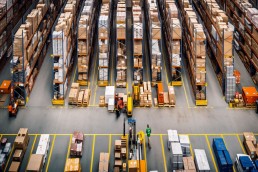
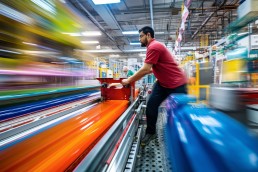
Warehouses are evolving, and keeping pace can be a challenge for business leaders. Amid rising consumer demands, technology is reshaping how products are stored and moved. This article unpacks the latest future of warehousing advancements that streamline operations, offering practical insights for modernising your storage facilities.
Discover the future now; it’s transformative.
Key Takeaways – Future of Warehousing
Warehouses are becoming highly advanced with the integration of AI, robotics, and IoT technologies to meet consumer demands for faster delivery times.
Sustainability is now a core focus in warehousing, with eco – friendly practices like using renewable energy sources and sustainable materials gaining traction.
The adoption of multichannel fulfilment strategies allows warehouses to effectively manage inventory across different sales channels, improving customer service.
Upskilling the workforce is crucial as new technology trends emerge; training in automation and data analytics can empower employees for future challenges.
Smart technology solutions like predictive analytics are being utilised to efficiently navigate labour shortages and scale operations during peak demand periods.
Driving Forces Behind Warehousing Evolution – The Future of Warehousing

The warehousing industry is undergoing a seismic shift, propelled by dynamic consumer patterns and technological breakthroughs. These catalysts are not only redefining efficiency but also reshaping the very landscape of modern-day storage and distribution facilities.
Consumer Demand and E-commerce Growth
Shoppers today crave speed and efficiency, with many expecting deliveries within a day or even hours of ordering. This hunger for instant gratification drives the warehousing industry to revolve around last-mile delivery solutions and rapid fulfillment strategies.
E-commerce has indeed set a new standard; customers now shop around the clock, necessitating warehouses that operate 24/7 to keep up with continuous order flows.
Smart warehouse managers are tuning into these changing consumer behaviours, ensuring their operations can swiftly adapt to surging online marketplaces. With customer satisfaction at stake, modern warehouses must embrace flexibility in shipping options and create systems for immediate product access.
Moving towards the next topic, technological advancements play an equally critical role in shaping these dynamic warehousing environments.
Technological Advancements
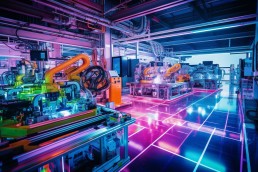
As consumer demands dictate a faster, more efficient delivery of goods, technological advancements have risen to meet these challenges head-on. Automation and robotics are now pivotal elements in modern warehousing, introducing levels of precision and speed that were once unattainable.
Artificial intelligence (AI) is transforming warehouse management systems (WMS), enabling real-time decision-making that maximises efficiency and reduces human error.
Warehouse operations benefit greatly from the introduction of automated guided vehicles (AGVs) mobile robots and drones for inventory management. These technologies ensure a streamlined flow of goods within the warehouse environment while providing valuable data analytics that enhance supply chain visibility.
In addition, machine learning algorithms predict demand fluctuations with greater accuracy, ensuring just-in-time inventory practices are optimised for peak performance without excess stockpiling.
Embracing these technological changes isn’t just about keeping pace; it’s about setting the standard for innovation in warehousing services.
Sustainability and Social Responsibility
Warehouses are stepping up their game to address global environmental concerns. They’re no longer just about storing products; they’re evolving into eco-friendly hubs that focus on minimising carbon footprints and promoting ethical practices.
Modern warehousing is pivoting towards green operations, with initiatives like recycling programmes, sustainable building materials, and energy-efficient systems being implemented.
Innovative, warehouse owners and managers recognise the need for aligning operations with the broader values of society. By incorporating sustainability in decision-making processes, warehouses not only contribute positively to our planet but also meet the increasing consumer demand for socially responsible business practices.
This shift is revolutionising industry standards and setting new benchmarks for competitors.
Looking ahead, these developments pave the way for a discussion on current trends shaping warehousing – a key topic that takes us further into understanding how integrated supply chain ecosystems and rapid fulfilment strategies are becoming integral to modern distribution centres.
Current Trends Shaping the Future of Warehousing
As the warehousing and logistics industry further pivots towards a future marked by efficiency and adaptability, current trends are firmly rooted in technological integration and customer-centric approaches.
These innovations not only redefine how warehouses operate but also set new benchmarks for service levels across the whole supply chain industry landscape.
Integration with Supply Chain Ecosystems
Warehouses are no longer standalone structures; they’re becoming integral parts of a cohesive and efficient supply chain ecosystem. This integration streamlines processes, from inventory management to distribution, ensuring products move smoothly and efficiently from manufacturers to consumers.
Modern warehouses thrive on connectivity – using cloud-based services and Internet of Things (IoT) technologies for real-time tracking that synchronises every step in the warehouse of the future logistics network.
Embracing this seamless connection allows warehouse operators to respond swiftly to market demands and customer needs. Predictive analytics play a crucial role by forecasting trends and guiding inventory decisions, further tightening the link between production, warehousing, and delivery services.
This efficient cohesion not only boosts operational effectiveness but also sharpens competitive advantage as businesses adapt to the fast-paced changes in consumer behaviour and retail dynamics.
Emphasis on Rapid Fulfilment and Customer Service
Today’s consumers expect swift service and that puts warehouses at the heart of delivering satisfaction. The race for faster turnaround times shapes every aspect of modern warehousing, from inventory management to shipping practices.
Retailers are now prioritising 2-day delivery options and improving shipment accuracy to keep pace with customer expectations. This shift has sparked an evolution in warehouse operations, where lean principles like just-in-time inventory control play a vital role in streamlining processes for rapid order fulfilment.
Harnessing the power of big data analytics is no longer optional; it’s critical for optimising supply chains and cutting costs while maintaining top-tier customer service levels. Data-driven insights enable warehouses to predict demand more accurately, manage resources effectively, and deliver orders with precision.
As they integrate new technologies and foster continuous improvement, warehouses are not just places for storage – they’re becoming sophisticated hubs committed to exceeding customer needs.
Moving forward, these advancements pave the way towards greener practices in warehousing as we turn our attention towards sustainability initiatives next on our agenda.
Commitment to Green Practices
Warehouses are turning over a new leaf, embedding sustainability at the heart of operations. The adoption of renewable energy sources and recycling programmes reflects this deep-seated commitment to environmental stewardship.
Modern warehousing is not just about storing goods; it’s about preserving our planet for future generations. Managers of logistics companies are now rethinking packaging solutions and shipping methods, aiming for maximum efficiency with minimal waste.
Designers are crafting flexible, warehouse space layouts that readily integrate advanced automation technologies. This strategic approach enables facilities to switch up practices without hefty capital investments – all while staying true to green principles.
Such initiatives demonstrate how the industry recognises its responsibility to the environment, fostering innovation in eco-friendly design and operation that pave the way towards a sustainable future.
Understanding these changes sets an essential context for discussing ‘Adoption of Multichannel Fulfilment Strategies’, which holds significant relevance in today’s diverse consumer landscape.
Adoption of Multichannel Fulfilment Strategies
Building on the commitment to sustainability, modern warehouses are increasingly adopting multichannel fulfilment strategies. This approach allows companies to seamlessly manage inventory and order fulfilment across various sales channels, ensuring fast and accurate demand and flexible shipping options tailor-made for the ecommerce boom.
With customers expecting rapid delivery times, a multichannel strategy integrates brick-and-mortar locations with online platforms, providing a cohesive customer experience while optimising distribution networks.
Embracing this trend means leveraging the warehouse automation market digitalisation and smart technologies to forecast demand accurately and allocate resources effectively. It involves transforming traditional storage facilities into futuristic warehouses capable of handling orders from smartphones, tablets, social media platforms, as well as through conventional retail avenues.
These multifunctional centres play a crucial role in maintaining supply chain agility – a necessity in today’s dynamic market environment driven by constantly shifting consumer behaviours and expectations.
Emerging Technologies and Innovations – The Future of Warehousing

In the dynamic arena of warehousing, emergent technologies and innovations stand as pillars for revolutionising operations, where cutting-edge tools augment efficacy and elevate the strategic advantage.
These advancements are not merely disrupting traditional practices but are shaping a new frontier in warehouse management that is smarter, faster, and more responsive to the evolving marketplace.
Internet of Things (IoT) Implementation
Warehouses across the globe are rapidly implementing Internet of Things (IoT) technologies to revolutionise inventory management and streamline operations. Smart sensors and connected devices gather valuable data in real-time, allowing for unprecedented levels of operational insight.
This influx of actionable intelligence enables managers to fine-tune processes for maximum efficiency and reduce costs.
Embracing IoT positions warehouses at the forefront of innovation, delivering competitive advantages that can’t be overstated. Not only do these systems enhance operational efficiency, but they also pave the way for superior customer service by ensuring products are stocked optimally and ready to ship without delay.
As a result, modern warehouses equipped with IoT capabilities stand out as leaders in a fast-paced industry where quick fulfilment is not just appreciated but expected by customers.
Advances in Robotics and Automation
Robotics and automation are revolutionising the warehousing industry, propelling modern facilities into the future with remarkable efficiency gains in storage costs. These intelligent systems utilise advanced algorithms and extensive computing power to streamline complex tasks such as packing, sorting, and transporting goods.
Automated guided vehicles glide through aisles with precision, while robotic arms deftly handle materials too cumbersome or delicate for human workers.
The integration of these technologies has led to faster fulfilment times and significant cost savings. Automation technology is also pioneering new forms of automated warehouse and fulfilment that respond dynamically to changing demands.
Robotic process automation ensures that repetitive tasks are executed flawlessly every time, freeing up staff to focus on more strategic operations within distribution centres. This relentless march towards innovation is setting a new standard in warehousing processes – a testament to the transformative potential of robotics and machine intelligence in redefining logistics landscapes.
Application of Big Data and Predictive Analytics
Warehouses are harnessing the power of big data and predictive analytics to revolutionise inventory management. As the global market for predictive analytics is projected to surge, reaching USD 35.45 billion by 2027, forward-thinking directors recognise this as not just a trend but as a pivotal investment.
Predictive tools analyse massive datasets to forecast demand patterns with remarkable accuracy, enabling warehouses to optimise stock levels and avoid costly overstock or stockouts.
Implementing advanced analytics means operations become more proactive than reactive. Machine learning algorithms dive deep into past trends, seasonal peaks, and consumer behaviour predictions, tailoring purchasing decisions to anticipated needs.
This ability significantly enhances operational efficiency in modern warehouses while also reducing waste and increasing customer satisfaction through timely delivery of products. With such transformative technologies at our disposal, warehousing is set on a path where smart data leads the way in strategic decision-making.
Utilisation of Blockchain for Transparency
Blockchain technology marks a revolutionary step in achieving unparalleled transparency within warehousing operations. As goods move through the supply chain, blockchain acts as an immutable ledger, recording every transaction and touchpoint with exact precision.
This provides managers with real-time visibility into product sourcing and processes, enabling them to verify authenticity and streamline inventory management systems. With such a secure platform, businesses can confidently assure customers about the provenance of their products while also deterring counterfeit activities.
Implementing blockchain is not just about security; it’s essentially reinventing trust in warehouse transactions and paving the way for next-gen operational intelligence. Directors have at their fingertips a tool that fosters collaboration across all parties involved in the supply chain, from manufacturers to transportation partners.
These transparent practices aren’t only beneficial internally – they resonate well with consumer awareness trends demanding ethical sourcing and genuine products.
Moving forward, as we consider warehouse technology trends and how emerging technologies like IoT and AI are further integrating into warehouse management systems, the synergies between these advancements will define the future landscape of warehousing innovation.
The Human Element in the Future of Warehousing

The evolution of warehousing inevitably intertwines with the workforce, propelling a future where upskilling and tech empowerment go hand-in-hand to foster a more efficient and sophisticated industry – discover how human ingenuity is driving this transformation.
Workforce Adaptation and Upskilling
Modern warehouses are facing a significant shift as artificial intelligence starts to redefine operations. Directors must focus on workforce adaptation and upskilling to stay ahead in the evolving warehousing landscape.
Adequate training programs must be established to equip employees with the knowledge to operate new warehousing technology trends effectively.
Employees need opportunities to learn how to manage automated systems, from simple conveyors to complex autonomous guided vehicles.
Upskilling involves introducing staff members to AI-driven tools such as real-time location systems and predictive analytics for demand forecasting.
Workers will thrive when given instruction on using mobile devices and warehouse management system (WMS) software that streamlines processes.
It is critical that staff are comfortable with data mining techniques, which can dramatically improve customer service levels and shipment accuracy.
Warehouses should integrate continuous learning cultures by offering workshops in augmented reality (AR) applications and other emerging technologies.
Investing in the human element is just as important as implementing futuristic warehouse solutions – human expertise steers these innovations towards success.
Encouraging collaboration between different departments ensures smooth adoption of new practices and enhanced communication through technology like video-conferencing.
Providing leadership pathways can inspire employees, fostering a sense of ownership over the transformation process within modern warehouses.
Enhancing Efficiency through Employee-Empowering Tech
As industries prioritise workforce adaptation and upskilling, the right technological tools can significantly impact productivity by empowering employees. Smart wearables and intuitive user interfaces on handheld devices are now standard in modern warehouses, giving staff real-time access to data that streamlines decision-making processes.
These employee-empowering technologies ensure tasks like inventory management become more accurate and less time-intensive.
Empowered employees make informed decisions quickly, leading to faster operations and greater job satisfaction. With wearable gadgets, warehouse workers can scan items hands-free, reducing errors and increasing the pace of fulfilment.
Bigger gains come from automation technologies which take over repetitive tasks, freeing humans for complex problem-solving activities – this shift not only boosts efficiency but also fosters a culture where innovation thrives within the team.
Navigating Challenges in the Future of Warehousing
In the complex world of warehousing, intelligent strategies are essential to overcome persistent obstacles like labour shortages and fluctuating demand, setting the stage for a more resilient future in the logistics sector – discover how innovation is steering this transformation.
Addressing the Labour Shortage with Smart Solutions
Labour shortages in warehousing demand innovative solutions. Smart, warehouse technology provides the key to managing and overcoming these challenges.
Implement AI-driven automation to perform repetitive tasks, freeing up human workers for more complex responsibilities.
Utilise 5G networks for enhanced connectivity, ensuring quick communication between automated systems and human supervisors.
Introduce flexible robots that can navigate warehouses safely alongside employees, boosting productivity and filling labour gaps.
Apply lean inventory management principles like just-in-time to reduce waste and make operations more efficient.
Deploy advanced analytics to forecast staffing needs accurately, enabling better planning during peak periods.
Leverage predictive analytics to anticipate equipment maintenance, preventing downtime and ensuring continuous workflow.
Invest in workforce upskilling programmes that empower employees with the skills needed to work alongside new technologies.
Equip staff with user-friendly devices and interfaces that simplify interactions with complex systems, aiding quick adaptation.
Explore partnerships with educational institutions to create a pipeline of skilled workers ready for modern warehouse demands.
Embrace collaborative autonomous vehicles within warehouse environments to transport goods efficiently, reducing the manual load on workers.
Scaling Operations for Peak Demand Periods
Peak demand periods present a significant challenge to warehousing operations. Directors must strategise to scale up efficiently, with operational costs and ensuring that consumer needs are met without compromising service quality.
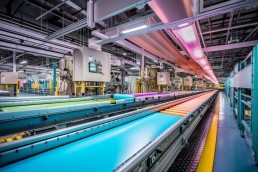
Invest in automation: Warehouse automation streamlines processes, allowing for rapid scaling during high-volume times. Conveyors, sortation systems, and automated storage and retrieval systems (AS/RS) reduce the need for manual handling and speed up movement within the warehouse.
Implement advanced robotics: Robotics technology can supplement human labour, especially during peak seasons. From picking to packing, robots increase productivity and reduce errors, which is essential when order volumes spike.
Utilise artificial intelligence (AI): AI helps forecast demand and optimises inventory management. Predictive analytics anticipate customer behaviour patterns and adjust stock levels accordingly to avoid overstocking or stockouts.
Foster employee upskilling: A well-trained workforce adapts more readily to new technologies and increased workloads. Providing ongoing training ensures that staff can operate new systems effectively.
Expand temporary labour pools: Hiring temporary workers for peak periods adds flexibility. Effective onboarding practices ensure these workers integrate quickly into existing operations.
Enhance supply chain integration: Close coordination with suppliers can help manage incoming inventory better and meet customer expectations for timely shipments during busy times.
Leverage cloud-based technology: Cloud computing offers scalability on demand. Access to real-time data across the supply chain enables quicker decision-making and more agile responses to changing market conditions.
Conclusion: Embracing Change in Warehousing Practices – The Future of Warehousing
Warehouses are evolving into sophisticated hubs powered by cutting-edge technology and inspired innovation. They now stand at the forefront of industry transformation, where efficiency and sustainability merge with customer service excellence.
Engaging with these changes will be pivotal for directors seeking to lead their operations into a prosperous future. The drive forward hinges on proactive adaptation, harnessing technological leaps while fostering an agile workforce.
In embracing this dynamic progression, the warehousing sector unlocks a realm of possibilities, setting new benchmarks in supply chain management.
FAQs – Future of Warehousing
1. What new technologies are shaping the future of warehousing?
Future warehouses will feature cutting-edge tech like autonomous road vehicles for transport, robots with face recognition to manage stock, and radio frequency identification (RFID) tags to track inventory effortlessly.
2. How will self-driving vehicles affect warehouse operations?
Self-driving vehicle technology, including lorries and other self-driving vehicles, will transform transportation within the supply chain management system by improving efficiency and reducing costs in the lorry industry.
3. Can advancements in computers influence warehousing efficiency?
Absolutely! Modern warehouses are leveraging increased computational power and wireless connectivity to automate tasks, leading to faster processing times and higher energy efficiency in manufacturing processes.
4. Are businesses ready for technological changes in their warehouse model?
Many businesses are adapting their business models by integrating technologies such as virtual reality for training staff or cryptocurrency for seamless pricing transactions – anticipating a complete futuristic warehouse transformation.
5. Why is it important for warehouses to adopt these new technologies?
Warehouses must embrace these sustainable warehousing practices and technology trends not only to keep up with Amazon’s growing dominance but also because they play a vital role in combating climate change through more sustainable operation practices.
And there's more...