In a fast-paced market, finding the best way to manage your supply chain can be tough. A centralised supply chain places all control under one roof for better oversight. This article dives into the benefits and drawbacks of such an approach, aiding in smarter business decisions.
Read on and discover if this method suits your company’s needs.
Key Takeaways
Centralised supply chain management enhances efficiency and control by consolidating decision-making, simplifying communication, and allowing for bulk purchasing benefits. This leads to cost savings and consistent quality across operations.
However, this centralisation also introduces the risk of inflexibility and higher vulnerability to systemic failures since decisions must go through one central point, which can slow response time to market changes.
Centralised systems might struggle with adapting swiftly to local customer demands due to a more uniform approach that may not cater to regional nuances, potentially impacting customer satisfaction negatively.
With all functions directed from a single location, centralisation offers better data analytics capabilities but depends heavily on advanced technology like cloud-based inventory management software for real-time efficiency gains.
Decentralising supply chains could offer solutions where regional responsiveness is crucial though it comes at the expense of potential inefficiencies in maintaining standard practices and coordinating widespread operational units.
Understanding Centralised Supply Chain Management

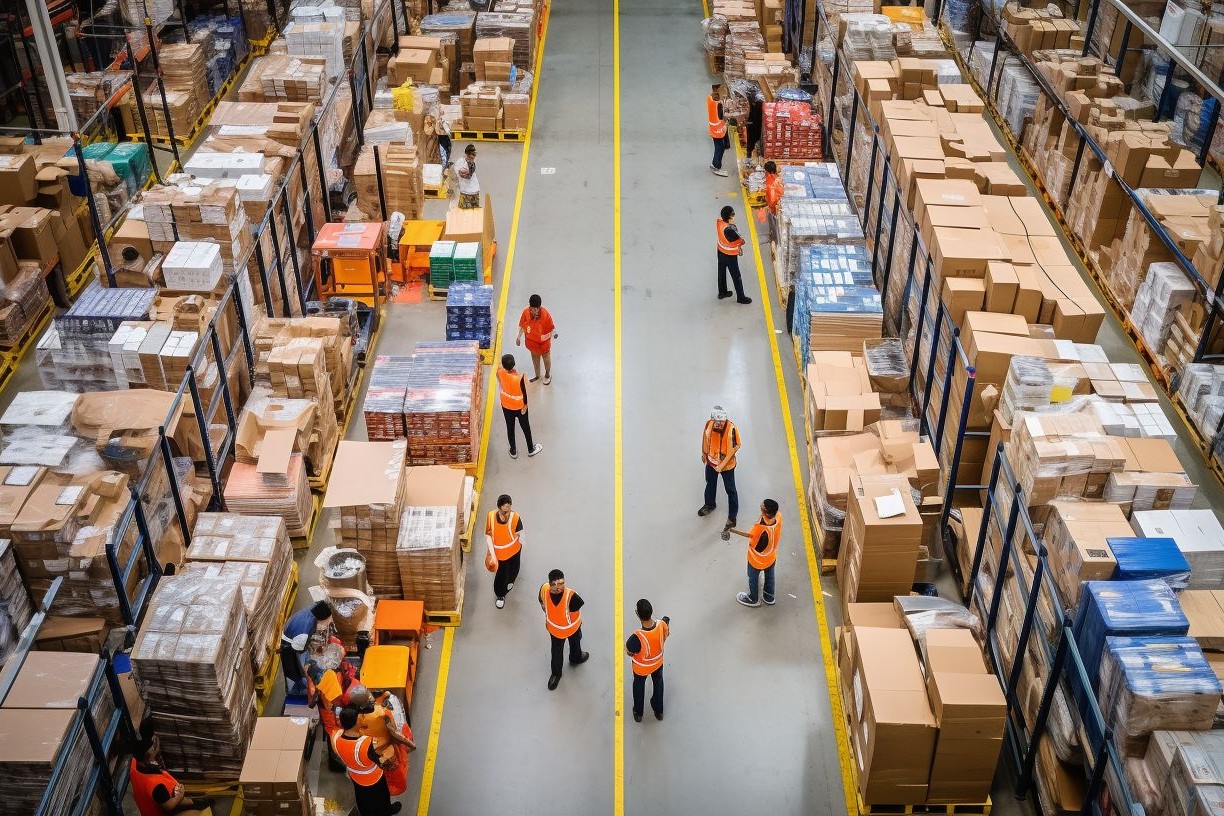
Centralised supply chain management streamlines decision-making and operations by concentrating authority within a centralised, single hub. This model hinges on centralised purchasing, where purchasing team in a dominant head office manages procurement and distribution across the entire network.
With all key functions directed from this central point and centralised purchasing model, companies can effectively harness economies of scale to negotiate better deals with suppliers, cut operational costs through bulk buying, and tighten control over their own purchases and logistics network.
Harnessing technology is crucial; advanced inventory management software deployed via cloud platforms ensures real-time data drives efficiency. Centralised distribution centres play a pivotal role by holding stock in more than one location and in strategic locations that serve expansive regions efficiently.
The ability to swiftly respond to market demands or adjust strategies based on centralised data analysis gives businesses employing this model an agile edge in highly competitive markets such as e-commerce and retail.
Advantages of Centralised Supply Chain Management

The centralisation of supply chain management garners significant praise for streamlining operations and unifying decision-making processes across businesses. It harnesses a cohesive approach that can lead to substantial gains in operational efficiency and proactive planning, positioning companies to react promptly to market demands with a solid strategic framework.
Increased Efficiency
Centralised supply chain management streamlines operations by bringing all decision-making under one roof. This model simplifies communication channels, ensuring that all purchase orders are processed faster and products distributed more efficiently.
With a single centralised location, businesses reduce the time spent on managing multiple contacts and protocols – it’s one system, one standard. Moreover, this one central location leads to less duplication of efforts across various departments or locations.
Rationalising the purchasing process within a centralised structure can drastically cut costs while increasing bargaining power with suppliers. By consolidating procurement activities in-house, companies often see significant savings due to larger volume discounts and reduced administrative overheads.
Centralised buying also minimises errors and delays that typically plague decentralised systems where fragmented data sets can lead to mismanaged inventories and unnecessary purchases.
As a result, supply chains become more responsive to the market demands while maintaining lean inventory levels through improved demand forecasting capabilities facilitated by automation and cloud computing integration.
Better Control Over Operations
Moving from the increased efficiency offered by centralised supply chain management to centralised the purchasing decisions too, we see how it strengthens command over operations. With central decision-making, leaders get a clear line of sight across the entire operation.
This top-down approach ensures that every part of the supply chain is aligned with the company’s strategy and objectives.
Company directors can quickly make informed decisions due to centralised data and analytics while maintaining consistency in processes. Centralisation reduces complexity and simplifies operational oversight, empowering businesses to respond swiftly to market changes or internal shifts.
Enhanced Planning and Forecasting
Centralised supply chain management sharpens the ability to plan and forecast across the entire organisation and business. It brings together various data points from sales, inventory, and market trends into a single source of truth.
This consolidation makes it easier for companies to anticipate demand, manage resources effectively, and minimise waste. Leaders can balance stock levels with precision, optimising the amount of safety stock without overburdening warehouses.
Using robust analytics tools centralisation provides clear visibility into operations. Real-time information flow enables directors to make informed decisions swiftly – adjusting strategies before small issues escalate into costly problems.
This foresight is crucial in maintaining competitiveness in dynamic markets where consumer demands constantly shift and evolve. Centralised systems streamline materials requirement planning (MRP) processes too, ensuring that buyers have necessary insights at their fingertips for timely procurement actions.
Disadvantages of Centralised Supply Chain Management

While centralised supply chain management streamlines operations, it can sometimes become its own bottleneck, creating challenges that demand thoughtful navigation; delve deeper to understand the intricacies of these disadvantages.
Lack of Flexibility
Centralised supply chain management often binds companies with rigid procedures and an inability to swiftly adapt to changes in the market. This system can stifle creative approaches and slow down responses to emerging trends or customer needs, as decisions typically funnel through a central point of authority.
Directors might find their hands tied by inflexible business processes that resist quick pivots or customisation. The pursuit of uniformity across all operations means there’s little room for individual branches or teams to tailor services locally, potentially alienating customers who value personalised interaction.
This rigidity contrasts sharply with decentralised operations where agile decision-making enables faster reactions to local demands and market shifts. As we turn our attention away from this central bottlenecking, it becomes clear how increased risk may further complicate the centralised approach.
Increased Risk
Putting all your eggs in one basket may seem efficient, but it also means that if the basket drops, you lose everything. That’s precisely the risk with a centralised supply chain. Increased shipping costs downstream can strain budgets and erode profits when management fails to account for variable factors like fuel prices and geopolitical instability.
Another significant concern is disaster risk. A single point of failure within a central hub could spell catastrophe across the entire network, causing disruptions that ripple outward to every connected facet of operations.
The lack of agility makes pivoting or scaling in response to market fluctuations or new opportunities more challenging, potentially leaving businesses a step behind their more adaptable competitors.
Potential for Communication Breakdown
In centralised supply chain management, communication is a linchpin for success. However, the model hinges on central decision-making, and when these high-level strategies are not cascaded down effectively, it can cause serious disruptions across operations.
With all decisions flowing from the core to the periphery of an organisation, there’s always a risk that vital information might get lost or misinterpreted along the way.
One crucial challenge lies in ensuring instructions reach every level without distortion; this becomes especially pressing with higher shipping costs downstream potentially affecting dialogue between headquarters and network nodes.
It takes robust collaboration tools and proactive leadership to prevent silos from forming within departments – otherwise, misunderstandings could multiply rapidly. Directors must champion clear channels of communication at every turn to maintain a unified operating model across various functions and regions.
Moving onto decentralised supply chain management offers new perspectives on how flexibility can shape resilience against such risks.
Overview of Decentralised Supply Chain Management

Supply chain management decentralisation shifts the focal point away centralised distribution, from a single, commanding hub to a wide-ranging mosaic of interconnected units. This strategic dispersion is designed to place logistics capabilities closer to customers’ doorsteps, offering distinct advantages in agility and service quality.
Decentralised systems embody the essence of local empowerment; they rely on divergent nodes – each operating with a degree of autonomy that often enhances responsiveness and agility within their sphere of influence.
These independent units can swiftly adapt tactics to meet regional market demands or circumvent disruptions without waiting for directives from a central command.
This model also leverages proximity by situating smaller offices and warehousing facilities near consumer clusters, thereby trimming delivery times and potentially reducing costs associated with long-distance transportation.
Embracing technologies such as cloud-based inventory management software becomes crucial in these setups – they form an integrated network where real-time data sharing ensures coherence across the decentralised architecture.
With this approach, businesses can leverage last-mile efficiencies to achieve same-day deliveries – a significant competitive edge in today’s instant-gratification marketplace. Centralising decision-making across disparate locations might seem counterintuitive but done right, it fosters innovation while maintaining consignment integrity through traceability mechanisms embedded within decentralised supply chains.
Advantages of Decentralised Supply Chain Management
Delving into the merits of decentralised supply chain management reveals a dynamic approach tailored to navigate today’s rapidly shifting market landscapes. This model fosters agility and proximity, positioning businesses to adeptly meet local demands while mitigating overarching systemic vulnerabilities.
Greater Flexibility
Decentralised supply chain management arms businesses with the agility to swiftly adjust to market changes and customer demands. This nimble approach helps companies rapidly scale operations up or down, depending on current needs without being bogged down by central command’s red tape.
It allows for the stocking of broader inventory ranges and eases the process of experimenting with new products in selected markets, acting as a test ground before wider distribution.
Each local unit within a decentralised system can react in real-time, crafting bespoke solutions that align closely with regional preferences and conditions. These outlets operate closer to their customer bases, gaining insights that drive innovation and enhance customer satisfaction.
By leveraging decentralised logistics, companies increase their chances of capturing diverse market segments and maintaining continuous relevance amidst shifting trends.
Reduced Risk
Greater flexibility inherent in a decentralised supply chain naturally leads to reducing several types of risks. One prominent competitive advantage here is the mitigation of operational disruptions; by spreading out assets and operations, companies are not putting all their eggs in one basket.
This dispersed approach can be particularly beneficial for industries such as pharmaceuticals, where handling sensitive materials requires stringent control measures.
Decentralising supply chains also allows for more robust risk management when it comes to local market fluctuations or geopolitical instabilities that might affect centralised operations more significantly.
With multiple distribution points, there’s less likelihood of a complete halt in the system due to unforeseen events – maintaining continuous customer service and protecting your company’s bottom line.
Improved Local Responsiveness
With decentralised supply chain management, companies can react swiftly to local market changes and customer demands. This agility allows for customisation of products and services and local discounts that cater specifically to regional preferences, strengthening brand loyalty and increasing market share.
As customers increasingly expect rapid service, including same-day delivery, a network with decentralised distribution points ensures businesses meet these demands effectively.
Local teams empowered by a decentralised system steer decision-making closer to the action – where they can observe and respond directly to real-time dynamics. By integrating hybrid models into their operations, companies capitalise on this improved responsiveness while maintaining overarching strategic coherence across their entire supply chain and chains.
This approach not only enhances end customer’ satisfaction but also provides a competitive edge in fast-paced markets where time is often the deciding factor between success and failure.
Disadvantages of Decentralised Supply Chain Management
While decentralised supply chain management brings its set of benefits, it also comes with its drawbacks including possible redundancies and complexities in operations that may impede overarching strategic goals; explore with us how these challenges can impact your business efficacy.
Potential for Inefficiency
Centralised supply chain management may streamline decision-making and consolidate resources, but it can inadvertently stifle the quick responses required in today’s fast-paced markets.
Without the autonomy to make on-the-spot decisions, regional managers might face delays in approval process as approvals climb up the hierarchy. This structure could slow down reactions to local market changes or customer demands, leading to missed opportunities and inefficiencies.
Deciding between centralised, centralised vs decentralised and decentralised logistics is no small feat for business leaders; surprisingly sometimes, a centralised distribution system can produce more red tape than results.
Local teams endowed with authority often navigate shifts in demand with greater agility than their centralised counterparts. Moving forward, directors must weigh these considerations carefully against the enhanced control that centralisation promises before deciding which path leads to optimal performance and profitability in their specific context..
Difficulty in Maintaining Consistent Standards
Decentralised supply chain management often grapples with uniformity across different locations. Local managers facing unique market demands might adjust processes, diverging from the central protocol.
These tweaks, while beneficial regionally, can disrupt harmony and create a patchwork of practices that deviate from the overarching strategy designed for optimal performance.
Striving for consistency in a decentralised model requires robust communication channels and sophisticated oversight mechanisms. Effective strategies may include deploying standardised software systems such as ERP (Enterprise Resource Planning) or SIOP (Sales Inventory and Operations Planning), ensuring every business unit now operates on common platforms with real-time updates.
This approach aims to minimise discrepancies between units but still allows enough room to manoeuvre when dealing with local market idiosyncrasies.
Challenges in Coordination
Coordinating a decentralised supply chain often means grappling with diluted control over operations and cultural practices across multiple locations. This can lead to inconsistencies across different locations, as autonomy allows for varied approaches that may not align with centralised corporate strategies.
Effective communication becomes key, yet it is more complex when teams are dispersed globally, each potentially adhering to its own set of norms and priorities. Aligning these divergent aspects demands robust oversight mechanisms and clear channels of dialogue to ensure unity in diversity.
With decentralisation, the capacity to swiftly infiltrate new markets might be hampered by an inherent lack of flexibility in coordination. Such rigidity can manifest in weaker bargaining power during supplier negotiations due to smaller purchasing volumes compared to a centralised approach.
As supply chains become more interconnected and reliant on technology like ERP systems or the cloud, this immobility could curtail potential growth opportunities for companies looking at globalisation through local lenses.
Moving forward from these hurdles requires innovative solutions that leverage human capital for strategic efficiency while keeping an eye on logistics efficiency and strategic sourcing from centralised and centralised procurement and departments – setting the stage for an evaluation of whether merging the two supply chain models could offer directors a superior blueprint for operational success.
Centralised Versus Decentralised Supply Chain Management: A Comparison
Centralised and centralised procurement model and decentralised supply chain management systems each have considerable advantages and offer distinct pros and cons. Directors seeking the most effective strategy should weigh these differences carefully.
- Decision-Making Process: Centralised systems allow for streamlined decision-making from a central hub, fostering cohesive strategies and uniformity across the organisation. Conversely, decentralised models empower local managers with decision-making autonomy, enabling quicker adaptation to regional market changes.
- Risk Distribution: Centralisation can mean that challenges faced by only one location or part of the supply chain potentially impact the entire network. Decentralised supply chain distribute risk across various nodes, often reducing the impact of localised disruptions.
- Cost Implications: A centralised approach has the potential for cost savings through economies of scale in central purchasing, and operations. Decentralisation, on the other hand, can lead to cost reductions in local logistics and inventory management.
- Customer Proximity: With decentralised management, supply chain nodes are usually closer to the end-consumer, which can lead to better customer service and understanding of local demands. Centralised management may struggle with customer intimacy due to its distant oversight.
- Flexibility and Responsiveness: Decentralised supply chains excel in flexibility, adapting swiftly to local trends and consumer preferences. Centralised systems, however, can be less agile due to their larger scale and broader focus.
- Standardisation and Quality Control: Centralised systems can enforce consistent standards and quality control across all operations, minimising variation. Decentralised systems might face challenges in maintaining this consistency due to their autonomous nature.
- Inventory Management: In a centralised system, inventory is concentrated, which simplifies management but can lead to higher downstream shipping costs. Decentralised systems allow for inventory to be held closer to customers, potentially reducing shipping times and lower shipping costs.
- Innovation and Experimentation: Decentralised supply chains can trial new products or processes in specific markets without widespread disruption. Centralised systems might not be as conducive to experimentation, as changes affect the entire chain.
- Coordination and Communication: Centralised models benefit from a simplified communication chain, which can enhance coordination. Decentralised models face the challenge of maintaining clear communication across diverse units, which can sometimes lead to inefficiencies.
- Infrastructure and Technology Investment: Decentralised networks require investments across multiple sites, which can be costly and complex to manage.
Conclusion
In assessing supply chain strategies, directors must weigh the benefits and drawbacks meticulously. Opting for centralisation can streamline operations but may hinder adaptability.
Conversely, decentralising offers nimbleness at the potential cost of coherence and efficiency. Ultimately, the choice hinges on aligning with business aims and market demands, ensuring robustness in both logistics and competitive edge.
Directors face a balancing act: finding that sweet spot where efficiency meets flexibility within their supply chains.
FAQs
1. What is centralised purchasing in supply chain management?
Centralised purchasing is a system where one central, purchasing department often handles all the buying for an entire business, streamlining the decision-making and procurement process and potentially lowering costs.
2. How does centralised supply chain management benefit businesses?
The advantages of centralised vs centralised purchasing include stronger bargaining power with suppliers, reduced insurance and logistics, reduced overhead expenses throughout, and more consistent use of third-party logistics services.
3. Can centralisation affect my startup’s agility and creativity?
While centralisation can enhance efficiency, it might limit creativity and slow down decision making, which are crucial for startups needing to adapt quickly to market changes.
4. What are some challenges of a centralised supply chain system?
Challenges include greater risk of disruption from bottlenecks or bugs affecting the whole system, reliance on just-in-time inventory that could face real-time delays, and less autonomy for local managers.
5. Why consider decentralising your supply chain management?
Decentralising allows different parts of a company more control over their own buying processes; this flexibility can better handle fluctuations like the bullwhip effect in b2b business vendor relationships.
6. Is outsourcing logistic management common in centralised systems?
Yes! Many firms with centralised business models outsource logistical tasks to specialised companies to ensure efficient distribution channels while focusing on core aspects like ecommerce or omni-channel retailing.
And there's more...