In the fast-paced world of business, staying ahead in supply chain management is a constant challenge for directors. Supply chain simulations are vital tools for navigating complex logistics and modeling in supply chain management works and ensuring efficient operations.
Our comprehensive guide sheds light on using these simulations to streamline your manufacturing processes, and avoid costly mistakes. Dive into this essential read to revolutionise your global supply chain simulation strategy.
Key Takeaways
Supply chain simulation is an essential tool for directors to forecast and strategise, allowing the testing of different scenarios without real world risks.
Using simulations can help businesses identify bottlenecks, optimise inventory levels and decide on the best stocking locations and reorder parameters.
Incorporating new products into a supply chain can be accurately planned with simulation software, predicting impacts on demand patterns before they happen.
Evaluating supplier performance becomes more practical through simulation, enabling businesses to adjust their supply strategies accordingly.
Simulations assist in maintaining robust sales and operations planning by aligning marketing and production plans with market demand.
Understanding Supply Chain Simulation

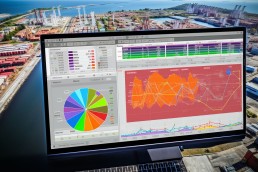
Moving from the broad overview of what supply chain management entails, let’s delve into the role of supply chain simulation software, within this domain. Supply chain simulation software serves as a powerful tool that allows businesses to create digital models of their supply chains.
By running these models, companies can explore how changes in one part of the supply chain might affect other areas. This capability is crucial for strategic planning and staying agile in a dynamic market.
Using simulation software, decision-makers are equipped with valuable insights into inventory management, logistics coordination, and overall system efficiency under varying conditions.
They can experiment with different scenarios to see potential outcomes before making substantial investments or policy changes. The process highlights bottlenecks and helps in identifying optimal solutions for complex problems involving multiple variables and constraints across the global supply chain network.
It’s essentially about answering ‘what-if’ questions without the risk and expense of real-world trial and error, ensuring robustness in operational strategies.
The Supply Chain Simulation Process

Delving into the intricacies of the Supply Chain Simulation Process, we uncover a strategic framework that empowers businesses to navigate complexities, forecast outcomes, and make informed decisions based on simulated scenarios.
Harnessing this approach paves the way for enhanced efficiency and a deeper understanding of various other supply chain challenges and dynamics.
Inventory optimisation
Inventory optimisation is a cornerstone of robust and efficient supply chain management, enabling businesses to strike the right balance between capital investment and service level. It harnesses mathematical modeling and simulation techniques to set optimal stocking levels, reduce excess inventory, and minimise stockouts.
Directors stand to gain significantly by aligning inventory with demand patterns through predictive analytics, thereby boosting profitability.
Effective optimisation often involves tweaking reorder parameters to reflect real-time market changes and consumer behaviour. By applying supply chain simulation software, companies can visualise the impact of these adjustments before implementing them in the physical world.
This foresight helps in crafting an agile strategy that adjusts dynamically as product mix analysis reveals shifting trends or as new product introductions alter demand forecasts. Moving on, effective stock allocation extends beyond just numbers; it requires an assessment of stocking locations across the network for maximised efficiency.
Stocking locations, levels, and reorder parameters
Seamlessly moving from inventory optimisation, we address the pivotal role of determining optimal stocking locations. Settling on strategic sites ensures that products and services are close to customer bases, which slashes shipping times and costs dramatically.
The decision on which one package these spots hinges on multiple factors such as market demand, transport links, and storage expenses.
Choosing the right levels of stock is just as crucial. Hold too much, and you risk escalating storage costs or dealing with obsolete items. Too little could mean missed sales opportunities and disgruntled customers.
Precise reorder parameters cap off effective inventory management by triggering replenishment at just the right moment, balancing holding costs against the risk of running out – a delicate dance played out through robust supply chain simulation models for accuracy’s sake.
Predicting the impact of new product introductions
Launching a new product can significantly alter demand patterns across the supply chain. Supply chain simulations empower directors to proactively evaluate how these introductions might shift inventory needs, capital requirements, and logistical considerations.
They facilitate scenario planning where multiple outcomes are modelled based on differing uptake rates of the new product. This enables decision-makers to craft strategies that optimise stock levels and ensure efficient resource allocation.
The realism added by dynamic models in such simulations provides insight into system-wide implications of new launches, from supplier readiness to customer delivery capabilities. Utilising what-if analysis tools within supply chain management simulation platforms can forecast potential bottlenecks or capacity issues before they arise, allowing leaders to adjust plans accordingly.
Keeping an eye on these predictions helps maintain service levels without overcommitting resources or incurring unnecessary costs.
Assessing the performance of suppliers and other partners
Building on the insights gained from predicting new product impacts, turning our attention to suppliers and partners is crucial. Supply chain simulation offers a powerful tool to evaluate these key players effectively.
By developing realistic models that mirror actual supplier operations, you gain invaluable information about their reliability, quality of materials, and delivery timescales. This process supports strategic decision-making by highlighting areas where improvements are needed or identifying outstanding performers.
Incorporating the simulation in supply chain optimisation refines supply chain designs for maximum effectiveness based on supplier performance data. It’s possible to test different scenarios that impact the supply chain dynamically – adjustments in lead times, cost fluctuations, or variations in order quantity – and see how they play out in the simulated environment before any real-world changes manage supply chain challenges are implemented.
These actionable strategies foster a robust and adaptable supply chain and logistics network capable of responding to market demands while keeping risks at bay.
Planning for demand variability
Effective supply chain management hinges on the ability to adapt to changes in demand. Simulations empower companies with a clear view of how potential fluctuations can affect inventory levels and overall supply chain performance.
Harnessing the power of what-if scenario analyses, businesses can anticipate market trends and adjust their strategies accordingly. This proactive approach ensures that when shifts occur, your logistics remain efficient, and service levels stay high.
Craft accurate demand forecasts using simulations to maintain the right balance between overstocking and stockouts. This insight helps mitigate risks associated with unexpected variations in customer needs, protecting both your bottom line and brand reputation.
As we delve into inventory optimisation, policy setting and testing in our subsequent section, remember that simulation is your ally in crafting robust strategies for every part of your supply chain system.
When to Use Supply Chain Simulation

Decisions concerning the intricate dance of inventory levels, distribution methods and risk management often necessitate a deeper analysis beyond intuition or past experience – this is where supply chain simulation becomes invaluable.
It serves as an indispensable tool for strategising in dynamic environments, allowing companies to pre-emptively address potential challenges with insight and precision.
Inventory policy setting and testing
Establishing the right inventory policies can revolutionise your supply chain and improve operations throughout. Supply chain simulation offers a powerful tool that allows directors to test various inventory scenarios before implementing them in real life.
You can experiment with different stocking levels, reorder points, and safety stock parameters to see how they would affect your overall performance metrics and operating costs. This hands-on approach helps pinpoint the most cost-effective strategies without risking disruptions in the actual workflow.
Simulations bring data-driven insights into sharp focus, presenting you with forecasted outcomes that align closely with KPIs crucial for decision-making. Managers get a preview of potential results from altering their current inventory policies, enabling more informed choices that support profitability and efficiency goals within global supply chains.
Moving on, let’s consider how these adjustments play out when altering distribution channels or logistics setups.
Altering distribution channels or logistics
Shifting distribution channels or tweaking logistics can lead to major efficiency gains within an organisation’s own supply chain process. This strategic move, made visible through simulation modeling, allows a business to experiment with various scenarios before implementing change.
With logistics simulation, decision-makers gain a clear view of how alterations could affect costs and service levels — all without disrupting current operations.
Supply chain and simulation model plays a crucial role in illuminating the consequences of changing logistics paths or between distribution centers and networks. It helps directors forecast demand fluctuations and their implications on inventory management, thus enhancing overall performance.
Engaging in this preemptive analysis aids companies in avoiding surprises and buttressing the supply chain against potential disruptions. Through prescriptive analytics within supply chain modeling, firms ensure proactive risk management when modifying logistical protocols or channel strategies.
Proactive risk management
While altering distribution channels, technology or logistics can create significant advantages, it is essential to stay one step ahead of potential issues. Proactive risk management enables organisations to anticipate disruptions and formulate strategies for swift response.
Through supply chain design and simulation, directors gain deeper insights into the most effective ways to maintain agility and ensure resilience in their operations.
Employing scenario analysis tools, leaders have the foresight to prepare for various outcomes before they occur. This preparation empowers companies with options that optimise performance amidst unexpected events in a global economy.
Supply chain optimisation and simulations serve as a dynamic platform for testing different risk factors and evaluating the impact of strategic decisions on inventory optimisation and overall supply chain health.
With these predictive capabilities, businesses strengthen their capacity to handle uncertainty effectively, safeguarding both profitability and brand identity.
Supporting sales and operations planning (S&OP) process
Supply chain simulation directly bolsters the S&OP process by mapping out the intricate dance between modern supply chains and demand. It enables companies to test various scenarios, gauging their potential effects on sales targets and operational capacities.
This dynamism allows directors to fine-tune strategies with precision, turning uncertainties into navigable challenges.
With real-time insights from simulations, businesses can pivot quickly, synchronising marketing efforts with production schedules. Leaders gain a clearer vision of how changes in one segment affect the whole value chain, ensuring that decision-making is both strategic and data-driven.
This connected approach ensures planning is not just a theoretical exercise but a robust tool for achieving business goals amidst fast-changing market conditions.
Benefits of Supply Chain Simulation

Exploring the advantages of supply chain model simulation unveils a powerful tool for businesses to enhance efficiency and strategic foresight. It’s an investment in clarity, enabling companies to visualise complex interactions within their supply chains and make informed decisions that drive success.
Identify optimisation opportunities
Harnessing the power of supply chain simulation, directors are empowered to pinpoint enhancement areas in their operations. The process meticulously reveals how each segment interacts, thereby illuminating pathways for refinement and growth.
Through this lens, potential breakdowns or inefficiencies become visible – opportunities where strategic adjustments could drive significant improvements in performance and cost-effectiveness.
Delving into these simulations equips decision-makers with a robust framework to experiment with various scenarios. Incorporate AI-driven analysis and run simulations and you’re not just predicting outcomes but actively shaping them by identifying optimal strategies before implementing any physical changes.
This approach doesn’t only suggest possible optimisations; it quantifies them, allowing leaders to make informed decisions that align closely with corporate goals and market demand fluctuations.
Maintain agility and resilience
Supply chain simulation plays a crucial role in enhancing the flexibility and toughness of your operations. It empowers businesses to test potential scenarios and manage unforeseen events without disrupting the entire system.
By using this advanced analytics software, leaders can confidently make decisions that uphold both speed and adaptability, thanks to highly accurate data that diminishes human error.
These tools also enable companies to experiment with major changes prior to rolling them out, safeguarding operational flow against possible setbacks. This level of preparedness ensures your company can swiftly adjust strategies and continue delivering results even when faced with volatile market conditions or sudden shifts in demand.
Moving on from agility and resilience, let’s delve into how these simulations serve in reducing risks during planning network design stages.
Reduce risk in the planning process
Embrace supply and value chain modelling and simulation to shield your operations from unexpected market twists and turns. By incorporating what-if scenario analysis, you significantly cut down on uncertainty and boost confidence in decision-making.
Such anticipation translates into proactive strategies that can seamlessly adapt to both short-term and long-term changes, sharpening your competitive edge.
Investing in this powerful tool enables organisations to respond with agility when faced with disruptions, ensuring continuity in even the most turbulent times. With supply chain resilience as a critical goal, simulations offer a robust way of crafting plans that are not easily rattled by unforeseen events or market volatility.
This assurance is indispensable for maintaining smooth operations and safeguarding profits.
Capture system dynamics
Supply chain simulation serves as a powerful tool for directors aiming to grasp the full breadth of their system’s dynamics. It shines a light on how business rules, policies, and product requirements play out within the intricate web of supply chain operations.
This insight is crucial when considering postponement processes or fine-tuning safety stock policies. Implementing consolidation and shipping strategies also becomes more clear-cut with simulation models that accurately reflect system interactions.
Leveraging these simulations enhances an organisation’s capacity to respond swiftly to unforeseen disruptions, ensuring both agility and resilience are built into the core of supply chain procedures.
Directors can anticipate how changes in one area might ripple through to others, enabling more informed decision-making that takes into account the multifaceted nature of global supply chains.
From tweaking distribution channels to managing vehicle routing problems effectively – capturing system dynamics through simulation translates directly into stronger strategic planning and implementation.
Supply Chain Simulation vs. Optimisation
While supply chain simulation provides a dynamic ‘what-if’ scenario analysis, optimisation seeks the best course of action within certain constraints; understanding their synergy can transform your strategic planning – discover how in our comprehensive guide.
What is simulation optimisation?
Simulation optimisation takes the principles of traditional modelling and turbocharges them with advanced algorithms. In essence, it’s about pushing a full supply chain data simulation through powerful AI and optimisation techniques to pinpoint where enhancements can be made.
This dynamic process merges the exploratory capabilities of simulation – where you test how various parts of your supply chain would behave under different scenarios – with the precision of mathematical optimisation.
The goal? To arrive at the most effective decisions for inventory control, allocation of resources, and responding swiftly to market changes.
At its core, this approach uses data not just for prediction but as a tool for crafting superior strategies within complex systems. It allows decision-makers to adjust variables in their digital twin model and observe potential outcomes without risking real-world fallout.
By employing methods like Monte Carlo optimisation or linear programming algorithms, companies are enabled to develop how to dissect intricate networks mathematically to improve productivity while reducing costs systematically.
Moving on from understanding what supply chain simulation game optimisation encompasses unfolds another critical aspect: grappling with Supply Chain Simulation versus Optimisation itself.
Conclusion
Embrace the transformative power of supply chain simulation to navigate today’s complex market. Experience benefits such as heightened agility, risk reduction and deep insights into your business processes.
Armed with this knowledge, chart a course for optimised performance and resilient strategies that meet challenges head-on. Harness these tools to stay ahead in the competitive global arena, ensuring efficiency and success at every turn.
Discover the infinite possibilities as you apply simulation models across your operations, fostering growth and innovation.
FAQs
1. What exactly is supply chain simulation?
Supply chain simulation involves using computer models and games to imitate real-world supply chains, helping managers understand how changes can affect the whole system.
2. Why are simulations useful in managing a global supply chain?
Simulations are useful as they allow teams to test optimisation techniques, examine what-if scenarios, and see how decisions might impact their operations without real-world risks.
3. When should businesses consider using a simulation model for their supply chains?
Businesses typically use simulation model or models when facing complex challenges such as demand forecasting or wanting to reduce the bullwhip effect in materials resource planning.
4. Can simulating help optimise my company’s value chain?
Definitely! By running simulations, companies can analyse different strategies and apply mathematical optimisation to analyse and improve efficiency across their entire value chain.
5. What kinds of problems does discrete event simulation address in logistics?
Discrete event simulation tackles issues like inventory levels, transportation delays and helps with making cost/benefit analyses by studying events sequentially over time.
6. Are there any particular benefits of agent-based modelling in supply chain management?
Agent-based modelling offers deep insights into the complexity of global networks by representing each part of the chain as an autonomous “agent” reacting dynamically to others, which leads to more robust decision-making.
And there's more...