Navigating the complexities of modern manufacturing can be daunting. Industry 4.0 marks a revolutionary shift, underpinned by digital innovation and connectivity. This article demystifies the Fourth Industrial Revolution, offering insights to streamline your operation and harness its potential.
Discover how, now.
Key Takeaways
Industry 4.0 integrates digital technology with traditional manufacturing to create smart, interconnected factories that redefine efficiency and productivity.
The adoption of Industry 4.0 technologies, such as advanced analytics, IoT, and AI, has proven critical for businesses during times of disruption like the COVID-19 pandemic.
Predictive maintenance utilising IIoT data analysis can anticipate machinery issues before they happen, minimising downtime and extending equipment lifespans.
Confronting challenges like cybersecurity threats and bridging the skills gap are essential for companies to fully utilise the benefits of Industry 4.0 models.
As organisations adopt advanced technological systems within their operations, they position themselves at the forefront of enhanced competitiveness in a rapidly evolving industrial landscape.
Understanding Industry 4.0

Understanding what is Industry 4.0 requires delving into the transformative processes reshaping the manufacturing sector, where digital technology merges with traditional industrial practices to forge a connected, smart and autonomous systems and production environment.
This fusion not only redefines productivity and efficiency but also heralds an era of smart factories equipped with capabilities far beyond their predecessors’.
The Fourth Industrial Revolution
The Fourth Industrial Revolution marks a significant transformation in the way our world operates, seamlessly blending physical and digital realms. It unleashes cyber-physical systems major components that communicate and cooperate with each other and with humans in real-time, fostering an era where smart factories and interconnected devices are not just concepts but everyday business practices.
This revolution in artificial intelligence is built on the foundation of advanced analytics, robotics, artificial intelligence (AI), and the Internet of Things (IoT), driving innovation at an unprecedented pace.
Directors must recognise that Industry 4.0 reshapes traditional manufacturing and production processes by introducing greater automation, improved communication, machine learning capabilities, sustainable operations, and more efficient supply chain management.
With 94% affirming that Industry 4.0 technologies have been critical during challenging times such as the COVID-19 pandemic to maintain continuous operations, adopting these advancements has become integral for future growth and resilience in the competitive market landscape.
Industrial Internet of Things (IIoT)
The Industrial Internet of Things (IIoT) merges machine-to-machine communication with industrial big data analysis to drive unprecedented levels of efficiency, productivity, and performance.
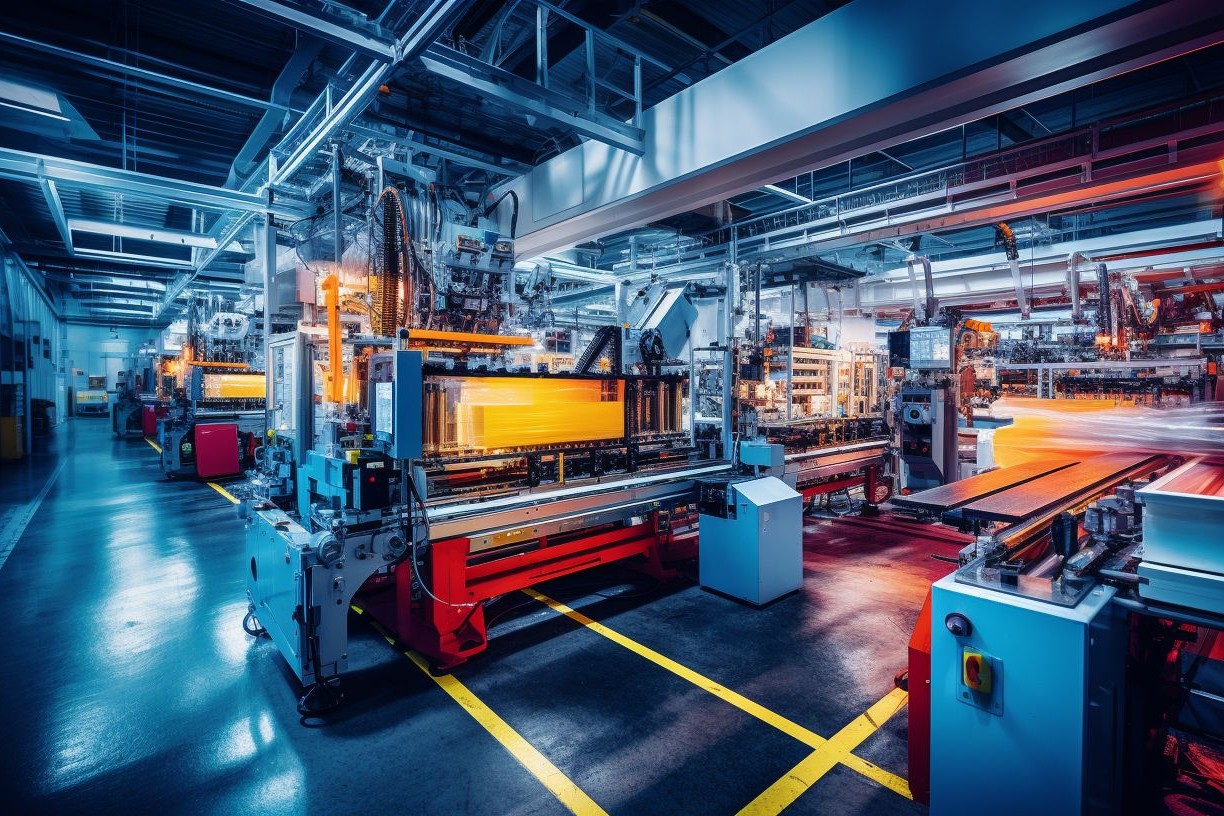
Picture a smart factory where sensors collect real-time data from machinery, enabling predictive maintenance that anticipates breakdowns before they occur. This not only minimises downtime but also extends the lifespan of equipment.
IIoT serves as the backbone for such transformative possibilities, enhancing how manufacturers monitor and analyse data to optimise their operations.
Armed with this connectivity and analytics prowess, businesses are now better equipped to respond rapidly to changes in consumer demand or potential disruptions — an agility made all too crucial by recent global events like the COVID-19 pandemic.
Directors should note that embracing IIoT isn’t merely about keeping pace; it’s a strategic move towards ensuring operational continuity and cementing competitive advantage within fast-evolving markets.
And as we look ahead beyond mere machinery interconnectivity, the next frontier spans across entire supply chains reshaped by digital transformation initiatives centred on Industry 4.0 principles.
Evolution of Industry from 1.0 to Present Day

Tracing the journey of industrial evolution offers a narrative of human innovation and transformative technologies, moving from steam-powered engines to cyber-physical systems. This progression not only marks dramatic shifts in manufacturing practices but also redefines how we perceive work, value creation, and economic development.
The First Industrial Revolution
The First Industrial Revolution marked a significant turning point in history, sweeping across Britain in the 18th century. It ushered in a new era where steam power and machine tools transformed agriculture-based economies into industrialised ones.
Factories sprang up, changing not just business models but also the fabric of society.
Inventors introduced ground-breaking machinery that mechanised textile production and increased efficiency manifold. This third industrial revolution starting saw the birth of mass production, relocating work from homes to factories and giving rise to an urban working class.
With industry benchmarks set by this pivotal movement, businesses today still draw lessons from its transformational impact on productivity and economic growth.
The Second Industrial Revolution
Building on the groundwork laid by the First Industrial Revolution, the Second Industrial Revolution marked a period of profound change and expansion in industrial activity and physical world. It ushered in major advancements such as electrification, mass production, and rail transportation.
Factories grew larger and more efficient due to new processes like assembly line manufacturing.
Steel production soared and became the building block for skyscrapers and bridges while innovations in chemical synthesis led to new medicines and materials. Electric power lit up cities, transforming urban life, making it possible for factories to operate around the clock.
This era set the stage for an unprecedented scale of industry that paved the way towards today’s technological landscape where Industry 4.0 is now taking center stage.
The Third Industrial Revolution
Moving from the widespread electrification and mass production that marked the Second Industrial Revolution, the Third Industrial Revolution brought about an era of digitalisation in the manufacturing industry.
This phase witnessed a significant shift as industries began incorporating more electronics and information technology to further automate the production process. Computers revolutionised how businesses manage operations, spurring advancements such as enterprise resource planning (ERP) systems, which aimed to streamline managing complex business processes.
The introduction of cyber-physical systems laid the groundwork for smart manufacturing practices. Innovations digital technologies like automation, computerisation, and cloud computing transformed traditional factories into interconnected workplaces capable of remote monitoring and management of production facilities.
These developments drastically increased manufacturing efficiency, while laying down the blueprint for what we recognise today as Industry 4.0 – where machinery and equipment are not only automated but also intelligent and self-optimising.
The Fourth Industrial Revolution, or Industry 4.0
Following the digital advancements of the Third Industrial Revolution, we now enter a new era marked by even greater integration and innovation: The Fourth Industrial Revolution manufacturing industry 4.0. At its heart, Industry 4.0 fuses physical production and operations with smart digital technology, using machine learning algorithms, and big data to create a more holistic and better-connected ecosystem for companies that focus on manufacturing and supply chain management.
This revolution doesn’t just involve enhancements in existing manufacturing processes; it transforms them entirely. Data connectivity becomes the lifeblood, enabling seamless communication between machines, parts, products and people – what’s known as the Industrial Internet of Things (IIoT).
Insights from advanced data analytics drive smarter decisions while human-machine interaction reaches unprecedented levels of sophistication through robotics equipped with sensors connected directly to cyber-physical systems (CPS).
For directors navigating this shift, understanding these pivotal changes is essential for driving value across your business benchmarks.
Impact of Industry 4.0 on Manufacturing and Production Processes

Industry 4.0 is revolutionising manufacturing and production processes, tapping into intelligent networks and sophisticated analytics to drive efficiency like never before – discover the transformative effects on your own business processes and operations.
Advanced Industrial Analytics
Advanced industrial analytics empower your manufacturing processes with the data capture deep insights that drive efficiency and productivity. As directors, you know that the right data can transform manufacturing operations everywhere.
Harnessing this computational power further, companies analyse streams of real-time data from IoT devices to optimise production lines and minimise downtime. Predictive algorithms can forecast equipment failures before they occur, enabling proactive maintenance and repairs.
This not only saves on costs but also elevates the overall performance indicators within your own business model.
Leveraging these analytics goes beyond preventive strategies; it reshapes supply chain management by providing a clear view of inventory levels, demand forecasts, and delivery schedules.
With $3.7 trillion in value creation potential by 2025, adopting advanced analytical tools is no longer optional for staying competitive – it’s essential for pioneering Industry 4.0 transformations within your company’s ecosystem.
Analytics turn vast quantities of data into actionable intelligence, fostering smarter decision-making across every level of operation – from shop floor dynamics to strategic planning in the boardroom.
Supply chain management and optimisation
Supply chain management and optimisation in Industry 4.0 leverages IoT technology to transform traditional supply chains into dynamic, interconnected systems. Real-time tracking of inventory and equipment through internet-connected devices ensures efficient production flow and minimises delays.
Data collected from these smart systems provides valuable insights into demand patterns, enabling companies to adjust their strategies swiftly.
Cloud-based technologies are revolutionising how businesses handle supply chain operations by allowing for seamless data sharing across the whole value chain and entire supply chain together. This shift eliminates the need for heavy IT infrastructure, as cloud platforms offer flexible solutions that can be scaled up or down according to business needs.
Optimised supply chains lead to enhanced customer satisfaction due to better product availability and faster delivery times – crucial factors in maintaining a competitive edge in today’s fast-paced market environment.
Predictive maintenance/analytics
Predictive maintenance has transformed how industries approach equipment upkeep, shifting from reactive to proactive strategies. By predicting failures before they occur, this analytics-driven method significantly reduces downtime and maintenance costs.
It uses data gathered through sensors and advanced algorithms to monitor equipment health in real-time. Automated alerts notify technicians of potential issues, allowing them to address problems swiftly and efficiently.
This forward-looking technique leverages cloud-based technology for seamless integration into existing systems. It empowers businesses by providing actionable insights without the need for continuous IT support.
Predictive analytics not only extends the lifespan of machinery but also streamlines production processes, delivering a competitive edge in today’s fast-paced, digital manufacturing’ landscape.
Directors need to understand that adopting predictive maintenance is not just about preventing breakdowns; it’s about fostering an environment where every piece of equipment operates at peak performance day-in and day-out.
Asset tracking and optimisation
Building on the capabilities of predictive maintenance, asset tracking and optimisation serve as crucial components in redefining operational efficiency. IoT technology has revolutionised the way assets are monitored by providing real-time visibility into their performance and location.
This granular level of detail empowers businesses to make informed decisions that streamline workflows and reduce downtime.
The integration of smart systems ensures that every piece of equipment is used to its maximum potential while minimising waste and redundancy. With sensors sending constant updates, manufacturers can detect issues before they escalate, ensuring a seamless production line.
This proactive approach not only safeguards against unexpected breakdowns but also extends the lifespan of valuable assets, driving long-term cost savings for companies embracing Industry 4.0 principles.
Benefits of Adopting an Industry 4.0 Model

Embracing an Industry 4.0 model revolutionises productivity by harnessing cyber-physical systems that integrate computation, networking, and physical processes. Factories and businesses become more agile with machine learning and advanced analytics informing decision-making in real-time.
This interconnectedness allows for faster response to changes in demand or hiccups in supply chain logistics, thus sharply reducing downtime and inventory costs.
Increased efficiency is a significant benefit for manufacturing companies as machines are optimised to predict failures before they occur through preventive maintenance techniques. Workers gain new tools for monitoring production lines using technologies such mobile devices such as IoT systems and ERP software, leading to enhanced quality control measures and reduced error rates.
The synergy between humans and smart manufacturing machines lays a strong foundation for sustainable manufacturing practices while also carving pathways towards eco-efficiency and energy conservation on the factory floor.
Challenges to Consider and Overcome with Industry 4.0
Despite the benefits that Industry 4.0 brings to the table, companies face several hurdles in its adoption. Cyber-security poses a significant threat; as businesses become more connected, they also become more vulnerable to cyber-attacks.
Protecting sensitive data and ensuring robust defence mechanisms are essential for maintaining trust and operational integrity. Additionally, many organisations grapple with integrating new systems into their existing frameworks.
The challenge of aligning legacy equipment with advanced technologies can be daunting without disrupting daily operations.
Manufacturers must also address the skills gap that emerges as industry benchmarks evolve. Reskilling employees becomes imperative as automated processes and complex computer systems replace traditional manual roles.
This shift requires substantial investment in training programs to empower workers with the technological know-how necessary for Industry 4.0 environments. Moreover, while predictive analytics offers insights for efficiency gains, interpreting vast amounts of data accurately demands expertise – it’s not just about collecting information but making sense of it to drive actionable strategies.
Navigating these challenges is crucial for directors who wish to harness the full potential of Industry 4.0 and transform their manufacturing landscapes effectively.
How Industry 4.0 is Shaping Work and Life
Industry 4.0 is revolutionising the way we work, introducing smart factories where machines communicate with each other and make decisions autonomously. This integration of cyber-physical production systems means that factory floors are becoming more efficient, adaptive, and user-friendly.
Robots now work alongside humans, taking over dangerous or repetitive tasks and freeing up workers to focus on more complex aspects of the production process. As a result, employees are upskilling to adapt to new technologies while businesses can achieve higher productivity with reduced risk.
In our daily lives, smart homes equipped with IoT devices like smart thermostats learn our preferences and adjust themselves accordingly for comfort and energy saving. Connected cars provide safer and more efficient travel options as they interact with traffic management systems to reduce congestion in real-time.
Meanwhile, advances in health care mean wearable smart technology enables continuous monitoring of personal wellbeing outside traditional medical settings. With such profound transformations being heralded by Industry 4.0 innovations, both work environments and personal spaces are becoming smarter, leading towards an era defined by increased connectivity and enhanced know-how across various sectors.
The Future of Industry 4.0
The landscape of manufacturing is on the cusp of a digital transformation itself, more profound than any previous industrial revolutions. Smart factories, outfitted with advanced sensors and AI-driven analytics, will deepen predictive maintenance capabilities, reducing downtime and increasing efficiency.
Customised products will flow off assembly lines as additive manufacturing takes personalisation to new heights, reshaping consumer expectations optimise logistics and supply chain dynamics.
Autonomous vehicles within smart cities promise to streamline logistics by integrating with Industry 4.0 frameworks – boosting sustainability while slashing energy consumption. As digital revolution paves the way for innovations like smart grids and cloud storage solutions, businesses must navigate this shift thoughtfully; data governance and business ethics will become paramount in managing the risks associated with increased connectivity.
Directors leading their organisations into this future can harness these disruptive digital technologies, not only to set new business benchmarks and achieve efficiency but also to empower their teams through unprecedented knowledge accessibility enabled by real-time cloud-based information sharing systems.
Conclusion
Industry 4.0 heralds a transformative era for businesses worldwide, brimming with technological marvels and challenges alike. Embracing this revolution equips organisations with the tools to enhance efficiency and ignite innovation.
Yet, it demands a strategic approach to skill development, adaptability, and new technology and implementation. As directors navigate these changes, their foresight will shape the future of industry standards and practices.
Indeed, mastering Industry 4.0 is not just about keeping pace; it’s about setting the pace for an interconnected industrial future.
FAQs
1. What is Industry 4.0 in the manufacturing world?
Industry 4.0 marks the fourth industrial revolution featuring smart technology in the manufacturing process, such as internet-connected machinery that boosts efficiency and productivity.
2. How can businesses measure their progress with Industry 4.0 benchmarks?
Businesses can track their advancement by using industry benchmarks related to the latest advancements like ERP systems, cloud computing, and business process management.
3. Why is it important for companies to understand Industry 4.0?
Understanding Industry 4.0 helps companies stay competitive by adopting smart technologies that lead to improved product life cycle management and better customer retention strategies.
4. What are some examples of technologies driving Industry 4.0?
Technologies fueling a key component of this revolution include prescriptive analytics, virtual reality for design and training, and smart appliances that communicate with each other for optimal performance.
5. Could small businesses also benefit from implementing aspects of Industry 4.0?
Yes! Small businesses stand to gain significantly through empowerment via an online presence as retailers or adapting new tools offered by service providers like Epicor for streamlined operations.
And there's more...