Managing inventory can be a labyrinth of complexity and frustration for business directors, as poor handling leads to costly errors. With the advent of automated inventory management systems, there’s a powerful solution at hand that curtails these issues.
This guide will reveal how the right automation tools not only streamline your operations but transform them into a well-oiled machine. Dive in to unlock efficiency and accuracy like never before!
Key Takeaways – Automated Inventory Management
Automated inventory management systems use barcode scanning and real-time tracking to maintain accurate stock levels, reducing human error and preventing costly mismatches in inventory.
These systems improve efficiency by allowing for automatic reordering when stocks are low, integrating with ERP systems, POS, and accounting software to provide a comprehensive view of business operations.
Shifting from manual to automated inventory control saves time, reduces errors in stock level calculations, leads to better purchasing decisions based on real-time data analytics, and ultimately results in cost reduction for businesses.
Automation enhances customer satisfaction by ensuring products are readily available when needed; this reliability can turn one-time buyers into repeat customers who trust the brand.
Features like multiple warehouse tracking, reorder point settings, integration capabilities with other apps such as e-commerce platforms or POS systems, along with advanced reporting tools enable businesses to optimally manage their inventory system.
Understanding Automated Inventory Management

As we move forward from the basics, let’s delve into automated inventory management and break down how it streamlines operations. This approach harnesses technology to oversee stock levels and manage supply chain activities with precision.
Modern systems employ barcode scanning and real-time tracking to maintain accurate inventories. They effortlessly record each item’s movement in and out of the warehouse, eliminating human error.
These advanced solutions also facilitate automatic reordering when stocks dip below predetermined thresholds, safeguarding against costly stockouts. Automated inventory control systems seamlessly integrate with existing ERP systems, POS, and accounting software – a must for keeping all facets of business interconnected.
Linking these platforms provides an overarching view of activities across multiple sales channels, offering insights that guide more strategic decisions in purchasing and demand forecasting.
Drawbacks of Manual Inventory Management

In the fast-paced commerce sector, persisting with manual inventory management is akin to navigating a ship without a compass; it often results in operational inefficiencies and missed opportunities.
The shift away from these antiquated practices has become imperative for businesses aiming to thrive in an environment where precision and agility are paramount.
Inaccurate stock levels
Inaccurate stock levels often spell disaster for businesses, leading to frustrating stockouts and the loss of potential sales. The key to avoiding this pitfall is integrating barcode scanners within your enterprise resource planning (ERP) system.
These tools are indispensable as they ensure real-time updates of inventory counts, thereby maintaining accurate stock figures at all times. With every scan, your automated inventory management software instantly reflects changes, preventing mismatches that could otherwise derail your operations.
Synchronising inventory across various sales channels becomes critical in the era of multichannel retailing. Doing so effectively prevents the common error of overselling – an issue that not only results in lost revenue but also damages customer trust and brand reputation.
Mastery over your stock through effective automation ensures you always know what’s available for sale and what needs replenishing. This level of control empowers directors to make informed decisions about purchasing and sales strategies without being bogged down by preventable inaccuracies or relying on guesswork.
Lost sales
Manual inventory management has a direct impact on your sales potential, and often not in the way you’d hope. Without accurate stock levels, customers face stockouts which immediately translates to lost revenue for your company.
It’s a simple equation: when products aren’t available, sales opportunities vanish alongside customer trust.
Introducing automation in inventory management eliminates this risk significantly. Real-time inventory updates provided by automated systems ensure that you maintain optimal stock levels at all times.
This equates to having just enough inventory without overstocking or running out – meaning every potential sale is captured and no customer walks away unhappy due to unavailable items.
Automated solutions like an automatic reordering system are designed to keep pace with demand, so lost sales become less of an issue and more of a relic from your manual management past.
Wasted time
Beyond the frustration of lost sales, time becomes another victim in the realm of manual inventory management. Directors understand that time is a resource just as valuable as stock itself.
Manually tracking and updating inventory not only eats into precious work hours but also diverts attention from strategic decision-making and business growth activities.
In an environment where every minute counts, the laborious task of manually counting items, documenting discrepancies, and inputting data can lead to significant setbacks. Any error spotted triggers a domino effect: staff must then sift through records to locate and correct mistakes, redirecting efforts away from more productive tasks such as customer engagement or market analysis.
Automating these processes cuts down on wasted hours, freeing up your team to focus on initiatives that propel the business forward.
Benefits of Automated Inventory Management

Embracing automated inventory management propels your business towards operational excellence, enabling you to harness the power of efficiency and precision for unparalleled competitive advantage – discover how this transformative approach is redefining success in our detailed guide.
Enhanced accuracy – Automated Inventory Management
Automated inventory management systems significantly boost accuracy in maintaining stock levels. Gone are the days of guesswork or human error that often accompany manual checks; these advanced systems leverage barcode scanners to update information instantaneously and precisely.
Each scan reflects real-time data, ensuring a director can trust in the numbers provided by their automated warehouse management system.
Trustworthy data is the backbone of strategic business decisions. With an automated inventory tracking system, directors gain insights into stock trends without fearing inaccuracies that could lead to poor decision-making or financial losses.
These meticulous records also form a solid base for predictive analytics, helping businesses stay one step ahead by anticipating demand accurately and managing safety stock effectively.
Improved efficiency
Building on the precision of enhanced accuracy, improved efficiency is a cornerstone of automated inventory management. This technology streamlines operations by swiftly processing orders and updating stock levels in real time, eliminating the lag that hampers manual systems.
With automation, businesses can rapidly respond to customer demands and market changes.
Efficiency gains extend beyond faster processing; they include reduced error margins and lessened need for oversight. Automated systems free staff from time-consuming tasks such as data entry, allowing them to focus on strategic activities that drive business growth.
This elevation in operational performance directly contributes to leaner, more agile business practices – key ambitions for any director looking towards future-proofing their company’s supply chain management.
Better decision-making – Automated Inventory Management
Automated inventory management systems arm you with the tools for sharp, precise choices that keep your business ahead. Real-time data on stock levels ensures decisions are based on current figures, eliminating guesswork.
You can confidently steer your company without fearing miscalculations that lead to overstocking or stockouts. This real-time visibility means less time debating and more time actioning valuable strategies.
Using barcode scanners in automated inventory systems streamlines the entire process from tracking goods to forecasting needs. Decision-makers gain back crucial hours previously lost in manual checks and adjustments, transforming them into opportunities for growth and refinement of business strategies.
With these efficient tools at your disposal, directing resources becomes a task rooted in clarity and foresight, laying a solid foundation for scalability and customer satisfaction.
Cost reduction
Automated inventory management systems are transforming the way businesses handle their stocks, leading to significant cost savings. By leveraging real-time tracking and automatic updates, these systems prevent overstocking and stockouts—both of which tie up capital that could be used more efficiently elsewhere.
This modern approach eliminates the need for manual checks and reduces errors, cutting down on unnecessary spending.
Switching to an automation inventory management system also streamlines operations by improving decision-making processes. Directors can make informed choices regarding purchasing and stocking with instant access to current data analytics from cloud services like Microsoft Dynamics 365.
As a result, companies not only save on operational costs but also optimise their overall financial performance through better resource allocation. Moving forward from cost reduction, increased customer satisfaction is another vital benefit that automated inventory management brings to the table.
Increased customer satisfaction
Empowering your business with automated inventory management systems leads directly to happier customers. The advances in automation ensure that the crucial link between stock availability and customer demand is seamlessly managed, leaving no room for the frustration of stockouts or delays.
With real-time tracking and accurate inventory levels kept consistently up-to-date, your clients receive their orders promptly, improving overall service quality.
Moreover, these technological solutions transform one-time buyers into loyal clientele by delivering reliability and efficiency – two factors highly valued in today’s fast-paced market.
Your ability to meet consumer needs swiftly doesn’t just satisfy them; it sets a benchmark for what they can expect from you down the line, enhancing their trust and confidence in your brand.
Easy scaling
Building on the foundation of increased customer satisfaction, growing your business becomes smoother with automated inventory management. Say goodbye to the days when expanding meant drowning in complex spreadsheets and stock errors.
With powerful automation tools at your fingertips, you can effortlessly scale up operations without a hitch. Cloud-based inventory software streamlines this process, allowing for seamless integration with sales channels.
Scaling up doesn’t mean adding more stress to your plate; it’s about smart growth using technology that works smarter, not harder. Automating key tasks means you’re prepared to handle an increase in product range or volume without missing a beat.
Business scalability becomes achievable as the system adapts quickly to changes in demand, ensuring distributors keep pace with your growth trajectory while maintaining optimal stock levels and operational efficiency.
Greater visibility
Greater visibility in automated inventory management systems transforms how businesses track and manage their stock. With the integration of cloud computing, every aspect of your supply chain comes into sharper focus.
You gain real-time insights into inventory levels across multiple warehouses, making overstocking or understocking issues a thing of the past.
This heightened transparency enables directors to make informed decisions about production scheduling, purchasing strategies, and sales forecasting. Cloud-based solutions offer complete oversight from anywhere at any time, streamlining operations from factory floor to customer door with unprecedented clarity.
As you maintain this comprehensive view over your business’s operational gears, every decision becomes data-driven – elevating efficiency and enhancing strategic planning across all departments.
Key Features of Automated Inventory Management Software

To master the intricate dance of inventory control, one must turn to software that not only tracks every pirouette of your stock but also orchestrates it with precision. These automated solutions come packed with an array of features designed to streamline warehouse operations and keep shelves appropriately stocked whilst adapting seamlessly to your business’s rhythm.
Tracking multiple warehouses
Managing inventory across several warehouses can be a complex task, but it’s made much simpler with automated inventory management systems. These sophisticated tools allow you to view stock levels and asset allocations across all locations from one central dashboard.
No longer must you juggle multiple spreadsheets or manually check in with each warehouse manager; the automation system provides real-time updates, ensuring that your decision-making is based on current information.
With this seamless tracking at your fingertips, sourcing products for customer orders becomes a strategic operation rather than guesswork. If one warehouse is running low on stock, the system immediately alerts you so that you can arrange transfers from another location with surplus items.
This proactive approach prevents stockouts and ensures continuous supply chain movement without unnecessary delays or disruptions to sales channels – keeping both your team and customers satisfied.
Barcode scanning
Barcode scanning transforms the speed and reliability of logging inventory. Scanners read barcodes on items, instantly capturing data like price, SKU, and product details. This precision eradicates human error from manual entry and keeps stock levels precisely updated in real-time.
Your automated warehouse management system becomes a well-oiled machine; every scan feeds information back to your central database management system effortlessly.
Inventory automation hinges on seamless barcode integration. Directors recognise its value as it paves the way for swift checkouts and streamlined restocking processes. Not just at point-of-sale systems but across all touchpoints—warehouses, self-serve kiosks or B2B eCommerce platforms—barcode scanning is pivotal for maintaining an accurate pulse on inventory health.
Setting reorder points
Setting reorder points is a strategic feature of automated inventory management systems, designed to maintain optimal stock levels. These predetermined thresholds ensure that you’re notified to restock when inventory dips below a specific level.
Using data-driven insights from past sales and integrating demand forecasting tools, these systems enable precise ordering quantities. This way, the risk of stockouts is mitigated while overstocking issues are avoided, ensuring your business can meet customer demand without unnecessary capital tied up in excess inventory.
Automated alerts help keep track of each SKU across various warehouses or channels, streamlining the replenishment process. Directors leverage this functionality to outsmart sudden market changes and align purchase orders with real-time supply needs.
By automating reorder points within an inventory management system, businesses save hours on manual checks and calculations for restocking products. It’s not only about having enough stock; it’s about smartly managing resources to drive efficiency and profitability in today’s competitive markets.
Integration with other apps
Automated inventory management software excels when it works hand-in-hand with other business applications. Imagine your accounting system updating in real-time as sales happen, ensuring financial records are always accurate and up-to-date.
This level of integration aids decision-making and streamlines operations, particularly for ecommerce businesses that rely on precision and speed.
E-commerce platforms and Point of Sale (POS) systems benefit significantly from this seamless connectivity. Stock levels adjust automatically as customers place orders online or salespeople process transactions in-store.
It ensures that stock-outs are minimised, customer satisfaction is high, and the risk of selling the same item twice across different channels is eradicated. Successful integration facilitates a unified approach to stock control, essential for multichannel retailers operating both physical stores and online shops.
Inventory forecasting
Building on the efficiency of integrating applications, inventory forecasting emerges as a pivotal component of automated inventory management systems. It empowers directors to anticipate future demands accurately, ensuring that stock levels are always optimised.
Through precise predictions, businesses can fine-tune their purchasing strategies and sales order management without the guesswork associated with manual processes.
Harnessing data from past sales trends and seasonal fluctuations, automated systems provide a crystal-clear picture of what products will be needed and when. This foresight prevents stockouts and maximises sales opportunities by having the right items available at the right time.
Inventory forecasting not only streamlines operations but also significantly reduces waste, enabling more sustainable business practices.
Reporting and analysis
Robust reporting and analysis tools are the backbone of any effective automated inventory management system. These features empower directors to monitor performance, anticipate trends, and make data-driven decisions that directly impact the bottom line.
With comprehensive dashboards at your fingertips, you’ll gain insights into sales patterns, stock levels, and customer preferences. This real-time data equips you with the knowledge to optimise inventory turnover rates and avoid costly overstock scenarios.
Harnessing advanced analytics provided by these systems allows for a deeper understanding of business health. You can swiftly identify top-selling products or flag items that aren’t performing well.
Moreover, custom reports can be tailored to focus on specific KPIs relevant to your business goals. Utilising such analytical prowess ensures that strategic planning is based on solid evidence rather than guesswork, resulting in more accurate forecasting and efficient resource allocation across all channels.
Access for multiple users
Automated inventory management software expands its utility by offering access to multiple users. This feature becomes indispensable as your business grows, ensuring that staff across various departments can input data, monitor stock levels and manage orders in real time.
It’s a collaborative tool where different team members can work on related tasks simultaneously, increasing productivity and minimising the chances of errors.
Access for several users means you can assign distinct roles and permissions to every individual using the system. Imagine having sales personnel update customer orders while warehouse workers process shipments without any overlap or confusion – it streamlines operations beautifully.
This level of accessibility also affords transparency within your organisation, granting team members visibility of inventory processes which is crucial for businesses managing multiple warehouses or operating across diverse sales channels.
Synchronisation across multiple sales channels
Keeping your inventory in sync across all sales channels is a critical feature of any modern automated warehouse management system. It ensures that whether customers shop in-store, online, or through third-party marketplaces, they see real-time stock levels.
This capability prevents the embarrassment and customer service issues that arise from double-selling a product due to outdated inventory data. With this synchronisation, multi-channel retailers can maintain consistent availability information at every touchpoint.
Imagine the ease with which you can manage a diverse retail operation where warehouse staff update stock using barcode scanners or RFID tags and these updates reflect instantly across all platforms.
Real-time tracking empowers businesses to respond rapidly to purchasing trends and make informed decisions about restocking or running promotions on overstocked items.
Next up: How to Select the Right Inventory Systems for Your Business – diving into choosing tools that align with your strategic goals.
How to Select the Right Inventory Systems for Your Business
Selecting the right inventory system can streamline your business operations and boost growth. Directors should consider these key factors for a smart investment:
Evaluate your business size and complexity: Choose a system that can handle your current stock levels, range of products, and expand as you grow.
Define specific needs and objectives: Look for features that address your unique challenges such as tracking SKUs, managing multiple warehouses, or integrating with POS systems.
Prioritise ease of use and accessibility: Pick software with an intuitive interface and mobile access to manage inventory on-the-go.
Assess compatibility with existing software: Ensure the new system works seamlessly with your CRM systems, accounting software, and e-commerce platforms.
Check for real-time data capabilities: Opt for systems offering up-to-date inventory insights to make informed decisions swiftly.
Focus on scalability potential: The ideal system should support your business’s evolving demands without additional upgrades.
Examine customer support and training resources: Reliable customer service ensures any issues are resolved quickly, minimising downtime.
Determine budget constraints: Balance initial costs against long-term benefits such as improved efficiency and reduced manual errors.
Future Trends in Inventory Management Automation
As we peer into the horizon of inventory management, emerging trends promise to further revolutionise efficiency and precision; stay tuned for an in-depth exploration of these forward-looking innovations that are set to redefine the landscape.
Data analytics
Data analytics in automated inventory management transforms raw numbers into actionable insights. Directors can use these tools to predict trends, understand customer behaviours, and make smarter stock decisions.
By analysing past sales data and market conditions, businesses avoid overstocking or running out of products. This predictive approach helps fine-tune purchasing strategies and keeps inventory at optimum levels.
Leverage analytics to identify which items turn over quickly and which ones may need a pricing adjustment or promotion. Advanced algorithms can even forecast future demands, adapting to seasonal changes or consumer shifts.
With this precise level of control, your business is always one step ahead – ensuring you’re well-prepared for the upcoming chapter on ‘Automated machinery’.
Automated machinery
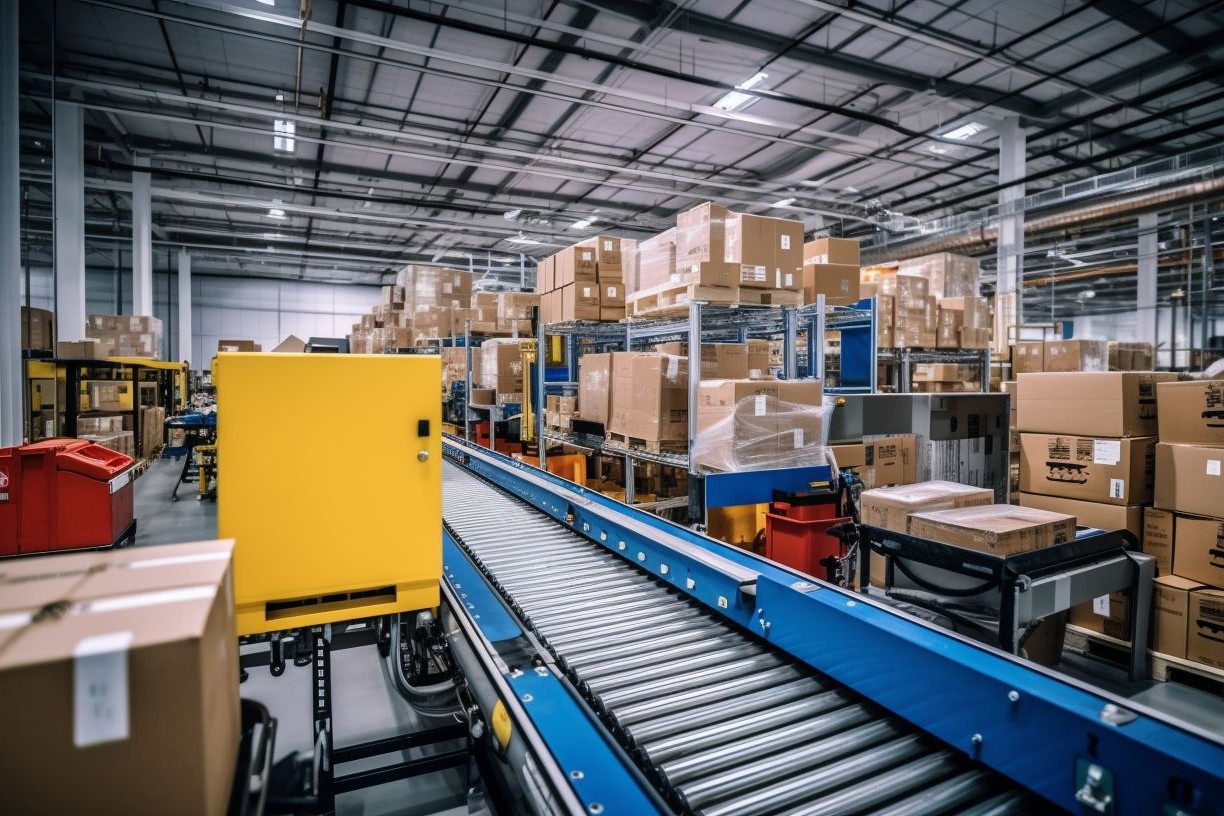
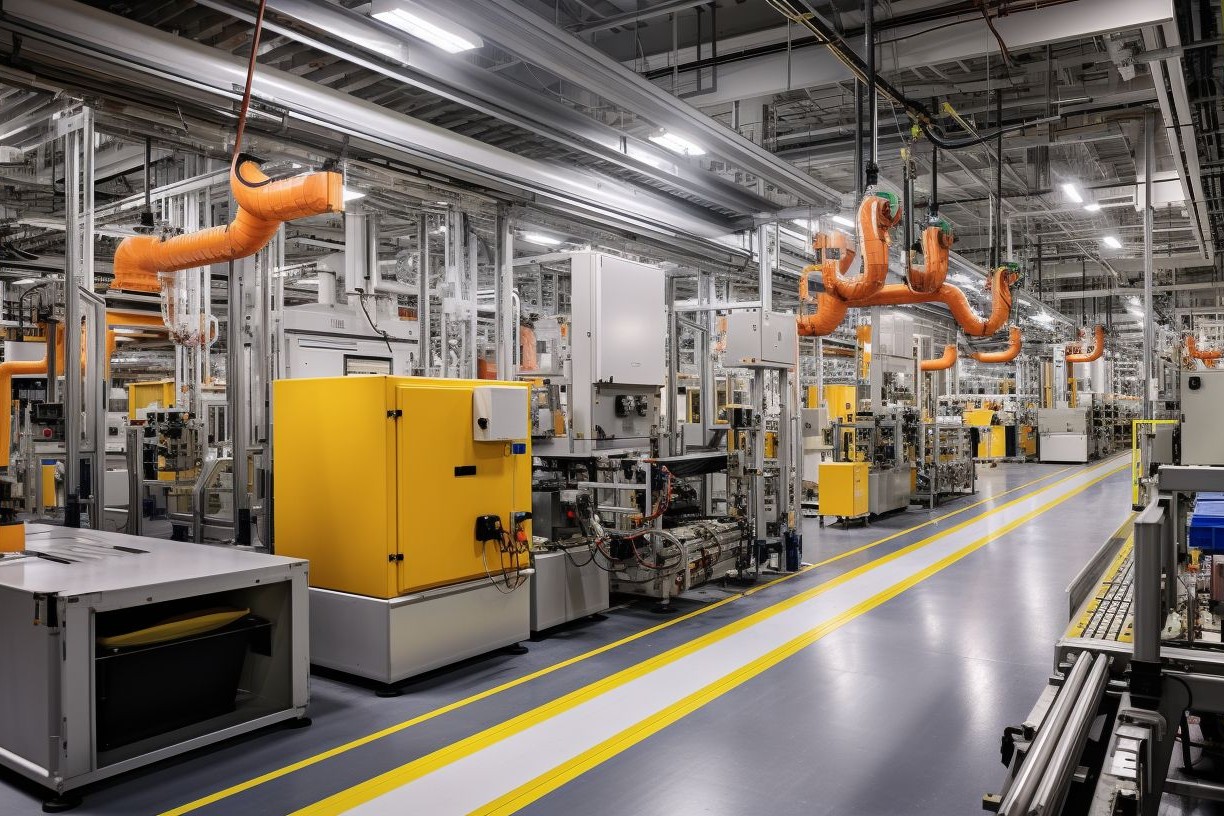
Building on the insights gained from data analytics, automated machinery is revolutionising inventory management in warehouses. Imagine rows of Automated Guided Vehicles (AGVs) swiftly navigating through aisles, retrieving items with impeccable precision.
These advanced systems significantly speed up fulfilment operations, allowing for an unprecedented level of efficiency in stock handling and distribution.
Employing this cutting-edge technology not only propels businesses ahead but also carves out a competitive edge by enhancing operational speeds and accuracy. Directors who harness the power of automated warehouse management systems find themselves at the forefront of innovation, ready to meet customer demands faster and more reliably than ever before.
With 5G technology set to further refine these processes, investing in automation now is preparing for a future where smart warehouses are the standard.
5G
Moving from the topic of automated machinery, 5G technology stands as the next significant leap in the evolution of inventory management systems. With its ultra-fast speeds and reduced latency, 5G transforms how warehouses operate, allowing real-time data analysis and communication among devices.
This breakthrough paves the way for IoT technologies to perform at their peak, providing directors with instant updates about stock levels and movements. Imagine scanners and robots sending information to your system within milliseconds; that’s the efficiency we’re talking about.
The adoption of 5G will enable more complex automation management tasks to be performed swiftly, increasing productivity further than before. It allows seamless synchronisation across multiple sales channels without sacrificing performance or accuracy.
Using this tech trend wisely can set a business apart in both operational capacity and customer satisfaction – ensuring that you are not just keeping up but setting the pace in today’s fast-moving market.
Conclusion – Automated Inventory Management
Embracing automated inventory management marks a significant step forward for any business. It promises efficiency, accuracy, and the agility to grow without the burdens of traditional stock-keeping woes.
With a sound system in place, directors can steer their companies to smoother operations and stronger profits. Trust in technology’s ability to refine your warehouse processes will be well rewarded.
Set your sights on innovation; let automation transform how you handle inventory forever.
FAQs
1. What is automated inventory management?
Automated inventory management is a system that uses technology, such as smart labels and radio-frequency identification (RFID), to keep track of stock levels in real time and ensure efficient warehouse operations.
2. How does automation help businesses manage their inventory?
Automation helps by streamlining business processes, like tracking purchases with optical scanners at the point-of-sale (POS) systems and updating stock-keeping units (SKUs) on the cloud for instant access anywhere.
3. Can automated systems improve the accuracy of inventory records?
Yes, by digitising inventory tracking using IoT technology and automating data entry with RFID tags, automated systems reduce human error and keep precise records.
4. Are there benefits to using an automation management system in dropshipping?
Definitely! An automation management system can simplify dealings with suppliers for dropshipping businesses, handling orders just in time whilst managing bills of materials (BOMs).
5. Do I need technical expertise to operate an automated warehouse management system?
Not necessarily; advanced solutions like Microsoft Dynamics 365 are designed user-friendly so employees without specialised knowledge can manage them effectively after initial setup by experts.
6. Can small online stores profit from investing in POS software with inventory automations?
Absolutely – even small online stores benefit significantly from POS software equipped with automation features which facilitate receipting and customer management, helping self-serve clients swiftly.
And there's more...