In a rapidly evolving marketplace, directors are recognising the imperative need to streamline and manage warehouse operations. A smart warehouse stands at the forefront of this revolution, harnessing cutting-edge technology to transform logistics.
This article offers insights into defining a smart warehouse, exploring its technologies and revealing how it can mitigate common warehousing hurdles. Discover the future of efficient warehousing – read on for enlightenment!
Key Takeaways
Smart warehouses incorporate technologies such as AI, IoT devices, robotics, and automated systems to enhance efficiency and reduce reliance on manual labour.
Advanced components within smart warehouses like Warehouse Management Systems (WMS), Internet of Things (IoT), collaborative robots (cobots), Automated Storage and Retrieval Systems (AS/RS), and RFID tags play key roles in optimising inventory management and operational workflows.
Benefits of adopting smart warehousing include improved accuracy with real – time data tracking, increased operational efficiency through automation, cost reductions from streamlined processes, better customer service resulting from fast and accurate order fulfilment, and enhanced transparency over supply chain activities.
Implementation challenges involve ensuring robust data security against cyber threats, managing the significant initial financial investment required for new technology adoption, and retrofitting existing structures to support modernised operations.
Transitioning to a smart warehouse involves assessing current operations carefully, defining clear objectives for improvement areas prioritised by automating processes or integrating new technologies that should align with long-term business growth strategies.
Definition of a Smart Warehouse

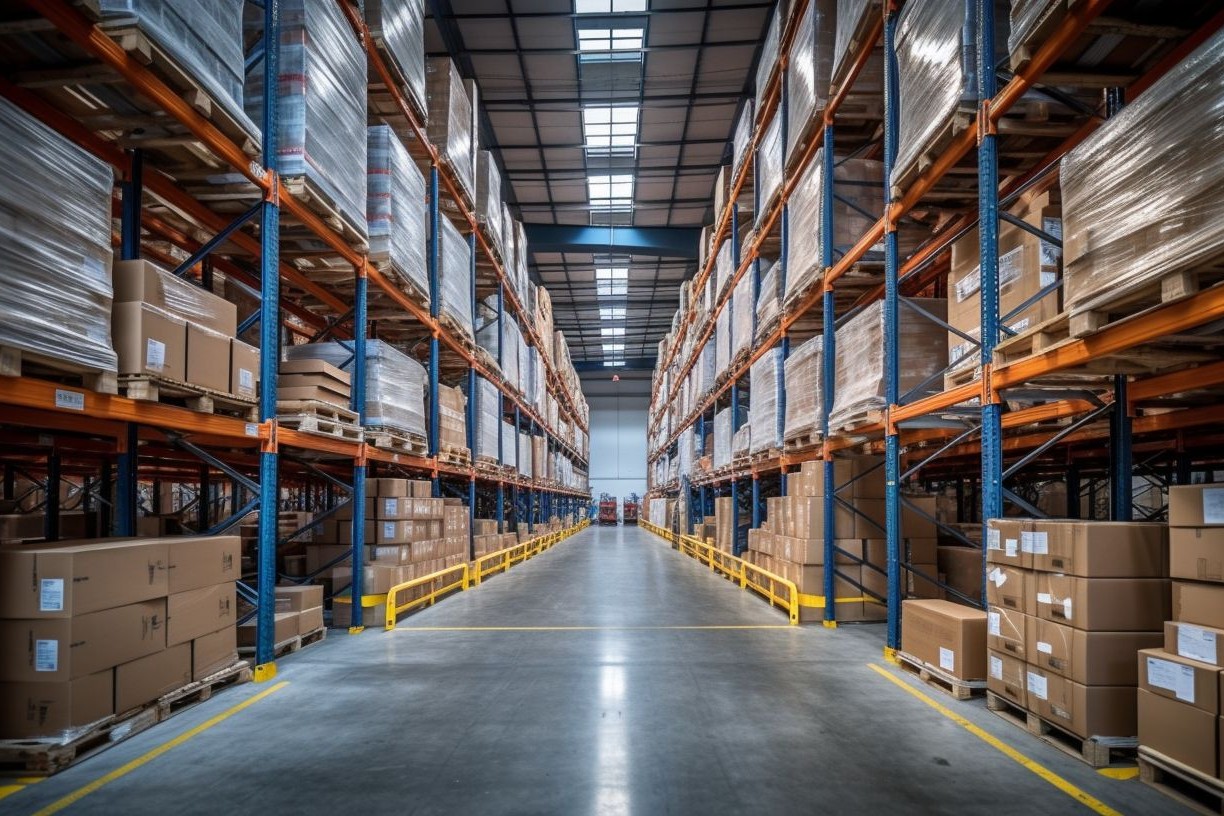
A smart warehouse represents the next generation of storage and distribution facilities, where efficiency is paramount. It harnesses advanced technologies such as Artificial Intelligence (AI), the Internet of Things (IoT) devices, robotics, and automated systems to streamline operations and optimise warehouse space.
These intelligent warehouses operate with minimal human intervention as machines communicate with each other to automate tasks like inventory management, order processing, and predictive maintenance.
Equipped with sensors and connected through a cloud-based Warehouse Management System (WMS), every item within a smart warehouse can be tracked in real-time. This level of connectivity ensures accuracy in inventory control and enables swift adaptations to changing demands or unforeseen disruptions in the supply chain.
Material handling robots work alongside humans to optimise pick-and-pack processes while drones may fly overhead for surveillance or stock checking – demonstrating how these spaces have evolved into high-tech hubs that bolster operational efficiency throughout the logistics network.
Evolution of Warehousing: From Traditional to Smart

The shift towards smart warehousing marks a significant milestone in the industry’s history, shaped by the need to meet rising e-commerce demands and consumer expectations for faster delivery.
Traditional warehouses relied heavily on manual systems where workers managed inventory with paper lists and physically moved goods; this approach was time-consuming and prone to error.
With global sales soaring, spurred by giants like Amazon, traditional methods strained under increased pressure. The introduction of warehouse management systems (WMS) signalled a new era in warehouse operations, offering digital solutions that reduce manual workloads and improve accuracy.
Emerging technologies quickly set the stage for even smarter warehousing strategies that transformed facilities into high-speed, efficient centres capable of precise inventory control and rapid order fulfilment.
Automated guided vehicles (AGVs) began navigating aisles autonomously while IoT devices collected vast amounts of data – facilitating predictive analytics to preemptively manage stock levels.
Collaborative robots (cobots) joined human workers on the warehouse floor to pick orders side-by-side, boosting productivity without compromising safety. These advancements not only streamlined workflow but also forged pathways to a future where artificial intelligence (AI) and machine learning algorithms would further refine supply chain management processes.
Key Components of a Smart Warehouse

The core of a smart warehouse lies in its advanced components, seamlessly integrating technology to revolutionise inventory management and operational efficiency – dive deeper into each element’s role in transforming the warehousing industry.
Warehouse Management Systems (WMS)
Warehouse Management Systems (WMS) are the technological backbone of smart warehousing, automating essential warehouse processes to streamline and improve warehouse operations throughout. They empower directors like you with real-time data and advanced analytics that drive decision-making, cut expenses, and bump up overall warehouse performance.
Such systems link seamlessly with Automated Storage and Retrieval Systems (AS/RS), ensuring your inventory is precisely tracked and managed without a hitch.
Opting for a WMS allows for enhanced visibility into every product’s journey through your warehouse – from receiving to shipping. It eliminates guesswork by providing instant access to the status and location of items, thus reducing errors in order picking and managing inventory levels.
With these powerful insights at your fingertips, storage cost plummets while customer satisfaction soars thanks to timely deliveries and accurate fulfilment. Consider how leveraging this technology could transform efficiency metrics within your digital twin-enabled warehousing operation.
Internet of Things (IoT)
Seamlessly picking up from where advanced warehouse management systems leave off, the Internet of Things (IoT) catapults smart warehousing into a new era of connectivity and efficiency.
With IoT technology, devices across the warehouse are internet-connected, creating a network that allows for more automated inventory control platforms, data exchange and real-time insights. This mesh of digital twins and RFID tags paves the way for unparalleled inventory accuracy, as each item communicates its status to ensure stock levels are precisely managed.
Embracing 5G technology within this ecosystem offers lightning-fast communication speeds between IoT devices. This results in a highly responsive supply chain capable of adapting to changes instantaneously, while also reducing manual and labour costs through automation technologies.
The adoption of such sophisticated systems ensures operations run smoothly with fewer errors, directly enhancing customer experience and satisfaction. Moreover, securing this expanse of data emerges as an essential task; robust encryption methods get implemented to safeguard against cyberattacks within these intricate networks – a critical measure for maintaining trust in an age driven by data security concerns.
Collaborative Robots (Cobots)
Collaborative robots, or cobots, play a pivotal role in enhancing smart warehouse solutions and operations. These sophisticated machines work alongside humans to execute complex tasks while reducing the monotony of repetitive activities.
They are far more than mechanical aids; integrated with AI and analytics, cobots swiftly adapt to varied tasks, improving accuracy and efficiency on the warehouse floor.
Cobots have become indispensable tools for businesses looking to scale their warehousing solutions. Their ability to collaborate closely with other internet-connected devices means that real-time monitoring is ever-present, ensuring inventory management is both predictive and precise.
This harmonious blend of human skill and robotic precision speeds up order fulfilment while simultaneously driving down operational costs – a clear win-win for any forward-thinking business director invested in industry 4.0 innovations.
Automated Storage and Retrieval Systems (AS/RS)
Automated Storage and Retrieval Systems (AS/RS) are revolutionising how warehouses operate by streamlining the storage and retrieval process of goods. These systems are equipped with advanced technologies and automated picking tools like voice automation and pick-to-light tools, enhancing picking accuracy while boosting speed.
They provide a strategic competitive edge in warehouse management by seamlessly integrating with Warehouse Management Systems (WMS). This integration ensures coordination is optimised, supporting real-time decision making that drives business success.
In smart warehouses, AS/RS play a pivotal role in material handling processes. These robotic systems can swiftly locate, retrieve, and track items with incredible precision. Such capabilities allow businesses to cut back on their manual processes and labour costs significantly.
By adopting these automated solutions, companies enhance operational efficiency – creating an agile environment ready to meet the demands of modern distribution centers and e-commerce platforms.
Automated Inventory Control
Automated and automated inventory control platform and systems revolutionise how smart warehouses operate, streamlining tasks such as tracking goods and managing stock levels. These cutting-edge technologies enable real-time monitoring, ensuring that the information directors rely on is accurate and up-to-date.
With precision at its core, automated systems detect even the smallest changes in inventory, alerting warehouse operators and managers to replenish stocks or address surpluses before they impact operations.
Investing in automation means adopting a proactive approach to improving inventory accuracy, maintaining order points and fulfilling items seamlessly. This not only avoids potential stockouts but also bolsters confidence among suppliers and customers alike due to consistent delivery performance.
The integration of AI technologies into smart warehousing solutions facilitates this by learning from data analytics, predicting needs and orchestrating complex distribution strategies with minimal human intervention.
Radio-Frequency Identification (RFID)
Moving from the robust capabilities of automated inventory control, Radio-Frequency Identification (RFID) takes precision and efficiency to new heights in smart warehousing operations. This technology endows items with digital identities through tiny RFID tags that send out radio waves.
Scanners pick up these signals and relay precise information back to your warehouse management system in real time. The magic of RFID lies in its ability to track products throughout the warehouse without direct line-of-sight, offering enhanced operational visibility.
Employing RFID slashes labour costs by reducing manual scan requirements and minimises human error often associated with traditional barcodes. It’s not just about cutting costs; it’s also about scalability and meticulous inventory management that adapts as demand fluctuates.
Track items all the way from receiving to shipping seamlessly; this is what sets apart leading-edge warehousing from the pack. With an RFID-enabled environment, you can streamline complex operations, allowing for quicker response times and more informed decision-making across all levels of warehouse activities.
Benefits of Smart Warehouses
Smart warehouses present a transformative leap in the efficiency and functionality of inventory management, marking an era where precision meets pace. The adoption of these innovative environments yields far-reaching advantages, streamlining operations and elevating business outcomes to remarkable new heights.
Improved Accuracy
In smart warehouses, advanced technologies such as RFID and WMS play crucial roles in enhancing the accuracy of inventory management. These systems work together to ensure that every item is precisely tracked from arrival to dispatch.
Real-time data tracking cuts down on human errors and provides a clear picture of stock levels at any given moment. This functionality not only streamlines order fulfilment but also boosts confidence in inventory reporting.
As orders are processed, smart and warehouse automation technologies deploy data analysis to continuously refine operations, resulting in fewer mistakes and higher customer satisfaction. With precise control over inventories through these automated systems, businesses can make better-informed decisions and keep their customers informed with accurate information regarding product availability and shipment status.
Moving forward to “Increased Efficiency,” let’s explore how smart warehousing further optimises operations.
Increased Efficiency
Improved accuracy in smart and warehousing processes sets the stage for greater efficiency across all operations. Automating routine tasks slashes processing times and maximises resource usage, allowing staff to focus on critical, value-adding activities.
The seamless flow of information through a warehouse management system optimises routes and processes for picking and packing, ensuring orders are despatched swiftly.
Smart warehouses harness real-time tracking to monitor inventory flow with precision, meaning stock levels adjust instantly as goods move in and out. This connectivity reduces downtime and speeds up delivery cycles significantly.
By embracing technologies such as automated storage and retrieval systems, warehouses can operate around the clock without fatigue or errors – a boon for meeting the relentless pace of ecommerce demand.
Reduced Costs
Switching to a smart warehouse system transforms financial outlay, slashing expenses in several key areas. Automation technology reduces the need for manual labour, cutting costs significantly over time.
Smart warehouses bring down operational expenses by optimising space utilisation and energy consumption. With intelligent Warehouse Management Systems (WMS), you gain data visibility and increased control over inventory management, reducing waste from overstocking or stock shortages.
Embracing these technologies leads to leaner operations that not only save money but also boost overall efficiency. Directors should note how these savings can be reinvested into further innovations or passed on as competitive advantages in pricing to customers.
Now, let’s take a look at another benefit: enhanced and improved customer service too.
Enhanced Customer Service
Smart warehousing significantly elevates customer service by providing quicker, more accurate order fulfilments. Through predictive analytics and real-time data, businesses can anticipate customer needs, ensuring they receive their purchases without delay.
This efficiency not only streamlines operations but also fosters customer trust and improved customer satisfaction afterwards, reinforcing brand loyalty.
Incorporating advanced technologies such as automation and IoT within a smart warehouse allows for seamless communication between different parts of the overall supply chain operations. Reduced errors mean fewer returns and exchanges while fast shipping becomes the norm.
These improvements in service quality give companies an edge in competitive markets where customers value reliability just as much as price and product quality.
Better Transparency
Smart warehouses bring a new level of clarity to inventory and supply chain management. Through the seamless integration of technologies like RFID, Internet of Everything, and cloud computing, every item’s movement is monitored in real time.
This results in precise tracking from arrival to dispatch, which decimates the guesswork that often plagues traditional warehousing operations.
Directors now have access to dashboards filled with big data analytics that provide insights into performance metrics across the entire warehouse floor. The use of AR headsets allows workers to see information overlaid on their physical environment, further streamlining processes and reducing errors.
These enhancements mean decision-making is informed by accurate, timely data – elevating transparency to unprecedented heights in warehouse environments.
Challenges in Smart Warehouse Implementation
While the promise of smart warehouses is alluring, it’s imperative to acknowledge the hurdles faced during their implementation. Navigating issues such as safeguarding sensitive data and managing substantial initial investments tests an organisation’s resolve and resourcefulness in integrating cutting-edge technologies into their logistical framework.
Data Security
Data security in smart warehouses demands a proactive approach to safeguard sensitive information. With the integration of internet-enabled devices, there’s an increased risk of cyber attacks that could compromise both smart warehouse systems’ operations and customer data.
Directors must prioritise the implementation of robust protection measures like advanced encryption and secure network configurations. This ensures that as new technologies are adopted, they do not become vulnerabilities within the system.
Protecting your own smart warehouse operations from digital threats requires constant vigilance and cutting-edge security strategies. Consider regular simulations to test the resilience of your systems against potential breaches.
Employ asset tracking to monitor equipment and inventory in real-time, reducing the chance for internal leaks or external hacking attempts. Investing in these precautions will fortify your infrastructure against cyber risks, maintaining trust with partners and clients by showing a commitment to data integrity.
Initial Costs
While data security is a vital factor to consider, the financial aspect of transitioning to a smart warehouse cannot be overlooked. The initial costs required for implementing these technologies are significant and should not be underestimated.
Investments cover purchasing advanced equipment, such as collaborative robots and automated storage retrieval systems, alongside the integration of sophisticated software like warehouse management systems and Internet of Things applications.
Retrofitting older buildings represents another cost layer; they often need extensive modifications or even replacement parts to become compatible with new tech amenities. Directors must ensure careful budgeting and planning for this substantial upfront expenditure, which sets the stage for long-term savings through improved efficiency and accuracy in operations enabled by smart warehousing solutions.
Retrofitting
Bearing the initial costs in mind, retrofitting emerges as a subsequent challenge with its own complexities. Transforming an older warehouse into a smart facility requires more than just installing new technology; it often demands extensive modifications to the existing structure.
This process might involve significant construction work, such as strengthening floors to support heavy automated equipment or updating electrical systems for enhanced power capacity and connectivity.
Directors must consider not only the physical changes needed but also how these alterations will integrate with smart warehousing technologies like radio frequency identification and autonomous mobile robots.
Retrofitting can turn older buildings into highly efficient, modernised hubs that harness technological advancements if tackled strategically. These improvements lay the groundwork for future-ready operations that optimise inventory management and control and streamline critical warehouse data management, ultimately driving business forward in an increasingly competitive market.
Steps to Transitioning to a Smart Warehouse
Transitioning to a smart warehouse is a strategic process that entails careful planning and execution. This journey requires businesses to conduct thorough assessments, set clear objectives, integrate cutting-edge technologies seamlessly, optimise warehouse processes to reduce labour costs, provide comprehensive training for staff, and continuously refine operations to stay at the forefront of warehousing innovation.
Assess Current Operations
To shift towards a smart warehousing system, scrutinising every detail of your current operations is crucial. This critical look helps to uncover areas where efficiency lags and processes that need upgrading.
By doing so, you create a roadmap for incorporating smart warehouse technology seamlessly with existing structures.
Evaluate the workflow minutely and highlight aspects ripe for enhancement through automation or Internet of Things devices. Consider how emerging technologies like augmented reality or advanced robotics could streamline or perform tasks currently slowing down productivity.
Keep scalability in focus: any new tech must not only fit into today’s operations but also accommodate future growth without massive overhauls.
Define Goals
Setting clear objectives is imperative as you plot the course towards a smart warehouse. Goals function as beacons, illuminating the path and ensuring that every step taken aligns with your overarching vision for efficiency and innovation.
They help pinpoint which technologies will drive your transition effectively, considering factors like compatibility with current systems, scalability, user friendliness, and potential for investment return.
Establishing these targets requires a thorough examination of existing operations to highlight inefficiencies and identify what improvements are necessary. It’s about understanding where your business stands now and envisioning where you want it to be after adopting smart warehousing solutions.
The goals should be specific enough to guide decision-making yet flexible enough to accommodate unforeseen obstacles or opportunities that may arise during implementation.
Choose the Right Technologies
Choosing the right technologies is pivotal for morphing your empty warehouse space into a smart facility. It’s not merely about selecting the most advanced gadgets; appropriate technology integrates smoothly with your existing systems and scales up as business grows.
Consider Automated Guided Vehicles (AGVs) to streamline product movement, or harness the precision of computer vision for error-free inventory management. Implement Radio-Frequency Identification (RFID) to cut down on manual scanning time, boosting overall efficiency.
Investigate Warehouse Management Systems (WMS) that provide real-time data to sharpen decision-making and enhance key performance indicators. Opt for IoT devices that offer increased bandwidth and processing power necessary for handling large volumes of data securely, leveraging this connectivity to improve transparency across operations.
Embrace technologies like digital twins that enable you to create virtual duplicates of your supply chain operations, predicting outcomes and refining processes without disrupting actual workflows.
Now, prepare for seamless implementation by developing strategic plans – the next essential step towards smart warehousing success.
Implementation
Rolling out smart warehousing solutions requires meticulous planning and execution. Directors must oversee the retrofitting of existing spaces to accommodate new technologies like Warehouse Management Systems (WMS) and Internet of Things (IoT) devices.
This phase also involves integrating advanced, software solutions that can streamline operations, often necessitating a deep dive into data security measures to safeguard sensitive information.
Installing cutting-edge equipment such as Automated Storage and Retrieval Systems (AS/RS) transforms warehouse functionality, but it doesn’t end there. Effective implementation demands an investment in professional training for staff members so they can adeptly manage the new systems.
Ensuring teams are up to speed with the latest warehouse execution systems is pivotal for seamless operation, while establishing a robust support system is essential for addressing any teething issues promptly.
Training and Support
Effective training and support form the backbone of any transition to a smart warehouse. Your staff needs to understand the nuances of new technologies, from augmented reality tools that aid picking and packing, to Kiva robots that streamline inventory management.
Investing in professional development ensures your team can navigate these innovations confidently, reducing downtime and increasing productivity.
Offering comprehensive support goes beyond initial training sessions; it means creating an environment where employees feel empowered to seek help when needed. Tailor ongoing educational opportunities to fit different learning styles and operational roles within your warehouse.
This approach not only boosts morale but also reinforces your commitment to embracing cutting-edge smart warehousing benefits for long-term success.
Review and Optimise
Following the phase of providing comprehensive training and support to your team, the next essential step is to review how these smart systems are performing in your dynamic warehouse environment.
Regular assessment identifies gaps between current operations and desired outcomes, pinpointing areas that could benefit from further refinement. Use insights from real-time data analysis to tweak workflows or technology configurations for enhanced performance.
Optimisation is an ongoing process that reassures directors their investment continues to yield positive returns. By consistently evaluating system functionality and scalability, you ensure that technologies like WMS, IoT, and RFID adapt as business needs evolve.
This fine-tuning not only maximises efficiency but also extends the lifecycle of your smart warehousing solutions, safeguarding against obsolescence in a rapidly advancing field.
Conclusion
Embrace the future with smart warehousing. This innovation stands at the forefront, redefining inventory and supply chain management. It unlocks efficiency and paves the way for unparalleled customer experiences.
While challenges demand attention, strategic planning ensures a smooth transition. Smart warehouses represent progress; they are not just concepts but actionable revolutions in logistics and storage operations.
FAQs
1. What exactly is a smart warehouse?
A smart warehouse uses advanced technologies like augmented reality and virtual reality to manage goods more efficiently, often integrating with third-party logistics systems for better coordination.
2. How can technologies in a smart warehouse benefit businesses?
Technologies in a smart warehouse streamline processes, improve accuracy, and increase the overall ease of use, leading to faster operations and lower costs for businesses.
3. Are there any drawbacks to using a smart warehouse system?
While the benefits are significant, challenges such as high setup costs, the need for skilled staff, and potential tech issues could arise when implementing a smart warehousing system.
4. Can regular homes use similar technologies found in smart warehouses?
Yes! Many of the technologies used in smart warehouses are also found in smart homes to automate tasks and make daily life more convenient.
And there's more...