Efficiently navigating the production process can often seem like a daunting task for many businesses. It’s a complex journey from raw materials to finished products, involving numerous strategic decisions at each stage.
This blog will unravel the intricacies of production, providing valuable insights into its definition, stages, and varied types to streamline your operations. Dive in to demystify production and boost your business savvy!
Key Takeaways – Production Process
The production process is central to transforming raw materials into final products, integrating labour, machines, and technology. Understanding the right combination of these elements affects a business’s competitiveness and customer satisfaction.
Decision – making in production is multifaceted; businesses must carefully consider how much to produce, whether to adopt mass production or craft techniques, which technologies to use, and the optimal mix of inputs for maximising efficiency without compromising quality.
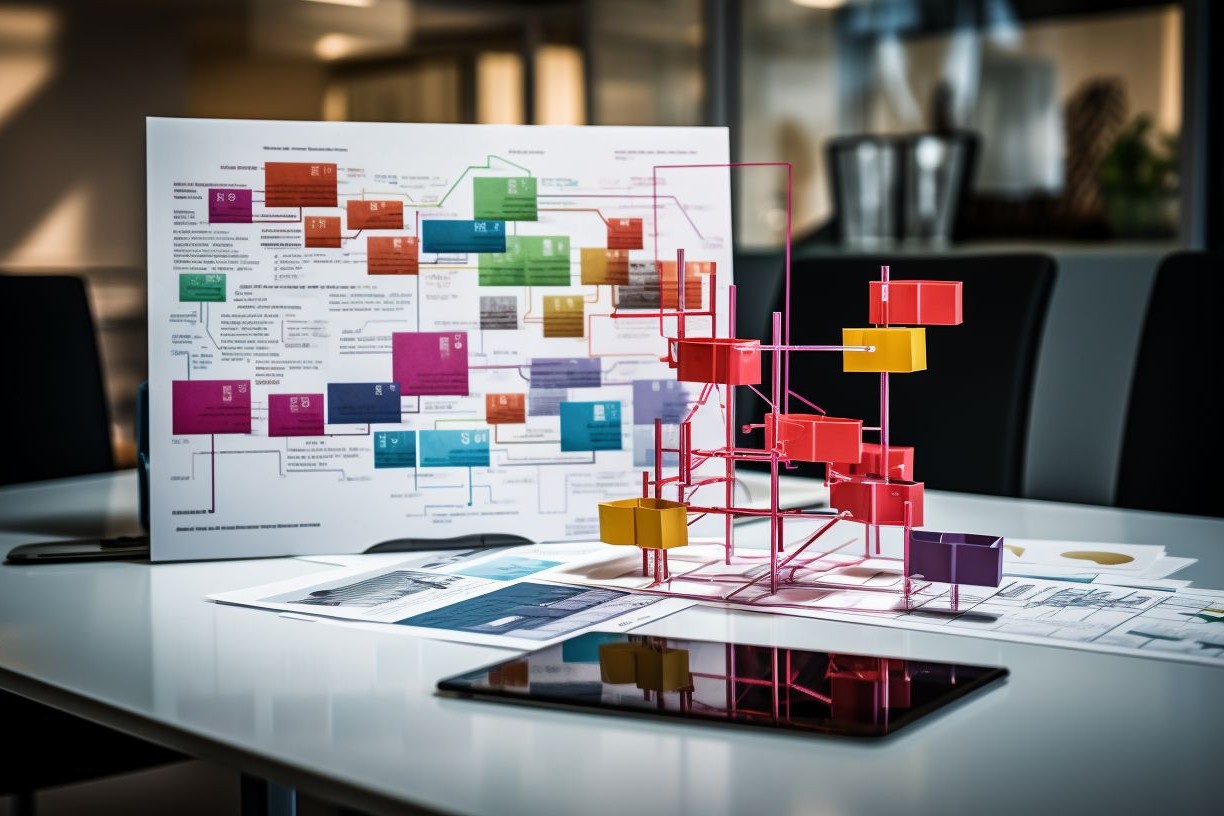
There are several distinct stages in the production process: planning where steps are mapped out; routing that defines the journey through manufacturing; scheduling ensuring timely operations; dispatching where resources are allocated precisely; and control maintains balance between supply and demand.
Different types of production approaches include Mass Production for high-volume uniform goods; Craft Production focused on individuality; Batch Production balancing personalisation with efficiency; Job Production for tailor-made items, Service Production leveraging automation for non-tangible services and Mass Customisation combining large-scale production with customised options.
Real-world examples bring these concepts to life: mass-produced cars highlight efficient assembly line operations while bespoke jewellery exemplifies unique craftsmanship. These varying methodologies illustrate how diverse strategies meet different market needs and consumer preferences.
Definition of Production Process

A production process defines the journey from raw materials to finished products, intertwining labour, machines, and technology. It’s the backbone of every manufacturing system, turning inputs like energy, information, and raw goods into outputs that meet market demand.
The right mix of these factors ensures a business remains competitive and responsive to consumer needs.
This systematic approach not only streamlines how a product is made but also plays a crucial role in determining quality and cost-effectiveness. Choosing an optimal production path directly impacts profitability and customer satisfaction – vital elements for any successful enterprise.
With each decision made about machinery or resource allocation comes potential advancements in efficiency and innovation; this is where understanding the essence of your production process becomes pivotal.
Moving forward, let’s delve into the key elements that influence these crucial production decisions.
Key Elements of Production Process Decisions

In the intricate dance of production, decision-making sits centre stage. It is here that businesses sift through essential considerations – not merely what to produce, but how technology and resource synergy can coalesce to create efficient output tailored to market demands.
Amount to produce in the Production Process
Determining the right amount to produce is crucial for any director aiming to strike a balance between supply and demand. Overproduction can lead to excess inventory, tying up capital and increasing storage costs, while underproduction might result in higher production cost, missed opportunities and dissatisfied customers.
Leaders must analyse market trends, forecast demand accurately, and consider their production capacity to decide the optimal quantity.
Factoring in economies of scale can also influence this decision. By producing uniform products in larger quantities, companies can often reduce the cost per unit due to spread-out overheads. However, it’s essential not to compromise on quality or flexibility – especially in industries where personalisation is key.
With mass customisation becoming more prevalent, directors are now exploring innovative ways to efficiently cater to unique customer preferences without significantly increasing operational costs or complexity.
Production processes require meticulous planning regardless of whether you’re engaged in job production with its small-scale approach or dealing with high-volume activities like mass production or batch processing with operations managers.
Smart resource management ensures that your productive process maximises profit margins without sacrificing excellence in product design or customer satisfaction levels.
Decision on mass production
Making the move to mass production represents a significant step for any business. It entails committing to producing large quantities of a product, which requires careful consideration of resources and technology tools.
Directors must weigh the potential benefits such as lower per-unit costs against the risks including significant upfront investments and demands on supply chain management.
Choosing this path also means looking at how it fits with your company’s structure, employee capabilities, and technical support systems. Mass customisation offers an avenue to blend standardisation with personalised products, but only if your organisation can handle complex inventory management and has robust machine learning algorithms in place.
The commitment is substantial, yet when executed effectively, it can lead to economies of scale that provide a competitive edge in the market.
Technology selection in the Production Process
Selecting the right technology is a pivotal step in refining the production process. It impacts everything from cost analysis to final product quality, and it can dictate whether your operations stay relevant in an ever-evolving market.
Directors must weigh their options carefully, considering how different technologies integrate with current systems. Artificial intelligence (AI), computer-aided design and manufacturing (CAD/CAM), and internet of things (IoT) are no longer futuristic concepts but essential assets that drive efficiency.
Leveraging these tools effectively requires a deep understanding of your business strategy, team capabilities, and customer-centric goals to ensure that technological investments deliver tangible benefits without unnecessary expenses or delays.
Input combinations in the Production Process
After deciding on the technology needed for your next production system, it’s crucial to determine the right mix of inputs. Your selection profoundly impacts both efficiency and product quality.
Picking input combinations is more than just a matter of balancing costs; it’s about aligning your resources with your business’s strategic objectives. You’ll need to consider elements like labour, materials, and equipment – understanding that each choice plays a critical role in creating an optimised production line.
Craft Production demands a unique blend of inputs tailored to personalised goods, while Mass Customisation harmonises standardisation with individual preferences at scale. Software can be pivotal in orchestrating these variables by providing robust features for superior management and real-time tracking of processes.
Directors should approach this step decisively, leveraging flexible inputs that deliver both quality products and agility within the marketplace.
Stages of Production Process

The journey from concept to market-ready product is encapsulated within the intricately structured stages of the production process, each phase meticulously designed to ensure efficiency and increase output quality.
This vital roadmap guides businesses through planning, organising, executing, and supervising operations to transform resources into finished goods that resonate with consumer demands.
Production Planning
Production planning stands as the cornerstone of any successful manufacturing strategy. It involves mapping out every step needed to turn raw materials into finished products, ensuring resources are optimally allocated and processes run smoothly.
For businesses employing batch production, this means employees must cooperate seamlessly across different sections to meet specific targets without a hitch.
Production software becomes invaluable for directors aiming to streamline their own flow production processes and planning tactics. These solutions can dramatically improve efficiency by aiding in forecasting demand, managing inventory levels, and scheduling workloads effectively.
As we look towards the subsequent stage of printing process, ‘Production Routing,’ precise execution in production planning paves the way for smooth transitions between process stages.
Production Routing
Once the planning stage sets the groundwork, production routing takes centre stage, steering products through the manufacturing process with precision and efficiency. It’s all about determining the most effective path for raw material inputs, materials, components and assemblies to take as they transform into finished goods.
Directors understand that a well-defined route within the facility minimises delays and maximises productivity.
This pivotal phase involves designating operations sequence, pinpointing machinery usage and assigning tasks to skilled workers. It integrates closely with scheduling and control measures to ensure that every piece of material is accounted for and every step follows a tight timetable.
Getting this right has direct implications on meeting customer demands promptly while also keeping manufacturing costs low and costs low – two factors crucial in maintaining a competitive edge in today’s fast-paced markets.
Production Scheduling
Moving from the mapped-out journey of actual production routing, we pivot to the heart of coordination and timing: production scheduling. This vital step acts as a linchpin in the operations management any manufacturing or service provision operation, ensuring that resources, machinery, and personnel are aligned for prompt and efficient output.
Directors understand the weight this stage carries in upholding quality standards while meeting deadlines.
Carefully crafted production schedules harness data-driven insights to predict bottlenecks before they occur – be it in discrete manufacturing where individual units are meticulously tracked or within the fast-paced environment of just-in-time (JIT) production lines.
In craft production settings, even though products are tailor-made, effective scheduling guarantees excellence without delay. It is this precise orchestration across various sectors – from the early mass production to customisation to service automation – that propels businesses ahead by optimising workflow and sharpening competitive edges.
Production Dispatching
In the bustling world of production, dispatching stands as a pivotal element in maintaining a streamlined workflow. This critical phase of job process involves meticulous allocation and coordination of human resources, to ensure tasks are completed efficiently and on time.
With an eagle eye for detail, those in charge of dispatching duties manage the intricate dance between materials, labour, and equipment across various stages of production.
Harnessing advanced technology and sophisticated software systems significantly bolsters the effectiveness of this process. By skillfully orchestrating these elements, production dispatchers play an instrumental role in minimising downtime, easing bottlenecks, and elevating productivity levels.
Their decisions directly impact the pulse of operations – keeping everything running smoothly is no small feat but essential for thriving in today’s competitive landscape where real-time adjustments can be vital for success.
Production Control
Following the careful coordination of production dispatching, production control stands as a critical business function within your operation. It hinges on strategic decision-making and vigilant oversight to maintain equilibrium between supply and demand.
Effective production control ensures that resources are allocated efficiently, with machinery and employees primed to meet the cyclical nature of customer orders. This operational command centre is where you monitor real-time data, utilising advanced technologies like cloud-based systems for responsive adjustments in output levels.
With its finger on the pulse of manufacturing processes, from injection moulding to welding, production control juggles the complexities of scheduling and resource management. This guarantees that every batch meets exacting specifications without surplus or shortage.
Precision here directly influences cost savings, product quality, on-time delivery rates – and ultimately – customer loyalty. Quick action taken during this stage reinforces just-in-time production models while supporting predictive maintenance plans that minimise downtime risks.
Types of Production Process

In the diverse landscape of manufacturing, understanding different types of production is crucial for tailoring efficiency and excellence to consumer demands. From the specificity of job production to the broad reach of the mass production techniques, each method presents unique advantages that shape industries and redefine market expectations.
Mass Production
mass production stands at the core of modern industry, propelling significant industrial growth and democratising accessibility to products for consumers. By churning out vast volumes of uniform goods swiftly through assembly lines and innovative machinery, the industrial revolution, this process has revolutionised how businesses operate.
Specialisation in tasks combined with advanced equipment ensures efficiency reaches its pinnacle, dramatically reducing costs while enhancing productivity.
Adopting mass production also leads to substantial competitive advantages for manufacturers that capitalise on economies of scale. However, it often isn’t the right fit for markets demanding bespoke items or those with rapidly changing trends.
To navigate these challenges, some industries integrate mass customisation into their processes, thus offering tailored options without sacrificing the speed and cost benefits associated with mass-produced goods.
This method effectively bridges the gap between standardised output and personalised appeal – a testament to how flexible manufacturing strategies can be pivotal in catering to diverse consumer needs.
Craft Production
Craft production stands out as a unique approach within the production process, catering to the demand for customised products. Tailoring each product individually allows for fine attention to detail and personalisation that mass production methods cannot offer.
This method suits those businesses where customers expect high-quality, bespoke items rather than off-the-shelf solutions.
Employing craft production can significantly enhance a business’s reputation for quality and exclusivity. Here, skilled workers take pride in creating distinct pieces using their expertise, which often results in products with superior craftsmanship and design.
Such an approach may require more time and investment per item but can command higher prices due to the perceived value of customisation.
Batch Production
Moving from the artisanal approach of craft production, batch production emerges as a strategic choice for companies aiming to find a balance between personalisation and efficiency.
This method allows businesses to produce goods in set groups or batches, effectively managing resources while catering to specific customer demands. Batch production proves ideal for items that come with limited quantities or need particular configurations, such as pharmaceuticals or bespoke biscuits.
The process flows through several key stages: meticulous planning, precise scheduling, careful setting up of production lines, repetitive and standardised processes, stringent quality control measures, and constant monitoring.
These steps ensure each batch meets the high standards expected in industries like food processing or cosmetics where consistency is paramount. The flexibility offered by this methodology enables firms to achieve economies of scale without sacrificing customisation – crucial for staying competitive in today’s marketplaces and satisfying diverse consumer needs.
Job Production
Job production stands out for its focus on tailor-made solutions, catering to the distinct preferences of each customer. This approach ensures that every product is constructed with meticulous care and precision, resulting in a truly unique outcome.
With an emphasis on low-volume manufacturing, it addresses niche markets where demand may not be high but expectations for quality and customisation are.
Technology enriches this production type by introducing advanced tools and software systems that elevate craftsmanship to new heights. Craftsmen use these modern amenities to enhance their skills, infusing traditional methods with cutting-edge precision.
Directors seeking differentiation in the marketplace often turn to job production as a means of creating exceptional value through bespoke products designed to meet specific client needs.
Service Production
Service production revolutionises how companies offer personalised services through automation. It’s about providing assistance or technical support, not via humans but sophisticated machines programmed to understand and cater to customer needs.
This form of production leverages technology in the delivery of non-tangible goods, ensuring efficiency and consistency in service levels across different customer interactions open and frequent communication throughout.
With this approach, businesses can scale up their service offerings without sacrificing quality. It forms a critical part of broader, production management strategies that include mass, batch, and flow productions – all aimed at optimising operations while meeting specific market demands.
Moving forward into ‘Mass Customisation,’ it becomes clear that the ability to tailor services is not just a trend but an evolving business necessity.
Mass Customisation
Shifting from the standardised output of service production, Mass Customisation introduces a new horizon in manufacturing that harmonises large-scale efficiency with individual preference.
This innovative approach allows customers to enjoy uniquely tailored products while companies maintain the economic advantages typically associated with mass production. Customers actively engage in the design process, selecting options that reflect their personal tastes and needs.
The result is a product lineup as diverse as the consumer base itself, leading to increased satisfaction without sacrificing cost-effectiveness.
Embedded within this strategy is the necessity for cutting-edge technology and nimble production systems capable of swiftly adapting to varied customer specifications. Advanced computer vision systems, cloud computing solutions and real-time adjustments are fundamental components that empower businesses to effortlessly pivot between custom orders.
By doing so, firms not only boost their market competitiveness but also foster strong client loyalty through direct involvement in product creation – a clear win in today’s rapidly evolving business landscape where customer centricity reigns supreme.
Examples of Production Process
To truly appreciate the diversity in production methodologies, it helps to delve into real-world examples where each type shines. From tailored suits that epitomise craft production’s attention to detail, to the precision and uniformity championed by mass-produced electronics, these instances elucidate how different approaches satisfy varied market needs and consumer expectations.
Mass Production Example
Consider the automotive industry for a prime illustration of mass production. Manufacturers employ robust assembly lines that enable the construction of cars in a systematic, high-volume, continuous process, with exceptional precision and speed.
Workers along these lines are specialised in various tasks, such as installing engines or attaching doors. Each individual is responsible for one specific duty, which they perform repeatedly as car frames move down the conveyor belt.
This efficient method significantly lowers manufacturing costs while increasing output, making cars more accessible to consumers worldwide. Key elements like mould cavities and stamping ensure each part conforms to exact standards – essential for achieving uniformity across thousands of vehicles.
Employers invest heavily in sophisticated machinery designed for activities ranging from soldering components to machining intricate parts, all integral cogs within this industrial machine striving towards producing vast quantities efficiently.
Craft Production Example
Shifting gears from the uniformity of mass production, craft production offers a stark contrast with its focus on individuality and personalisation. Picture a skilled artisan in their workshop, meticulously crafting a unique piece of jewellery that’s tailored to the specific desires of a customer.
Every curve and gem is selected to echo the personal style and preference of its wearer.
This bespoke approach extends beyond adornments to various pieces like custom-made clothing or hand-crafted furniture designed for discerning clientele who treasure distinctiveness over ubiquity.
With meticulous attention paid to each detail, these items often become treasured heirlooms reflecting not just utility but also the richness of human touch and creativity inherent in every crafted object.
Batch Production Example
Batch production shines in industries where tailor-made batches are a norm, like in the creation of pharmaceuticals. Here, precision is paramount as different drugs require distinct ingredients and conditions.
This method provides the flexibility to switch between formulations quickly without stopping the entire operation. Manufacturers can produce medicines for both common and rare conditions efficiently over the counter drugs, scaling up or down depending on demand.
Imagine walking through a bakery with the warm aroma of freshly baked bread wafting through the air. This setting often relies on batch production too. Bakers prepare dough in separate batches that might include various types of bread – whole wheat, rye, sourdough – each requiring specific recipes and baking times.
The batch process ensures each loaf receives focused attention while streamlining workflow and preserving quality across all products being made. Batch methods support bakers’ ability to adapt swiftly to new trends or changes in consumer preferences, leading to better management of supply chains while delivering fresh baked goods daily.
Job Production Example
Turning our attention to job production, this approach is significantly different from the batch production process in that it focuses on crafting single items tailored to specific requirements.
Picture a custom-made dress designed and sewed by a skilled dressmaker for one individual client. Each stitch and cut are made with care, ensuring the final product is unique and fits perfectly.
Just as an artist paints a masterpiece with precision, job production artisans create products that stand out for their distinctiveness.
In industries such as film or spaceship construction, the emphasis on bespoke work elevates job production to new heights. Filmmakers orchestrate complex projects scene by scene to produce works of art meant for audiences worldwide.
Similarly, engineers constructing a spacecraft piece together intricate components carefully selected for their mission-critical attributes – each module contributes towards the success of space exploration endeavours.
This meticulous process underscores how advanced technology blends with human skill in environments where every detail matters immensely.
Service Production Example
Service production revolutionises service businesses and how customers interact with businesses, leveraging automation for efficiency and personalisation. Consider the rise of online stores that have transformed retail by offering instant ordering systems combined with swift delivery services.
Here, the customer initiates the service production process by placing an order through a user-friendly platform, activating a series of automated events from payment processing to shipment tracking.
Another notable example is found in professional sectors such as consulting or legal firms. These organisations deploy advanced software that provides first-level advice and automates appointment bookings, allowing clients to receive immediate assistance while human experts handle more complex issues.
This blend of personalised attention and technical support epitomises service production’s impact on modern business operations.
Mass Customisation Example
Shifting focus from service production, we delve into the innovative realm of mass customisation. This model revolutionises traditional automobile manufacturing plants by combining the efficiency of mass production with individual customer preferences.
It allows consumers to add a personal touch to their products, giving them an active role in the creation process. Nike’s NIKEiD line is a prime illustration where customers design their own footwear online by choosing colours and materials for different parts of their shoes.
Leveraging technology plays a pivotal role in this setup; sophisticated software tracks each order through the manufacturing system, ensuring that every pair of tailored sneakers meets both quality standards and customer specifications.
Here, assembly lines transform into dynamic environments capable of handling a myriad mix of unique orders without compromising on speed or cost-effectiveness. Brands adopting this strategy not only boost customer satisfaction but also edge towards greater market differentiation without straying too far from established production efficiencies.
Different Manufacturing Processes
Delving into the realm of manufacturing processes reveals a complex tapestry, where techniques such as discrete and job shop production shape our industrial landscape; uncover how each method plays such a decisive role pivotal role in transforming raw materials into goods that drive business success.
Discrete Manufacturing
Discrete manufacturing stands out in the world of production, as it focuses on creating distinct items that are often distinguishable by serial numbers and can vary in complexity. It’s particularly prevalent in industries where products need to be tailored or modified according to specific customer requirements.
In this process, items are typically produced in predetermined batches or lots, making it easier for companies to adjust the output based on demand fluctuations without compromising on efficiency.
Manufacturers engaged in discrete manufacturing benefit from a high degree of flexibility and scalability. The method is ideal for handling orders ranging from small to medium quantities while maintaining the capability to customise each unit.
This approach allows businesses not only to meet bespoke client needs but also adapt swiftly amidst changing market trends or consumer preferences. Tailored production schedules and meticulous control over inventory exemplify how discrete manufacturers strive for precision and responsiveness within their operations.
Repetitive Manufacturing
Shifting gears from discrete manufacturing, we encounter the realm of repetitive manufacturing where uniformity is key. This process thrives on producing high volumes of the same product without significant variation.
It leverages an automatic sequence of operations to ensure consistent quality and efficiency, leading to a streamlined workflow that can operate 24/7 if necessary.
Employing repetitive manufacturing methods allows businesses to perfect their production techniques, resulting in faster turnaround times and reduced costs. Products move through a rigid production line at a constant pace, typically overseen by sophisticated control systems that minimise human intervention.
This setup is ideal for industries aiming to sustain high levels of output while maintaining stringent standards across their product lines.
Batch Manufacturing
While repetitive manufacturing focuses on producing the same item 24/7, batch manufacturing allows for more flexibility and customisation. This process caters especially to those businesses that thrive on variety and specific customer demands.
Batch production takes centre stage in scenarios where products deliver customised services are not needed in vast quantities but rather tailored batches process components with distinct characteristics or configurations.
Companies often turn to this method when their goods come with a limited shelf life or require particular formulations. It strikes a balance between the personal touch of craft production and the efficiency found in mass production setups.
Directors seeking to align product output with fluctuating market demands will find batch manufacturing an adaptable solution, facilitating nimble shifts in strategy without compromising quality or speed.
Job Shop Manufacturing
Job Shop Manufacturing stands out in the industrial landscape for its ability to handle custom or specialised production orders. This approach to job based production predominantly relies on skilled labour rather than heavy automation, setting it apart from other manufacturing processes.
As firms face increasingly unique customer demands, this flexibility becomes a significant advantage. It allows for intricate and bespoke products to be crafted, catering to specific client needs which could range from individual items like spacecraft parts to more extensive yet distinct projects such as military equipment.
The method shines in producing high-quality products tailored to exact specifications by leveraging advanced technology alongside seasoned professionals’ expertise. Small businesses and independent experts thrive in this environment; their size enables them to adapt swiftly and focus intensely on each project’s singular details and requirements.
This precision is why job production remains integral within Job Shop Manufacturing, proving essential across industries where one-of-a-kind orders are the norm rather than the exception.
Next, let’s explore Continuous Manufacturing, another critical process of manufacturing firm that significantly contrasts with the customised approach of job shops.
Continuous Manufacturing
Moving from the flexibility of Job Shop Manufacturing, Continuous Manufacturing stands out with its ongoing continuous production flow. It leverages automated machinery and sophisticated control systems to create products without interruption.
Materials flow in constantly at one end, and finished goods stream out continuously at the other, achieving high-volume production in remarkably short cycles.
This method shines in environments where demand for a product is constant and high, as it offers stable output levels around the clock. It demands substantial investment upfront but pays off with lower per-unit production costs, due to economies of scale achieved through automation and streamlined processes.
Decision-makers must weigh these initial costs against long-term savings when considering Continuous Manufacturing for their operations.
Conclusion
In mastering the intricacies of the production process, businesses harness the power to innovate and deliver value. Understanding different stages and types equips leaders with insights to optimise operations effectively.
Choices in technology and production strategies shape tomorrow’s industry landscape, offering solutions that marry efficiency with customer satisfaction. With a firm grasp on these concepts, directors steer their companies toward sustained success and growth in a competitive marketplace.
The journey through the complexities of manufacturing processes defines the backbone of business achievement.
FAQs
1. What is the production process in business?
The production process in business involves transforming materials into finished products, including steps like procurement, manufacturing, and inspections.
2. Can you list some types of production processes?
Yes! Key types include forging, extrusion, rotational moulding, additive manufacturing, and compression moulding among others.
3. Why are factors of production important?
Factors of production like land, labour, capital and entrepreneurship are crucial as they contribute to creating wealth through the creation of goods or services.
4. How does technology impact the production process?
Technological revolutions have introduced robotics, lean manufacturing methods and real-time data analysis that improve efficiency and sustainability in the production process.
5. What does a production engineer do?
A production engineer designs efficient systems to handle material handling flow production; oversees machinery operations for fabrication; ensures quality via risk assessments; and manages technological application such continuous processes such as automation for better output.
6. In what ways can innovations influence suppliers during the management production process?
Innovations can help streamline processes from alloy selection to sheet metal preparation with suppliers by leveraging advancements like browser-based tools or privacy-compliant tracking technologies replacing third-party cookies.
And there's more...