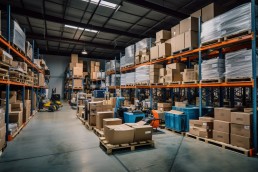
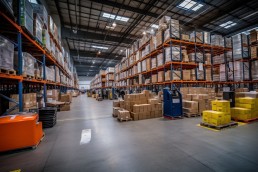
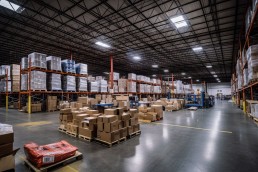
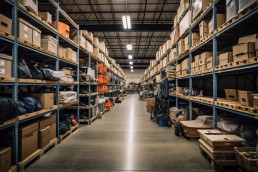
Managing an efficient flow of goods across various shopping channels can be a daunting task for businesses today. Omnichannel fulfilment stands as the backbone of a seamless customer experience in this multi-platform retail landscape.
This guide will unveil proven strategies, equipping you with the tools needed to master complex omnichannel challenges and propel your business forward. Dive in to transform your fulfilment strategy and elevate your brand’s success.
Key Takeaways – Omnichannel Fulfilment
Omnichannel fulfilment integrates all shopping channels, allowing customers to buy online and pick up in store (BOPIS), use curbside pickup, or get ship from store services.
Implementing omnichannel strategies can elevate customer satisfaction by offering them control over their shopping and delivery preferences.
Advanced systems with enhanced reporting capabilities provide real-time insights for better inventory management and decision-making across multiple platforms.
Buy Online Pickup In Store (BOPIS) sales are expected to reach $131.66 billion by 2026, indicating the growth potential of omnichannel fulfilment strategies.
Employing technology that is compatible with various shopping channels helps maintain an efficient order flow and strengthens a brand’s image.
Understanding Omnichannel Fulfilment

Moving forward from an introduction to the essentials of omnichannel fulfilment, let’s dive into its core process. Omnichannel supply chains revolve around a seamless integration of all available channels to fulfil customer orders.
This means that whether a customer buys a product online or in a brick-and-mortar store, they experience consistent service and delivery options. The goal is simple yet ambitious: provide customers with flexible shopping journeys like buy online, pick up in-store (BOPIS), curbside pickup, or ship from store services.
This strategy not only meets the rising demands for convenience but also helps retailers keep pace with giants like Amazon.com’s ever-expanding reach. A retail company utilising omni-channel software solutions can automate order processing from various points of sale – through their website, mobile app, over the phone, or directly at physical store locations, – ensuring every purchase triggers a smooth fulfilment operation.
Inventory management systems become key players here; they track products across different sites and platforms to avoid stockouts and optimise warehouse operations for faster turnaround times on orders.
With industry forecasts indicating significant growth in BOPIS sales reaching $131.66 billion by 2026, embracing omnichannel fulfilment strategies now opens doors to increased efficiency and future-proof business success.
Benefits of Omnichannel Fulfilment
Omnichannel fulfilment is revolutionising the retail landscape, providing seamless integration across various shopping channels to meet the rising expectations of today’s consumers.
Its strategic implementation can significantly streamline operations and elevate the overall customer experience, marking a pivotal shift in how enterprises approach distribution and the new sales channels.
Higher order efficiency
Higher order efficiency is the backbone of successful omnichannel fulfilment. It ensures that orders are processed accurately and swiftly, reducing errors and improving overall operational performance.
For directors seeking to streamline their company’s supply chain, this aspect cannot be overlooked. By allocating inventory smartly across different locations, businesses can respond rapidly to customer demand no matter where it originates.
This strategic approach minimises delays and maximises satisfaction.
Outsourcing to a third-party logistics provider simplifies achieving higher order efficiency. With experts handling your omni fulfilment process in just five steps, you can focus on other critical aspects of your business while reaping the benefits of increased brand competitiveness in today’s e-commerce-driven market.
Efficient management of warehouse operations also contributes significantly as it keeps products moving smoothly through various distribution channels without unnecessary hiccups or hold-ups.
Increased customer satisfaction
Increased customer satisfaction stands at the heart of an effective omnichannel fulfilment strategy. Offering customers multiple ways to receive their purchases not only streamlines the process but also boosts their shopping experience.
Imagine the convenience shoppers feel when they have the power to decide whether they want a home delivery, in-store pickup, or click and collect service for their online order. This level of control elevates customer contentment and fosters loyalty.
Directors should note that dual channel customers who engage with both online and physical stores tend to spend three times more than those using a single cross channel fulfillment only. By integrating omni channel and fulfillment centers into your business model, you’re catering to these high-value customers’ preferences for flexibility and speed.
Not only does this lead to repeat business, but it also encourages positive word-of-mouth, as satisfied shoppers are likely to recommend your brand’s seamless service to others. Next up: Enhanced reporting capabilities – unlocking insights that drive decision-making forward.
Enhanced reporting capabilities
With enhanced reporting capabilities, omnichannel fulfilment takes your operational efficiency to new heights. Centralised Order Management Systems come equipped with powerful analytical tools that streamline data from all sales channels into one place.
This consolidation simplifies the task of tracking inventory levels and customer interactions across multiple platforms.
Leveraging these advanced systems allows you to harness detailed insights for better decision-making. Imagine having real-time visibility over which products are flying off shelves and which ones are not, enabling quick adjustments to inventory distribution.
Accurate reports inform strategies for promotional activities, stock replenishment, and even help in anticipating future demand and market trends by analysing past consumer behaviours. With every report at your fingertips, navigating the complex waters of omnichannel supply chain management becomes markedly simpler for directors aiming to stay ahead in a competitive landscape.
Strengthened brand image
Seamless reporting capabilities not only streamline operations but also pave the way for a stronger brand image. Customers take notice when a company delivers on its promises across all channels, reinforcing trust and loyalty.
A solid omnichannel fulfilment strategy positions your brand as reliable, modern, and customer-centric. It’s more than just getting orders out; it’s about creating a cohesive experience that resonates with customers long after they’ve received their purchases.
Crafting this unified customer journey sets you apart from competitors who may struggle to integrate multiple channels effectively. Consistency in order to improve customer satisfaction reflects positively on your brand, translating into repeat business and positive word-of-mouth referrals.
Your ability to efficiently fulfill orders, with precision and care is not just an operational success—it becomes part of your brand’s identity, showcasing commitment to excellence in every aspect of the customer experience.
Challenges of Omnichannel Retail Fulfilment

Mastering the coordination between online and offline channels presents its own set of challenges, from seamless inventory management to robust fulfilment infrastructure creation. Businesses often face hurdles in aligning their supply chain processes with the dynamic demands of omnichannel commerce, ultimately affecting overall efficiency and customer experience.
Inventory management across channels
Mastering inventory management across different channels is crucial for the seamless operation of omnichannel retail. Retail directors understand that real-time inventory data forms the backbone of successful channel integration.
This granular visibility allows businesses to monitor stock levels, anticipate restocking needs, and update product availability instantly across all sales platforms—be it online marketplaces or brick-and-mortar stores.
ShipBob’s tech-driven fulfilment solutions serve as a key example here. With its capability to integrate with leading ecommerce platforms and marketplaces, ShipBob streamlines logistics and fulfillment operations, by centralising them — something every director aiming at omnichannel excellence should consider.
Next, we delve into developing and maintaining an efficient fulfilment and fulfillment infrastructure, to further bolster your company’s retail fulfillment strategy here.
Developing and maintaining a omnichannel fulfilment infrastructure
Navigating the complexities of inventory management across alternative sales channels seamlessly leads to the pivotal role of developing a robust fulfilment infrastructure. To meet customer demands for swift and accurate delivery, businesses must build a network of warehouses and distribution centres that are strategically positioned to serve various market segments efficiently.
This means investing in state-of-the-art warehouse management systems that can synchronise real-time inventory data across all sales platforms, preventing issues like overselling or overstocking.
Establishing this integrated network requires careful planning around location, technology adoption, and process optimisation. Companies should ensure their omnichannel supply chain is agile enough to switch gears between multiple fulfilment and fulfillment methods anywhere—be it direct shipping from warehouses, in-store pickups or curbside deliveries.
A well-maintained infrastructure not only streamlines operations but also fortifies the retail chain’s ability to scale up while maintaining consistency in customer service quality—a key factor in amplifying online shoppers’ shopping experience and cementing brand loyalty.
Effective Strategies for Omnichannel Fulfilment
Effective strategies for omnichannel fulfillment model fulfilment are the backbone of a seamless multi-platform retail experience, requiring meticulous coordination and adaptability. Mastering these tactics empowers businesses to streamline their supply chain operations and meet the rising expectations of a digitally-driven customer base.
Outsourcing to a single 3PL
Outsourcing your omnichannel fulfilment to a single third-party logistics provider (3PL) streamlines the entire process. With this approach, you harness a unified structure that integrates seamlessly into existing ecommerce platforms and marketplaces.
It centralises order and inventory management, providing clarity and control over your operations. This means faster shipping times to meet customer expectations, without the hassle of also managing inventory from multiple suppliers.
Leverage a 3PL’s powerful combination of inventory management software and nationwide fulfilment capabilities for an edge in the competitive retail industry. Their system ensures smooth data syncing across various online sales channels, for picking, packing, and shipping orders efficiently.
Embrace this solution not only to satisfy current demand but also to strategically position your company for scalable growth in digital commerce.
Keeping omnichannel fulfilment in-house
While outsourcing to a 3PL can be beneficial, there’s a strong case for maintaining fulfilment operations within your own business infrastructure. Keeping fulfilment in-house affords you complete control over the entire fulfillment process itself, from inventory management right through to delivery.
You’ll have the power to directly to manage inventory and stock levels, tailor customer service and ensure that packages are dispatched precisely when they should be.
Maintaining an in-house fulfilment strategy allows directors like you to closely monitor quality control and build direct relationships with both suppliers and customers. This approach requires investment in robust systems.
It also brings together crucial order management tools under one roof, providing real-time insights that enable fast shipping and flexible fulfillment options, which meet today’s customer expectations.
Using varied strategies for different channels
In the realm of omnichannel fulfilment, a singular approach may not cut it. Directors should consider employing multiple tactics tailored to distinct channels for optimal results.
Recognise that each channel has its unique demands and customer expectations. A strategy that works for your online store might not suit your brick-and-mortar outlets.
Use data analytics to understand customer behaviour on different platforms. Adapt your order fulfilment process according to these insights for each channel.
Tailor inventory management by channel. Keep top-selling items in closer proximity to shipping locations for faster online delivery while stocking a wide range in physical stores.
Develop a seamless POS system that facilitates easy checkouts regardless of the purchase point, enhancing the overall retail experience.
Opt for an ERP system enabling real-time inventory visibility across all channels, ensuring no sale is missed due to stock discrepancies.
Implement channel-specific marketing strategies driving traffic to both ecommerce businesses and brick-and-mortar stores, increasing overall retail sales.
Fine-tune shipping methods; offer next-day delivery through your e-commerce platform while ensuring efficient in-store pickup and curbside pickups options are available.
Engage third-party logistics providers (3PLs) who excel in rapid ramp omni logistics when demand exceeds in-house capabilities, avoiding potential bottlenecks.
Foster strong reverse logistics for hassle-free returns, making it an attractive proposition irrespective of purchase origin — online or in-store returns must be effortless.
Regularly track key performance indicators (KPIs) for every channel; use those metrics to refine strategies ensuring continuous improvement in omni orders fulfilment.
Utilising technology compatible with different channels
Transitioning from various strategic approaches tailored for different channels, it becomes evident that the backbone of effective omnichannel fulfilment lies in leveraging technology designed to integrate seamlessly across these platforms.
Implementing a unified data system ensures that all store inventory and levels are accurate, customer orders flow smoothly and returns processing is efficient. This synergy between online meeting points and brick-and-mortar stores streamlines operations and boosts performance metrics.
Selecting the right technology is pivotal for directors aiming at a robust omnichannel supply chain. It requires choosing solutions that offer flexible integration with existing enterprise resource planning (ERP) systems and delivering real-time insights into every aspect of order management – from the point of sale right through to shipping and customer communication.
Embracing tech-driven tools enhances control over supply chains while adapting quickly to market changes, ensuring your retail outlets operate like well-oiled machines no matter where or how a purchase is made.
Omnichannel Fulfilment Pathways
Explore the diverse routes your customers’ purchases can take, from digital clicks to physical bricks, ensuring a seamless journey that elevates both satisfaction and efficiency—delve into this pivotal element of omnichannel success in our comprehensive guide.
Buy online, pickup in-store
Buy online, pickup in-store offers a seamless bridge between digital convenience and brick-and-mortar experience. Directors should note how this strategy has become popular among shoppers who appreciate the flexibility of shopping from anywhere at any time while still enjoying immediate product access without shipping delays.
By implementing this aspect of omnichannel fulfilment, brick and mortar retailers can drive foot traffic to stores, potentially increasing in-store sales as customers come to collect their purchases.
Retailers with strong omni-channel fulfilment strategies use buy online, pickup in-store to leverage their physical locations as an asset rather than a liability. This pathway reduces delivery costs and satisfies consumers’ instant gratification needs by offering them quick product availability.
It demands precise inventory management across multiple selling channels, but positions retail directors to tap into improved order efficiency and elevated customer satisfaction rates that bolster brand image and return on investment.
In-store purchase, home delivery
Customers are increasingly looking for flexibility and convenience in their shopping experiences. In-store purchase with home delivery offers just that by merging the tactile benefit of brick and mortar stores with the comfort of online shopping.
This omnichannel strategy enables shoppers to browse and buy merchandise in a physical retail store, then have it delivered directly to their homes, blending immediacy with ease.
Retailers adopting this approach must streamline their omni-channel order fulfillment processes to ensure efficiency. It’s paramount for these businesses to integrate robust omni-channel order management systems that can handle in-store purchases alongside speedy home deliveries.
With omni-channel services, retailers can seamlessly manage orders from various channels without compromising on customer satisfaction or operational proficiency.
Ship from store
Transitioning from considering the dynamics of in-store purchase with home delivery, retailers now face a paradigm shift with the ‘Ship from store’ model. This innovative approach harnesses your retail stores as mini-fulfilment centres, allowing you to expedite shipping by utilising inventory already on shelves across fulfillment company at various locations.
It opens up a new realm for customer satisfaction by turning each brick and mortar outlet into a potential dispatch point.
Leveraging an Order Management System (OMS) like Fabric OMS streamlines this process, providing real-time inventory visibility which is essential for efficient ship-from-store operations.
The system smartly routes orders to the optimal location based on proximity and stock levels, slashing delivery times and costs significantly. By adopting such omnichannel solutions, directors can ensure their supply chain remains robust and responsive to ever-changing market demands while optimising overall omni channel fulfilment strategy.
Buy online, return in-store
Offering customers the option to buy online and return in-store is a cornerstone of omnichannel fulfilment. This process bridges the gap between digital convenience and brick-and-mortar assurance, creating a seamless shopping experience that boosts customer satisfaction levels.
Shoppers appreciate the opportunity to handle returns physically, ensuring immediate resolution rather than waiting for postal services to process their claims.
Stores can also benefit from this service by engaging with customers face-to-face during returns. Such interactions present unique chances to showcase exemplary customer service or even encourage exchanges rather than refunds, potentially leading to additional sales.
Emphasising integration across various sales channels becomes crucial here, as it allows for smoother transactions while maintaining accurate inventory records—key factors in achieving an efficient omni channel supply chain operation.
Overcoming Omnichannel Fulfilment Challenges
Navigating the complex landscape of omnichannel fulfilment can be daunting, but with strategic investment in technology and a commitment to continuous innovation, businesses can surmount these challenges and capture new growth opportunities in an ever-evolving retail market.
Investing in omnichannel order fulfilment technology
Embracing omnichannel order fulfilment technology offers a competitive edge by seamlessly integrating different sales channels for more efficient operations. This investment allows brands to keep up with the shift towards consumer demands for rapid and flexible shopping experiences.
Technologies come packed with integrations, enabling easy connections to various eCommerce platforms and marketplaces, thus facilitating smoother operations across both digital and physical retail landscapes.
Maintaining clear visibility over inventory becomes simpler with advanced omnichannel fulfillment solutions, which is especially crucial during peak seasons such as holidays. Directors must recognise that merging the online world’s agility with brick-and-mortar stores’ tangible presence lies at the heart of achieving top-notch omnichannel fulfillment.
Such technology bridges the gap between online efficiency and in-store engagement, ensuring that every customer touchpoint reflects your brand’s commitment to excellence in service delivery.
Backing of eCommerce and omnichannel fulfillment
Seamlessly integrating omnichannel order fulfilment technology lays the foundation for a robust eCommerce and an omnichannel order fulfillment” strategy. It’s essential for brands to embrace this dual approach to ensure they can meet customer demands in real-time, regardless of where the purchase takes place.
The marriage of online shopping with physical retail experiences allows customers to shop on their terms, which enhances satisfaction and loyalty.
Brands that effectively combine their eCommerce presence with an omnichannel infrastructure create a seamless path from screen to store. This synergy ensures that inventory management is synchronised across all channels, making sure products are readily available whether a customer chooses home delivery or in-store pickup.
With such a system in place, companies unlock new heights of order efficiency while fortifying their brand image against the rigour of today’s retail landscape.
Continuous Innovation
Supporting eCommerce and omnichannel strategies demands a relentless commitment to continuous innovation. It is this dedication that enables fulfilment centres to advance their technology, ensuring every aspect of the supply chain communicates effectively and operates efficiently.
Innovations in order management systems emerge as pivotal in handling complex customer demands across various channels – whether it’s dropping an order at a pop-up shop or routing it through an omnichannel warehouse.
Brands are now embracing novel omnichannel fulfilment options, including click-and-collect services, that reflect the evolution of consumer shopping habits. In response to Amazon setting high benchmarks with its capability to manage 35 orders per second, other retailers recognise the pressing need for innovative solutions.
These advancements play a crucial role in not only meeting customer expectations but also sustaining growth by targeting high-growth markets with smart, adaptable technologies.
Targeting high-growth markets
Expanding into high-growth markets spearheads the progress for any company aiming to leverage omnichannel fulfilment. These bustling economies often have a burgeoning middle class with disposable income, hungry for convenience and seamless shopping experiences across multiple channels.
Tapping into such environments mandates not only a strong presence online and in brick-and-mortar stores but also an infrastructure agile enough to adapt to rapidly changing consumer behaviours.
For business leaders, this means prioritising investments in advanced omni-channel supply chain technology that offers real-time inventory management and robust order processing capabilities.
It’s critical to employ innovative strategies that ensure your brand stands out by meeting customer expectations for swift, accurate service regardless of purchase points or delivery methods.
By focusing on these dynamic sectors, you build resilience against market shifts and set the stage for sustained growth through omnichannel excellence.
Case Study: Successful Omnichannel Fulfilment
To illustrate success in omnichannel fulfilment, let’s delve into a real-world scenario involving a renowned furniture retailer: IKEA. With an established brick and mortar retail presence, they embraced the omni-channel order fulfilment model to revolutionise their customer experience.
The adoption of cloud technology provided real-time inventory visibility across all channels, enabling seamless integration between online sales and physical store stock levels. Customers now enjoy multiple purchasing options including in-store pickup for online orders, enhancing convenience and bolstering satisfaction.
IKEA’s strategy included streamlining its supply chain logistics and integrating inventory and through advanced warehouse management systems (WMS). These efforts paid off as inventory turnover increased while operational costs diminished.
Moreover, customer penetration surged due to the flexibility offered by integrating ecommerce websites with physical outlets—a testament to effective multichannel retailing practice.
Transitioning smoothly into our next topic of discussion requires focusing on how businesses can scale such successful fulfillment center strategies further—the key lies within selecting the right omnichannel order management system (OMS) tailored for enterprise needs.
Scaling Omnichannel Fulfilment for Your Enterprise Business
As your enterprise business evolves, the complexities of scaling an omnichannel fulfilment operation can appear daunting. However, with a clear strategy focused on robust order management systems and seamless integration across platforms, expansion is not just achievable but essential for maintaining competitive edge in today’s market.
Selecting an OMS
Choosing the right Order Management System (OMS) for your enterprise is a pivotal move towards streamlining your omnichannel fulfillment strategy and fulfilment strategy. Look for an OMS that offers comprehensive distributed order management capabilities, crucial for handling inventory and orders across multiple channels.
Ensure it integrates seamlessly with your existing systems to avoid disruptions in data flow and operations.
Opt for an OMS that allows you to configure and customise according to your business’s specific needs, providing clear visibility of your inventory levels and making real-time updates possible.
This level of customisation is imperative as it empowers you to offer diverse fulfilment options such as dropshipping, in-store pickup, or ship-from-store solutions — all while enhancing operational efficiency, slashing costs, and lifting conversion rates.
Remember the ultimate goal: an OMS should not just fit but elevate your operational framework by knitting together disparate elements of omnichannel supply chain into one coherent system.
Integrating systems
Integrating systems is a pivotal step in mastering omnichannel fulfilment. It streamlines data flow across all platforms, ensuring that inventory levels and order statuses are updated in real-time.
This cohesion between systems prevents overselling and stockouts, delivering a transparent process for both buyers and your management team. Ensuring these elements communicate effectively fosters an environment where timely delivery becomes the norm, boosting customer satisfaction.
Through strategic system integration, you can harness the full potential and benefits of omnichannel fulfillment solutions like in-store pickup or ship from store options. Each model hinges on seamless backend operations to provide an effortless experience for customers.
Retailers must consider how technology will align with their business goals while choosing systems that interlock flawlessly with current processes—this guarantees operational coherence which is fundamental for quick scalability and maintaining a competitive edge within the market.
Looking beyond mere integration, configuring and customising your Order Management System (OMS) becomes the next significant endeavour.
Configuring and customising your OMS
Having established a seamless integration of systems, the next crucial step is configuring and customising your order management system (OMS). A well-tailored OMS becomes the backbone of your successful omnichannel fulfillment strategy, streamlining operations and enabling real-time inventory management.
It’s imperative to adjust settings within your OMS to reflect the unique needs of each sales channel while ensuring consistent customer experiences across all platforms. Customisation can range from simple interface changes to implementing complex logic for order routing based on inventory location or delivery promises.
Leverage microservices architecture to connect your OMS with other critical systems via APIs, allowing for more flexible adaptations as market demands evolve. Set up automated workflows within the OMS that align with our business rules for handling orders, returns, exchanges and customer service inquiries.
This ensures that every action taken contributes towards a unified brand experience – whether online, in-store or through any other touchpoint that forms part of your omni-channel supply chain network.
Enabling inventory visibility and availability
Once your Order Management System is fine-tuned, the next vital step involves shining a spotlight on inventory visibility and ensuring products are easily accessible across separate inventory and various channels.
Real-time tracking of stock levels becomes paramount to avoid overselling and understocking scenarios which can tarnish customer trust and your brand reputation. A robust warehouse management system should seamlessly update inventory information, whether a product resides in a warehouse or sits on store shelves awaiting purchase.
Leveraging technology that syncs with multiple shipping carriers via API integration simplifies management of multi-warehouse fulfilment, aligning with consumer expectations for product availability.
Empower omnichannel success by implementing an OMS offering distributed order management capabilities – this central hub not only streamlines inventory oversight but also fortifies the backbone of any omni-channel supply chain strategy.
With accurate data at their fingertips, directors can make informed decisions that boost efficiency and keep customers returning time and again.
Defining fulfilment options
Building on the visibility and availability of inventory, it’s vital to define your fulfilment options clearly. These are the pathways along which your products travel from warehouse shelves right through to the customers’ hands.
Determining the best mix of omni-channel fulfilment services can significantly streamline operations and cater to customer preferences. For instance, offering ‘buy online, pick up in-store’ or ‘ship from store’ options not only leverages physical retail locations but also satisfies customers seeking speed and convenience.
Making informed choices about whether to outsource certain processes or manage them in-house is crucial. The decision should align with company capabilities and strategic goals. Some companies have carved a niche in providing single 3PL services that simplify and outsource omnichannel fulfilment and logistics for businesses by handling storage, packing, shipping, and even returns.
Meanwhile, Amazon’s Fulfilment by Amazon (FBA) service can be an exemplary model for those looking into third-party solutions that enhance sales performance while maintaining high-quality customer experience across all channels.
Testing, Launching, and Monitoring
Testing, launching, and monitoring form a critical triad in the successful deployment of omnichannel fulfilment and omnichannel fulfillment optimization strategies. Directors must pay close attention to these steps to ensure seamless operations and excellent customer experiences.
Begin with thorough testing of the omnichannel order management system (OMS) to identify potential glitches before going live. This involves simulating various scenarios to check system robustness and response times.
Ensure that all integrations with other systems, such as your omni-channel warehouse or e-commerce platform, are fully operational and data is syncing correctly.
Customise the OMS according to specific business needs, making sure it can handle the unique aspects of your omni-channel supply chain.
Launch the system during a low-traffic period if possible, allowing for real-time monitoring without overwhelming customer service channels.
Track key performance indicators, like order fulfilment time, immediately after launch to gauge initial success and identify any immediate improvements needed.
Introduce inventory visibility checks right after launching; confirm that stock levels are accurate across all channels to avoid overselling or stock outs.
Continue post – launch monitoring over an extended period; this includes regular checks on system performance, customer satisfaction metrics, and fulfilment accuracy.
Conclusion – Omnichannel Fulfilment
Embrace the power of omnichannel fulfilment to revolutionise your business. Efficiently manage orders and exceed customer expectations by harnessing top strategies for success. The journey towards a seamless integration across channels begins with informed decision-making and robust investment in the right technologies.
Forge ahead, ensuring every step from click to delivery builds on your brand’s promise. Propel your enterprise forward; it’s time to master the art of omnichannel excellence.
FAQ’s
1. What is omni-channel fulfilment?
Omni-channel fulfilment integrates all outlets in the supply chain, allowing customers to buy and receive goods through various channels like online ordering or in-store pickup seamlessly.
2. How does omnichannel order management improve customer experience?
By using an omni channel order management system, businesses ensure that customers enjoy a swift and consistent shopping experience across multiple platforms, including tablet usage and store visits.
3. Can I collect my online purchase at a physical Walmart store?
Yes, Walmart offers an omnichannel ordering feature where you can choose to pick up your online orders directly from their stores for added convenience.
4. Are there benefits to having an omnichannel warehouse for my business?
Certainly! An omnichannel warehouse streamlines the entire lifecycle of the order fulfillment process, making it efficient for handling inventory while catering to both digital and physical retail demands.
5. Does data support the effectiveness of omnichannel strategies?
Data from sources like Slice Intelligence indicates that implementing a well-structured omni channel supply chain can significantly enhance business performance by meeting consumer expectations effectively.
And there's more...