Managing warehouse operations effectively poses a significant challenge, especially when it comes to the putaway process inbound inventory. This critical step ensures that items are stored efficiently after being received.
Our blog provides insights and strategies to refine and optimise your putaway process and system, promising enhanced performance and decreased operational woes over other putaway methods. Discover the methods to streamline your workflow and propel productivity forward.
Read on for transformative knowledge that could reshape your warehouse efficiency.
Key Takeaways – Putaway Warehouse Process
Directed putaway uses a Warehouse Management System to automate stock location assignments, improving accuracy and space utilisation.
Dynamic putaway employs smart algorithms to adapt storage locations based on inventory levels and demand patterns, increasing efficiency.
Fixed-location putaway assigns specific spots for items which aids in quick retrieval and suits high turnover goods, enhancing order fulfilment times.
Utilising real-time data analytics allows immediate optimisation of the putaway process by providing current information on inventory and warehouse capacity.
By reducing travel time within warehouses through efficient layouts and handling systems like AS/RS, overall putaway times are significantly decreased.
What is Putaway in Warehouse Operations?

Having established the fundamental role of warehouse operations in a supply chain, it’s essential to delve into one of its critical components: successful putaway process. This process is pivotal after receiving goods as it involves moving items from the dock to their best storage location within a facility.
It not only ensures that products are easy to find when needed but also maximises space efficiency and preserves order accuracy.
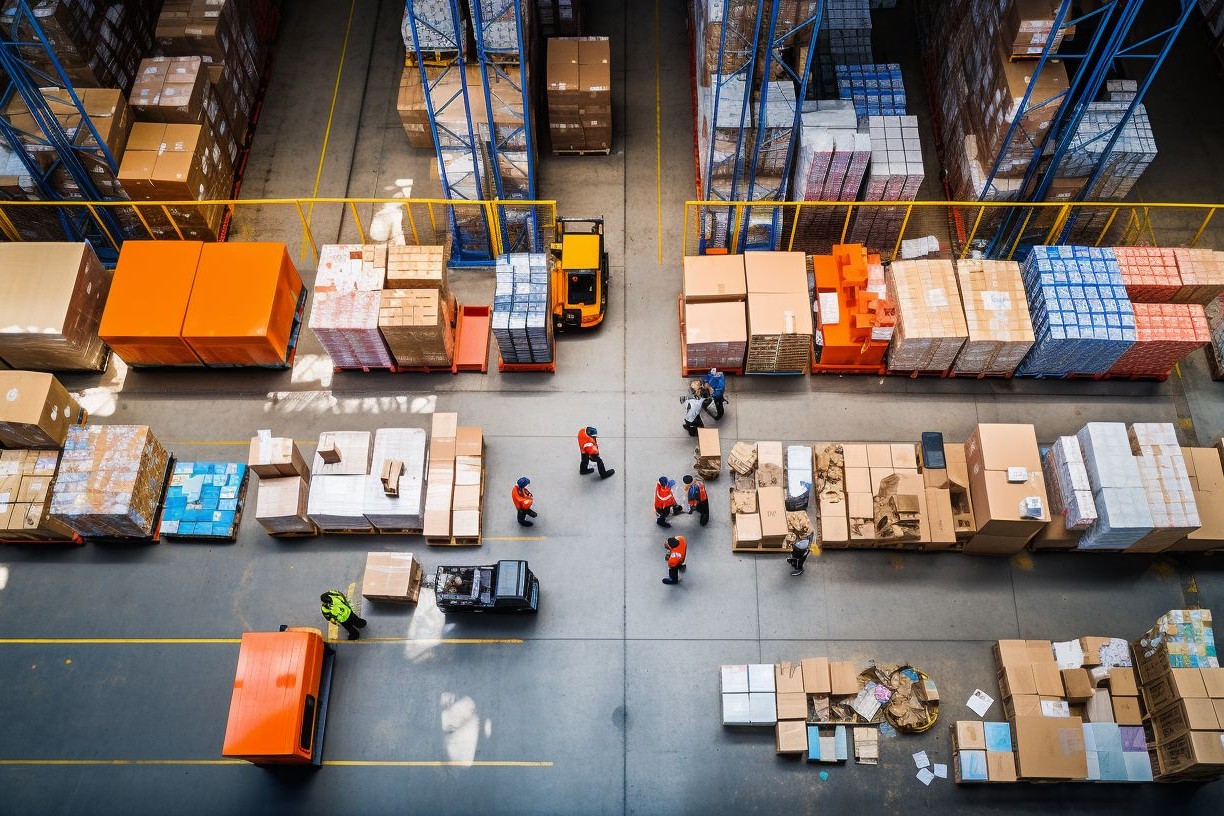
The task calls for precise coordination between workers and warehouse management systems (WMS). Forklifts deftly navigate through aisles, directed by real-time data about empty slots and item dimensions, ensuring every pallet or box is strategically placed for future picking.
Efficient putaway lays the groundwork for smoother operations downstream, from inventory management to fulfilling customer orders with speed and precision.
The Importance of Efficient Putaway Process
An efficient and effective putaway process is the backbone of successful warehouse operations. It ensures that goods are stored correctly and swiftly, which in turn reduces the time it takes to retrieve items later on.
This efficiency boosts overall productivity as workers spend less time searching for products and more time fulfilling orders. Furthermore, an orderly storage system minimises damage to stock, saving costs on waste and improving customer satisfaction with flawless deliveries.
A streamlined putaway strategy also maximises the use of available space. Warehouses can become chaotic quickly without structured storage practices, leading to under-utilised areas or overstocking certain zones.
With effective putaway methods such as directed or dynamic putaway, warehouses make better use of their layout by assigning locations that reflect item velocity and size storage requirements well.
These tactics facilitate quick adaptation to shifts in consumer behaviour or product demand trends – key factors for directors aiming at operational excellence. Moving forward, let’s delve into the different types of putaway methods that can further optimise this critical, warehouse manager function.
Different Types of Putaway Methods

Understanding the variety of putaway methods is crucial to streamlining your warehouse operations, and whether you adopt a directed, dynamic, or another approach can make all the difference in boosting efficiency – read on to uncover which strategy aligns best with your business needs.
Directed Putaway
Directed putaway streamlines your warehouse operations by assigning specific locations for incoming stock based on pre-set criteria. This method leverages a Warehouse Management System (WMS) like Microsoft Dynamics 365 to automate the allocation, which helps ensure high levels of inventory accuracy and efficiency.
Using directed putaway not only improves space utilisation in your warehouse or distribution center, but also minimises product damage risk by safely directing goods to their optimal storage positions.
By integrating directed putaway into your logistics strategy, you engage warehouse employees in an advanced level of order fulfilment. This approach brings precision to inventory management, guiding workers exactly where items need to go and facilitating quicker access storing items for future picking processes.
It paves the way for dynamic putaway, where continuous analysis of warehouse layout can further optimise warehouse storage space and handling strategies.
Dynamic Putaway
Dynamic putaway stands out as a game-changing approach in the modern warehouse environment. It relies on smart algorithms provided by advanced warehouse management systems to determine the best storage locations for items as they arrive.
This method doesn’t just assign any open slot; it analyses factors such as item size, weight, and turnover rate to streamline operations and maximise space utilisation.
Employing dynamic putaway transforms traditional storeroom practices by adapting to changes in inventory levels, demand patterns, and order fulfilment needs. Warehouses experience improved efficiency because this system intelligently assigns products to locations that reduce travel time during picking processes, ultimately accelerating order processing.
Through automation technologies integrated within warehousing operations, dynamic putaway ensures optimal placement of goods, effectively cutting down on storage costs and enhancing real-time visibility across inventories.
Fixed-Location Putaway
Moving from the flexible approach of dynamic putaway, fixed-location putaway offers a contrasting method that excels in environments where items have a designated spot on the shelves.
Pallets and products are assigned to specific locations within the warehouse, streamlining inventory management by ensuring each item has a final location and its own home. This technique aids the warehouse team in maintaining order and expedites the picking process because workers know exactly where to find and store merchandise.
Implementing this system requires careful planning of your warehouse layout to maximise space utilisation while enhancing safety protocols for staff manoeuvrability. It leverages predictability; workers familiar with their zones can operate more efficiently, reducing travel time between picks.
By adopting fixed-location and putaway strategies complemented by an effective warehouse management solution, organisations can bolster labour efficiency and spatial organisation – a crucial step towards leaner operations in distribution centres.
Direct Putaway
Shifting gears from fixed-location storage, direct putaway takes the warehouse returns process a step further by leveraging technology. This method is distinct in its reliance on warehouse management software to automatically assign incoming inventory back to the most suitable location.
It utilises predefined rules tailored to an operation’s unique layout and stock characteristics, ensuring items are stowed quickly and precisely.
Direct putaway shines in complex logistical networks where time savings translate into significant cost reductions. With automated processes driven by algorithms within a WMS, errors are slashed, and workers can focus on other critical tasks that demand their expertise.
Inventory management becomes less about guesswork and more about strategic placement driven by real-time data analytics, revolutionising how directors approach the put away process in warehouses today.
Benefits of an Optimised Putaway Process

An optimised putaway process stands as a cornerstone for operational success, significantly impacting the entire warehousing workflow. By refining this critical step all the processes, businesses can unlock a cascade of advantages that transcend mere organisation and delve into tangible benefits across their supply chain operations.
Reduction of lost or misplaced items
Implementing a well-structured putaway process dramatically cuts down on the instances of lost or misplaced items in your clean and organised warehouse too. With directed putaway systems, driven by sophisticated warehouse management and software systems, each product is assigned an optimal location.
This minimises errors and ensures that stock is easily retrievable when needed. The proper use of RFID technology further streamlines this process, making it easier for staff to locate products quickly and accurately.
Automated storage and retrieval systems take efficiency one step further by removing much of the human error from inventory management. By automating both the storing and picking processes, these advanced solutions safeguard against misplacement right from the start.
Proper training reinforces this system’s efficacy; employees trained in using such technologies contribute to an organised environment where items are significantly less likely to be misplaced or go missing.
Speedier picking process
Reducing the incidence of lost or misplaced items paves the way for a more streamlined picking process. With an efficient putaway system in place, warehouse managers and staff can locate and retrieve products with remarkable speed, cutting down on the time spent searching for inventory.
Directed putaway systems provided by sophisticated warehouse management solutions ensure that items are stored logically, making them easily accessible when orders come through.
This ease of access not only boosts productivity but also enhances overall customer satisfaction as order fulfilment times improve dramatically. Automated storage and retrieval systems reinforce this fast-paced environment by moving goods between storage locations and pick stations with precision and speed, thus simplifying what was once a manual and time-consuming task into an automated, swift operation.
Embracing these technologies allows warehouses to handle greater volumes of orders effectively, positioning e-commerce businesses at the forefront of operational efficiency.
Effective use of storage space
Maximising warehouse space goes hand in hand with an optimised putaway process. By precisely using available storage space availability and determining the most suitable storage locations for different items, you pave the way for a seamless operation.
The use of ABC analysis is pivotal here; it categorises inventory based on importance and turnover rates, ensuring high-demand products are readily accessible. This strategic approach not only improves space utilisation but also drives down handling costs by minimising unnecessary movement within the warehouse.
Employing smart storage solutions like adjustable pallet racks or Automated Storage and Retrieval Systems (AS/RS) transforms your warehouse landscape drastically. These innovations enable denser packing of goods without sacrificing pick efficiency – key for warehouses juggling a diverse range of products.
Always analysing user profiles helps tailor these systems to meet specific operational demands, further leveraging every inch of available space. Efficiently navigating through fixed and dynamic locations means less time searching and more time dispatching orders to buyers eagerly awaiting their purchases.
Best Practices for Enhancing Putaway Process
Delving into the core of an efficient warehouse operation, we unveil best practices that streamline the putaway process, a critical component poised to elevate operational performance – discover how these strategies can revolutionise your storage business growth and system efficiency.
Real-time Data Analytics
Harnessing the power of real-time data analytics transforms putaway and warehouse processes and operations. Immediate access to information via a Warehouse Management System (WMS) equips managers with actionable insights, enabling swift decision-making that increases efficiency and accuracy during the putaway process.
The implementation of cloud-based systems further elevates this by providing up-to-the-minute inventory levels and storage capacities, ensuring an optimised flow of goods through the warehouse.
Real-time analytics play a crucial role in reducing errors and slashing time spent on traditional methods. Automated systems that rely on such analytics streamline operations, cutting down manual input and allowing for immediate identification of optimal storage locations for incoming stock.
This technology also offers the agility to respond quickly to changes in inventory or demand, making it indispensable for dynamic warehouses aiming at peak performance without compromise.
Reduction of Travel Time
Reducing travel time within a warehouse significantly ramps up the entire put-away process. Implementing strategies like optimised floor layouts and advanced material handling systems means warehouse workers can move stock more quickly from receiving docks to storage areas.
Consider how automation, such as Automated Storage and Retrieval Systems (AS/RS), seamlessly integrates into these efforts, swiftly placing items in their designated spots with minimal human intervention.
Efficient pathfinding algorithms also play a crucial role; they guide forklifts along the shortest routes, preventing unnecessary detours that eat into productivity. Integrating real-time data analytics informs decisions on the fly, further streamlining movement inside busy warehouses.
Use of Fixed and Dynamic Locations
Incorporating both fixed and dynamic locations within your putaway strategy can dramatically streamline your warehouse putaway operations. Fixed locations designate specific spots for items, which simplifies the task of finding products and suits goods with a high turnover rate.
This method also supports better inventory control as each item has its place, reducing the time spent searching for stock. On the other hand, dynamic locations are assigned based on space availability and can be adjusted according to current inventory levels or demand patterns.
Leveraging these two strategies effectively requires a sophisticated Warehouse Management System (WMS) that directs warehouse staff to precise storage areas. Directed putaway systems provided by WMS platforms ensure items are placed in optimal positions, combining rules-based logic with real-time data on space utilisation.
By harnessing both methods, warehouses maximise their use of available space while boosting efficiency in locating and picking items – features essential in operating at peak performance in today’s competitive market.
Accurate Inventory Management
Accurate inventory management is the cornerstone of a seamless putaway process. It ensures that every item is accounted for, reducing the risk of stockouts and overstocking. Directors know that real-time inventory tracking and oversight keeps warehouse operations sharp and responsive.
With an effective inventory management system, workers can track products from receiving to optimal storage location, which leads to faster retrieval times and less confusion.
Properly managed inventories lead to precise order fulfillment in warehouse automation workflows. Utilising barcode scanners streamlines the recording of items into the system as they arrive.
This technology promotes an error-free environment by cutting down on manual data entry mistakes. Not only does it improve accuracy, but it also accelerates the entire putaway operation allowing businesses to keep up with increasing demand efficiently.
Conclusion
Implementing streamlined putaway processes revolutionises warehouse efficiency. Embrace innovative methods and harness data analytics to refine operations. Training staff in best practices merges human expertise with technological precision, fostering an environment ripe for continual improvement.
Embracing these techniques will be a significant stride towards operational excellence, ensuring that your optimised warehouse putaway process remains at the forefront of logistical innovation.
FAQs
1. What does ‘put away’ mean in a warehouse?
In a warehouse, ‘put away’ means moving goods from the receiving area to their predetermined location or proper storage space.
2. How can directed put-away help retailers optimise their supply chain?
Directed putaway uses electronic communications and optimisation methods to efficiently allocate cargo in the warehouse, preventing stock-outs and enhancing omnichannel operations.
3. Can barcoding improve the putaway process?
Yes, barcoding speeds up the warehouse putaway process by ensuring accurate tracking of items, which also assists in better order picking and packaging processes for retailers.
4. What role does third-party logistics play in optimising the putaway process?
Third-party logistics providers use advanced supply chain management techniques including ERPs and real-time data analysis to streamline and optimise every aspect of warehousing, including the put-away process.
5. How can technology like ‘the cloud’ aid with inventory management during put-away?
Cloud technology allows for instant updating of information on premise via internet service providers or browsers, enabling more efficient and optimise inventory management and control during each stage of manufacturing.
6. Are there any optimisation techniques that factor in product shelf life during the putaway process?
Optimisation techniques often involve prioritising products based on shelf life using smart systems that indicate which items should be moved first to avoid spoilage or waste.
And there's more...