In the bustling world of business, keeping goods moving efficiently is a puzzle many struggle to solve. A distribution center is the vital nodes that keep the supply chain flowing smoothly, storing and dispatching products with precision.
This article unveils the intricate dance of operations within distribution centers, revealing their pivotal role in connecting suppliers to customers effectively. Discover how these dynamic hubs power modern commerce, ensuring your orders arrive swiftly and accurately.
Key Takeaways – Distribution Center
Distribution centers act as essential hubs within supply chains, focusing on swift movement of goods rather than long-term storage.
They employ advanced technologies like Automated Storage and Retrieval Systems (AS/RS), barcode and RFID tracking, and Autonomous Guided Vehicles (AGVs) to enhance efficiency.
The strategic location of these centers facilitates quicker delivery times, directly impacting customer satisfaction with faster service.
Modern distribution centers must navigate challenges such as labour shortages by leveraging technology and workforce management strategies.
As logistics continue to advance, distribution centers will play a vital role in shaping the future of global commerce through innovative practices.
Defining a Distribution Center

A distribution center serves as a critical nexus point where products are received, processed, and distributed to their final destinations within the intricate web of supply chain networks.
Unlike traditional warehouses that primarily focus on storage for longer periods, these centers emphasise the seamless movement of goods, operating with an ethos of efficiency to meet dynamic consumer demands.
Distinction Between a Distribution Center and a Warehouse
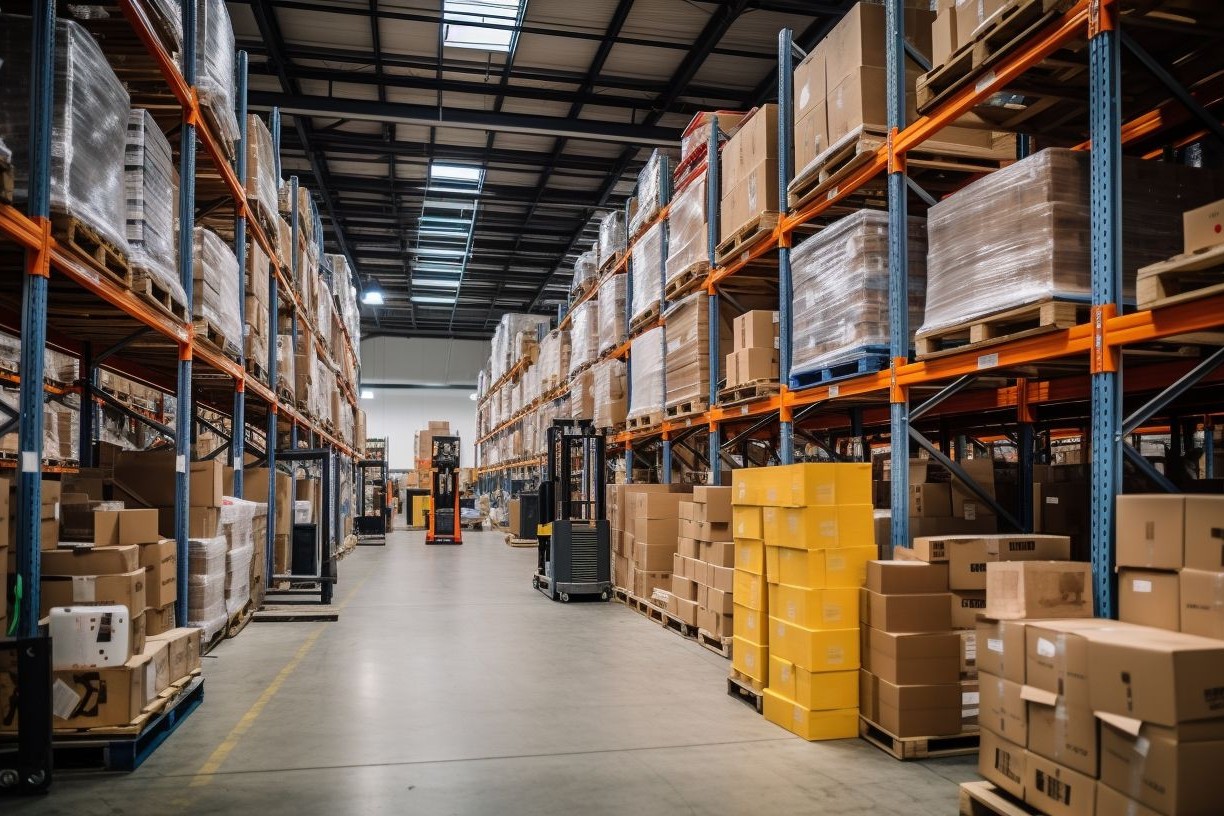
Distribution centers and warehouses serve different roles in the supply chain. Warehouses primarily store products for a long period, waiting until they are needed again. These facilities focus on maximising storage space with rows of pallet racking designed to keep large quantities of goods organised until distribution.
Unlike warehouses, distribution centers emphasise swift movement of goods; they balance short-term storage with active order processing.
The core function of a distribution center is to act as a hub that quickly receives, processes, and forwards items toward their final destination. Here, inventory management is more dynamic than in conventional warehouses; advanced systems like warehouse management software (WMS) track products through every stage.
Distribution centers support efficient handling by integrating various operations such as cross-docking and packaging within one facility, thus accelerating the journey from supplier to customer.
Core Functions of a Distribution Center

Distribution centers serve as the pivotal hubs within supply chains, where critical operations such as inventory handling and order processing converge to ensure a smooth flow of goods from suppliers to customers; delving further into their multifaceted roles will reveal the intricacies that power efficient distribution networks.
Receiving and Sorting Goods
Efficient receiving and sorting processes underpin the effectiveness of distribution centers. These tasks ensure the swift movement of goods through a facility, maintaining supply chain momentum.
Trucks arrive at the distribution center’s receiving dock, where unloading procedures begin immediately.
Staff check each item against delivery paperwork to confirm all goods have arrived as expected.
Scanners come into play to capture product information with speed and accuracy.
Damaged items undergo immediate identification to prevent them from entering inventory systems.
Sorting activities separate products based on their next destination within the center or onward journey.
Advanced systems like barcode or RFID tracking support quick sorting without manual errors.
Cross – dock facilities might be used for transferring goods directly from incoming to outgoing trucks without storage in between.
Products destined for different locations necessitate careful distribution onto pallets and racks.
Storing and Managing Inventory
Effective inventory management is pivotal in a full warehouse or distribution center, ensuring that goods are readily available for the order fulfilment process without resorting to excess stock that ties up capital.
Distribution centers tend to employ sophisticated inventory management software and automated storage and retrieval systems (AS/RS) to keep track of every item, whether on pallet racks or in bulk boxes.
These technologies also guide the precise placement of goods within the facility, optimising both space usage and accessibility.
Inventory turns into orders which then require precise coordination; this seamless transition hinges on well-managed storage systems. The next step in line with these processes is ensuring swift and accurate order fulfilment – another core function where meticulous inventory control plays a fundamental role.
Order Fulfilment
Order fulfilment stands at the heart of distribution center operations, ensuring customers receive their purchases promptly and accurately. This critical process in fulfilment at distribution center locations revolves around picking, packing, and shipping orders efficiently.
Staff pick items from storage shelves using advanced systems like voice- or light-directed picking to minimise errors.
Once collected, goods are carefully packed to prevent damage during transit, often with materials that balance protection and sustainability.
Workers label each package with precise shipping information, harnessing barcode technology for quick identification and tracking.
Fulfilment teams use warehouse management systems (WMS) to streamline order processing and maintain a steady workflow.
Orders are consolidated according to their destinations to optimise shipping routes and reduce delivery times.
Distribution centers coordinate closely with carriers to schedule pickups for outbound shipments, keeping in mind peak times and cost-effectiveness.
To enhance customer satisfaction, rapid handling of returns is integrated into the system, allowing quick restocking or disposal as needed.
Continuous analysis of order fulfilment metrics helps refine strategies for batch picking or wave picking based on demand patterns.
Automation technology plays an increasingly vital role, utilising robotics like automatic guided vehicles (AGVs) to move goods seamlessly throughout the facility.
Real-time data feeds into enterprise resource planning (ERP) software aid decision-makers in balancing inventory levels with order volumes.
Shipping and Transportation Coordination
Efficient coordination of shipping and transportation is a crucial component within a distribution center. It ensures the swift movement of goods from the facility to customers, playing a vital role in supply chain success. Here’s how these centers manage this complex shipping process well:
Distribution centers select the best transportation method based on the destination, size of shipment, and required delivery speed. This could mean dispatching full truckloads for large orders or using intermodal containers for long-distance haulage.
They use advanced technologies like barcode and RFID systems to track shipments in real time, providing updates on their whereabouts and estimated arrival times.
Goods are prepared for transport using effective material handling equipment, ensuring they are securely packed to prevent damage during transit.
The strategic location of distribution hubs allows for optimised routing, reducing travel time and fuel costs while maximising efficiency.
Coordination with freight forwarders and haulage firms is managed meticulously to ensure that all parties work together seamlessly, avoiding delays and stockouts.
Automated Storage and Retrieval Systems (AS/RS) help expedite the loading process by moving goods swiftly from storage areas to shipping docks.
Distribution centers implement ‘first in, first out‘ methods to manage inventory levels and ensure that products do not become obsolete before they reach retail stores or end consumers.
Robust Warehouse Management Systems (WMS) provide staff with clear instructions for picking and packing orders accurately and streamlining returns management.
They schedule shipments strategically throughout the day to avoid congestion at loading docks and capitalise on off-peak transportation rates where possible.
Ensuring last-mile delivery is efficient becomes a top priority as this final step can significantly impact customer satisfaction levels.
The Role of a Distribution Center in Supply Chains

Distribution centers serve as the pivotal hubs within supply chains, streamlining the movement of goods from suppliers to consumers with remarkable efficiency. They are critical in maintaining the balance of commerce, ensuring products arrive at their destinations promptly and managing resources effectively to meet market demands.
Synchronising Supply and Demand
Effective distribution centers are pivotal in keeping the balance between what’s available and what’s needed, ensuring that shelves are stocked just right – not too much to cause overstock waste and not too little to miss sales.
They adapt quickly to changes in consumer demand, using advanced forecasting methods supported by real-time data. This approach reduces bottlenecks and prevents surplus inventory from piling up.
Implementing technologies such as automated storage and retrieval systems streamlines the flow of goods through a full distribution center planning other distribution facility. By doing so, these fulfillment centers can respond more effectively to market fluctuations, aligning production schedules with order fulfilment.
Thanks to their strategic location near transport hubs, they can move products efficiently, matching supply with customer demands while cutting down on delivery times.
Facilitating Faster Delivery to Customers
Distribution centers are the engines that drive speedy delivery, enabling businesses to meet their customers’ expectations with remarkable efficiency. Positioned close to key transport links and major urban areas, they cut down transit times drastically.
This proximity ensures products move quickly from distribution centers to customers’ doorsteps, enhancing satisfaction and fostering loyalty.
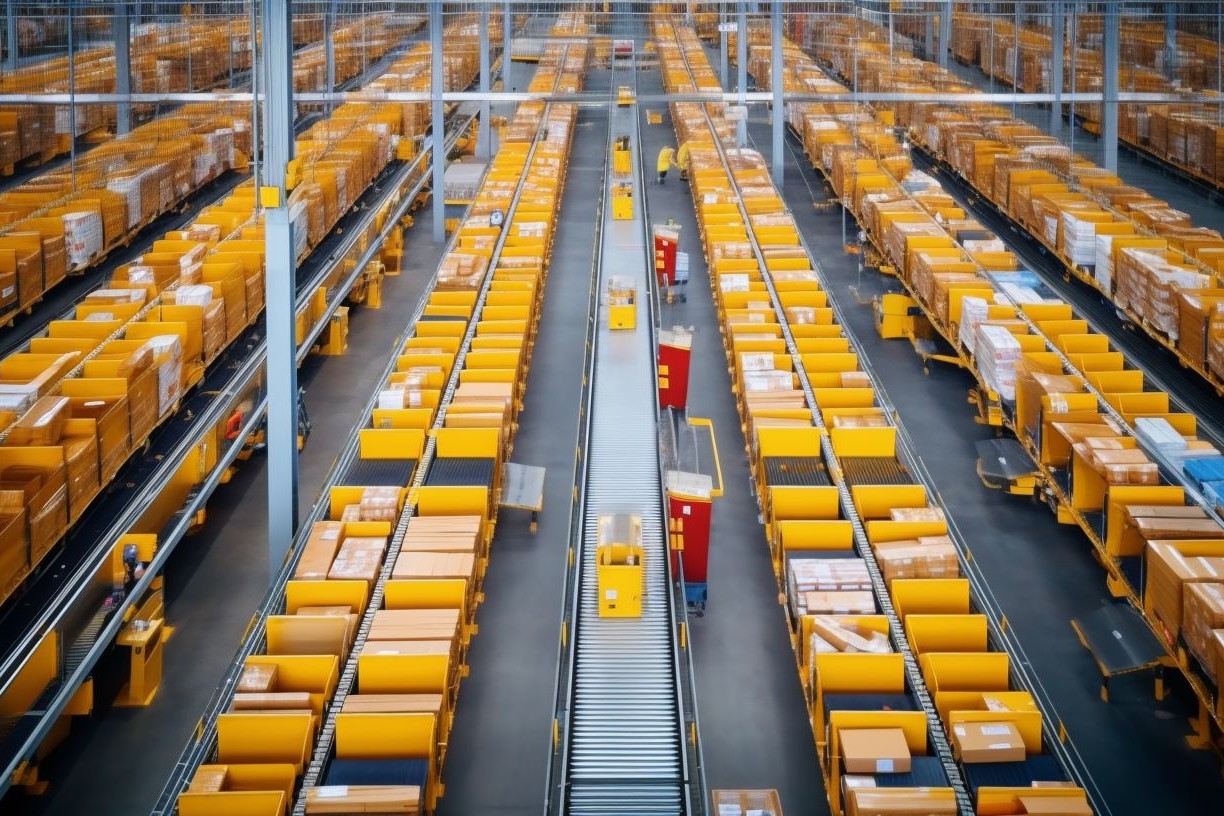
Equipped with cutting-edge technology such as advanced conveyor systems and state-of-the-art warehouse management software, these hubs manage goods with precision and speed. Automation plays a pivotal role in reducing processing time for orders – robots may whizz around gathering items while software seamlessly coordinates the shipping logistics.
As we delve into Streamlining Inventory Management next, let’s consider how meticulously organised inventory can further revolutionise the delivery process.
Streamlining Inventory Management
Effective inventory management is critical in modern distribution centers, enabling businesses to tackle the twin challenges of overstocking and stockouts. By employing sophisticated technologies such as automated storage and retrieval systems (AS/RS), barcode, and RFID tracking, managers gain real-time visibility over their stock levels.
This level of precision not only ensures optimal inventory levels but also significantly reduces the risk of errors during order fulfilment.
Advanced warehouse distribution centers play a pivotal role in revolutionising how inventory is handled by slashing warehousing costs and improving efficiency across the board. Utilising varied storage containers, these distribution center are adept at keeping pace with fluctuating supply chain demands while maintaining lean operations.
The fusion of strategic technology use with smart inventory practices leads to a streamlined distribution process that keeps products flowing smoothly from shelf to customer.
Advanced Technologies in a Distribution Center

Distribution centers are harnessing cutting-edge technologies to revolutionise logistics, from enhancing real-time tracking capabilities to streamlining operations with robotics; delve deeper into how these advancements are setting new industry standards.
Automated Storage and Retrieval Systems (AS/RS)
Automated Storage and Retrieval Systems, or AS/RS, are transforming how distribution centers operate by empowering them with sophisticated technology that handles the storage and retrieval of goods.
These innovative systems utilise a blend of conveyors, robotic arms, and automated guided vehicles to move items swiftly throughout the facility. Not only do they streamline processes, but they also maximise space efficiency – a crucial advantage for any high-volume distribution center.
Incorporating AS/RS into operations ensures seamless integration with warehouse management systems (WMS), enhancing overall productivity. They form an essential part of modern logistics, allowing businesses to respond rapidly to market demands while maintaining accuracy in inventory management.
The next advancement poised to revolutionise distribution centers is Barcode and RFID Tracking — another leap towards agility in the supply chain management process.
Barcode and RFID Tracking
Moving beyond the realm of automated storage and retrieval systems, barcode and RFID tracking stand as integral components in modern distribution centers. Barcode scanning streamlines inventory management by quickly capturing product information, enabling staff to track items throughout the facility with precision.
Employees use handheld scanners or built-in readers on forklifts to update store inventory records in real-time, ensuring data accuracy.
RFID technology takes this a step further by allowing non-line-of-sight reading of tags attached to goods. This means that multiple items can be scanned simultaneously without direct handling, significantly speeding up processes like receiving and sorting goods or checking stock levels.
The implementation of RFID systems results in reduced manual effort while enhancing the speed and reliability of operations within multiple distribution centers and establishments, solidifying their roles as pivotal forces behind effective supply chain management.
Autonomous Guided Vehicles (AGVs)
Autonomous Guided Vehicles (AGVs) are transforming distribution centers by bringing in cutting-edge efficiency and reducing labour costs. Equipped with advanced sensors, cameras, and navigation systems, these smart machines tirelessly move goods through complex warehouse layouts.
They flawlessly execute tasks from picking up items to delivering them along programmed routes, working seamlessly with other technologies like Warehouse Management Systems (WMS).
Consider the strategic advantage AGVs offer: they keep operations running smoothly around the clock without fatigue or errors common in human-operated processes. Integration of AGVs within a high-volume distribution center epitomises how automation can dramatically streamline material handling.
It’s clear that embracing AGV technology positions distribution centers at the forefront of innovation and competitiveness in today’s fast-paced supply chain environments.
Benefits of a Modern Distribution Center
Modern distribution centers are powerhouses of efficiency, harnessing cutting-edge technologies to revolutionise the logistics industry. They deliver tangible benefits that not only streamline operations but also translate into competitive advantages, propelling businesses towards greater growth and enhanced customer satisfaction.
Enhanced Efficiency and Productivity
Distribution centers are powerhouse hubs that drive efficiency and ramp up productivity in supply chains. By employing advanced technologies, such as automated storage and retrieval systems (AS/RS) and barcode or RFID tracking, these facilities ensure a swift flow of goods from suppliers to customers.
Streamlined processes and efficient workflow within the distribution centers enable packages to move quickly, reducing dwell time and speeding up order fulfilment.
Effective management within these centers plays a vital role in synchronising supply with customer demand. With the integration of warehouse management systems (WMS) and autonomous guided vehicles (AGVs), operations get refined, allowing for real-time inventory oversight and better allocation of human resources.
This optimised approach not only bolsters the overall performance but also paves the way for substantial cost savings while maintaining top-tier service delivery standards.
Cost Savings and Value Optimisation
Optimising value and slashing costs stand as pivotal advantages of integrating distribution centers into supply chains. By consolidating orders and streamlining operations, these facilities significantly trim down the time and expense involved in delivering products to their final destinations.
They foster economies of scale, allowing for bulk, storage costs and transportation that cut spending per unit. Advanced technologies such as warehouse management systems (WMS) further heighten efficiency by optimising route planning and inventory control, contributing to more cost-effective strategies.
Embracing multiple distribution centers can also decentralise product distribution, enabling quicker delivery at reduced shipping costs – a boon for any retail company looking at boosting its bottom line without compromising on customer service.
This strategic approach not only enhances immediate financial health through better inventory management but also positions companies for sustainable growth in a highly competitive online retail market.
Now, let’s delve into how enhanced customer satisfaction is another major benefit brought forth by modern distribution centers.
Improved Customer Satisfaction
Distribution centers play a crucial role in elevating customer contentment by ensuring products arrive on time and in perfect condition. They make this possible through refined order fulfilment processes that react swiftly to consumer demands.
The proximity of these centers to various market regions diminishes the lead time, letting customers receive their orders faster than ever before.
Centralised distribution strategies enhance the customer’s shopping experience by reducing errors and delivering orders accurately. This efficiency stems from advanced technologies such as warehouse automation and sophisticated inventory management systems, which not only streamline operations but also minimise delays.
Tailoring logistics to shopper expectations has become easier, resulting in a notable rise in customer satisfaction levels across industries.
Facing Challenges in a Distribution center
Distribution centers are the backbone of supply chain operations, yet they confront numerous trials that must be surmounted to maintain efficiency and competitiveness. Chief among these challenges is adapting to the evolving landscape of logistics, where balancing workforce management with the integration of advanced technologies becomes crucial for future success.
Addressing Labour Shortages
To tackle labour shortages, many distribution centers are increasingly investing in training and development programs. These initiatives not only enhance the skill set of current employees but also make these jobs more appealing to potential candidates.
Savvy businesses are turning to partnerships with third-party logistics (3PL) providers, enabling them to tap into a larger pool of skilled workers that can flexibly respond to peak periods without bearing the full weight of recruitment and training costs.
Embracing cutting-edge technologies is another effective strategy for mitigating staff deficits. Distribution centers deploy automated storage and retrieval systems (AS/RS), utilise barcode and RFID tracking, and implement autonomous guided vehicles (AGVs).
This automation supports existing warehouse workers, by handling repetitive tasks, allowing human resources to focus on more complex operations within the supply chain, thus driving efficiency up while keeping labour demands manageable.
Meeting the Need for Speed and Accuracy
Speed and accuracy stand at the forefront of distribution center operations. Managers incessantly seek methods to accelerate order processing without compromising precision. Advanced technologies such as automated storage and retrieval systems (AS/RS) and barcode or RFID tracking are pivotal in striking this balance.
They propel the quick movement of goods through the facility while ensuring that every item is monitored accurately, reducing errors and enhancing efficiency.
In today’s fast-paced market, customers expect rapid delivery of their purchases. Distribution centers must therefore streamline their workflow to meet these expectations. Utilisation of innovative equipment like autonomous guided vehicles (AGVs) aids in speeding up internal transport processes, allowing distribution centers to focus more for faster order fulfilment with fewer mistakes.
This integration of technology not only bolsters throughput but also fortifies a company’s reputation by reliably delivering orders on time and error-free, an essential factor for maintaining competitive advantage in a dynamic retail landscape.
Embracing Technological Advancements
Distribution centers are transforming rapidly with the integration of cutting-edge technologies. Automated Storage and Retrieval Systems (AS/RS) play a pivotal role in this evolution, streamlining inventory management and bolstering efficiency.
These sophisticated automated systems will enhance the precision and speed with which goods are handled, thereby reducing human error and operational costs.
The implementation of Barcode and RFID Tracking further revolutionises the distribution center and logistics by ensuring real-time visibility of assets throughout the supply chain. Autonomous Guided Vehicles (AGVs) amplify these advancements by transporting goods within facilities autonomously, fostering safer work environments while simultaneously elevating productivity levels.
Directors must recognise that leveraging such technological innovations is not merely an option but a strategic imperative to remain competitive in today’s fast-paced market.
Distribution Center Layout and Optimisation
To harness the full potential of a distribution center, strategic layout planning is essential, paving the way for enhanced workflows and efficiency gains that resonate throughout the supply chain.
Strategic Layout Planning
A well-designed layout maximises the use of available space, considering both horizontal and vertical dimensions. This involves leveraging high storage systems and recognising the importance of floor space for materials-handling equipment.
Efficient traffic flow within the center prevents bottlenecks, ensuring that forklift trucks, employees, and automated machines can move smoothly without causing delays or hazards.
Incorporating flexible storage solutions allows for adaptability in handling varying inventory sizes and quantities, responding effectively to market demands.
Zone picking areas are segmented strategically to minimise travel time for pickers, improving speed and accuracy in order fulfilment processes.
Safety measures form an integral part of the design; clear signage, walkways, and emergency exits need to be accessible unimpeded by storage or machinery.
Security systems protect assets from theft or damage; surveillance cameras and controlled access points are crucial components of a secure layout plan.
Proximity to key transportation links is factored into site selection to ensure efficient movement of goods to and from the facility. This reduces shipping durations and costs while maintaining supply chain fluidity.
Environmental considerations include energy – efficient lighting systems and sustainable waste management practices enhancing corporate social responsibility engagements.
Technology integration points are planned out for installing warehouse management system (WMS) hardware, providing real-time data on inventory levels and operational status.
Safety, Security, and Cleanliness Standards
A strategic layout using a distribution center is only the beginning; maintaining safety, security, and cleanliness within distribution centers is paramount. Upholding these standards not only ensures compliance with health and safety laws but also enhances overall quality assurance operational efficiency.
Implement strict safety protocols to prevent accidents and injuries among staff. This involves providing comprehensive training on equipment use, such as forklift trucks, and ensuring personal protective equipment (PPE) is always worn.
Install modern security systems to safeguard goods from theft or damage. These can include surveillance cameras, secured access points, and alarm systems to monitor and protect inventory around the clock.
Regularly conduct risk assessments to identify potential hazards in the facility. Once identified, take immediate action to mitigate risks, ensuring a safe working environment for all employees.
Maintain cleanliness throughout the distribution center with daily cleaning schedules. It’s crucial that workspaces are kept free from debris to prevent slips or falls and promote a more organised operation.
Keep aisles and emergency exits clear at all times. Unobstructed pathways are essential not only for day-to-day operations but also in case of an emergency evacuation.
Enforce proper waste management procedures for both recyclable materials and general waste. Encouraging responsible disposal practices contributes to environmental sustainability efforts.
Provide hand washing stations and sanitisation points throughout the facility as part of health hygiene standards. This measure has become increasingly significant in preventing illness spread among workers.
Ensure proper lighting in all areas to maintain visibility and reduce the likelihood of accidents or errors during order picking processes.
Utilise clear signage throughout your distribution center to direct flow of movement and highlight important information regarding safety procedures or locations of fire extinguishers and first aid kits.
Commit to regular training refreshers that reinforce critical safety measures while introducing new best practices as they emerge within the industry.
Leveraging Vertical Space and Optimising for Automation
Maximising the use of vertical space is an ingenious move in modern warehouse and distribution center layout. It allows for a significant increase in storage capacity without requiring additional floor space.
Equipping these high-rise storage areas with automated technologies, like automated storage and retrieval systems (AS/RS), transforms operations into highly efficient hubs capable of handling large volumes of goods swiftly and accurately.
Opting for automation not only accelerates processes but also minimises human errors. Integration of sophisticated barcode and RFID tracking systems ensures that every single item can be located at any retail location at any given time, reducing the risk of misplacement or delays.
Automated guided vehicles (AGVs) navigate through aisles effortlessly, streamlining the movement from storage locations to pick stations. With advanced technologies implemented effectively, your distribution center stands poised to tackle rising demands while setting standards for operational excellence in logistics.
Moving on to types of distribution centers..
Types of Distribution Centers
In the intricate web of logistics, distribution centers manifest in various forms to meet distinct supply chain requirements. From bustling retail hubs that streamline the flow of consumer goods, to specialised facilities tailored for e-commerce, each type performs a unique role in delivering efficiency and service excellence – key components in maintaining competitive advantage in today’s fast-paced markets.
Retail Distribution Centers
Retail distribution centers are pivotal hubs that ensure the seamless transfer of goods from suppliers to store shelves. Located strategically near bustling metropolitan areas, and specialised distribution centers, these facilities manage a complex flow of products destined for multiple retail locations.
They exemplify efficiency in the modern supply chain network, with giants like Walmart operating centers that support over 50 stores from one central point. With such large-scale operations, these centers adopt advanced systems and technologies to streamline processes and maintain continual movement of inventory.
Crucial to retail success, these distribution centers balance supply with demand by meticulously coordinating shipping schedules and inventory levels. Through meticulous planning and cutting-edge automation, they enable retailers to keep pace with consumer expectations for quick availability of diverse products.
The goal is clear: deliver the right item at the right time without excess stock or shortages – a challenging feat achieved daily within these logistical powerhouses.
E-commerce Fulfilment Centers
E-commerce Fulfilment Centers have revolutionised the way online shopping operates, turning clicks into doorstep deliveries at impressive speeds. These modern hubs are tailored to serve ecommerce businesses by efficiently processing high volumes of small orders and ensuring that products reach customers without delay.
They incorporate advanced systems for order management, from payment processing to picking, packing, and shipping.
With a focus on speed and accuracy, these centers help companies stay competitive in the fast-paced world of online retail and warehouse orders. By outsourcing fulfilment to specialised facilities, businesses gain advantages such as reduced overheads and enhanced customer satisfaction through prompt delivery services.
The strategic use of E-commerce Fulfilment Centers is a game-changer for any business looking to excel in digital commerce while maintaining control over logistics and supply chain efficiency.
Manufacturing Distribution Centers
Manufacturing distribution centers are the vital links that propel products from production lines to industrial buyers or other factories. These hubs specialise in orchestrating a seamless transition of goods, ensuring that materials essential for further manufacturing reach their destination efficiently and without delay.
They play a critical role by acting as pivotal points where product flows can be managed with precision, aligning supply chains to meet rigorous industry demands.
Equipped to handle high volumes of goods, these facilities streamline the movement between producers and users. They employ sophisticated systems and technologies aimed at maintaining tight control over inventory levels while optimising storage space.
With the capability to customise operations according to specific market needs, they provide manufacturers with robust support in managing complex logistics challenges. Manufacturing distribution centers are not just about storage; they’re dynamic engines driving forward modern supply chain strategies.
Specialised Distribution Facilities
Specialised distribution facilities break the mould of traditional warehousing by catering exclusively to niche markets like pharmaceuticals or food products. These centers are finely tuned environments where temperature control, security, and compliance with stringent regulations are top priorities.
Unique features such as cold storage units, secure areas for high-value items, and contamination-free zones are common in these specialised hubs.
Tailored strategies govern the operation of these facilities to ensure they meet the critical requirements specific to their merchandise. For instance, a pharmaceutical distribution centre might have advanced climate controls and tracking systems designed for sensitive drugs conforming to health industry standards.
Conclusion: The Future of Distribution Centers in Logistics
As logistics evolve, distribution centers stand at the forefront of a supply chain revolution. They hold the key to synchronising global commerce with their own distribution networks and play a pivotal role in efficient order processing and delivery.
Embracing cutting-edge technology, these hubs ensure businesses stay ahead in fast-paced markets. With each development, they redefine how products reach consumers, reinforcing their central position in our interconnected world of trade.
The future promises even more agile and responsive our own distribution center networks as we continue to push the boundaries of what’s possible in logistics management.
FAQs – Distribution center
1. What exactly is a distribution centre?
A distribution center, often called a warehouse or logistics center, is a large building where goods are stored and sorted before being shipped to stores or customers.
2. How do distribution centers work in supply chains?
Distribution centers play a key role in the supply chain by managing inventory from vendors, organising products, and sending them out to retail outlets or directly to customers through ecommerce platforms.
3. What’s the difference between a fulfilment center and a traditional distribution warehouse?
Fulfilment centers focus on picking, packing, and shipping orders for online shoppers quickly while traditional warehouses may store goods for longer periods before they move on in the supply chain.
4. Can you give an example of what value-added services might be provided at a distribution office?
Yes! Value-added services at these offices can include customising products with branding, assembling items into unit loads or intermediate bulk containers ready for transport.
5. Do all companies manage their own distributions centres?
Nope! While some businesses like wholesale food distributors have in-house operations; others might outsource these tasks to logistics service providers who specialise in warehousing and other storage system solutions.
6. Is automating common within modern warehouse distribution centres?
Absolutely! Modern facilities often use advanced systems like fork lift trucks and sortation systems which help speed up processes such as sorting shipments into shipping containers more efficiently.
And there's more...