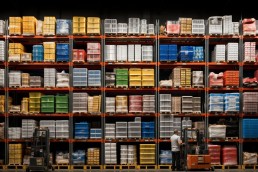
Controlling stock can be a real headache in the manufacturing game, with too much or too little causing big problems. Data shows that poor inventory management in manufacturing costs businesses millions each year.
Our ultimate guide is here to turn chaos into clarity, equipping you with proven strategies to manage your inventory effectively. Keep reading; it’s simpler than you think!
Key Takeaways
Implementing real-time tracking systems in manufacturing helps manage inventory accurately, allowing for swift adjustments to market changes or supply issues. This leads to better coordination with suppliers and prevents production delays.
Adopting key inventory management techniques like First-in, First-out (FIFO), Last-in, First-out (LIFO), Just-in-Time (JIT), Economic Order Quantity (EOQ) can reduce costs by minimising waste like product spoilage and optimising stock levels.
Utilising digital tools such as automated software and perpetual inventory systems enhances the accuracy of record-keeping and boosts efficiency by freeing up employee time for strategic work rather than manual stock checks.
Transitioning from traditional physical inventory methods to automated processes is crucial for real – time updates but comes with challenges, including implementation costs and training employees on new technologies.
Effective inventory control addresses classification through ABC analysis and ensures that resources are prioritised correctly, leading to improved warehouse organisation and smarter purchasing decisions.
Understanding Inventory in Manufacturing

Inventory in manufacturing serves as the lifeblood of a productive business, linking raw materials to finished goods. It moves through various stages – starting from goods waiting to be processed into products, moving through production lines as work-in-progress, and ending up as completed items ready for customers.
Mastering this flow is pivotal for maintaining a balance between meeting market demands and minimising costly overstock or stockouts.
Effective inventory management hinges on precision and foresight. Directors must ensure that systems are in place to track every component accurately, from receipt to dispatch. This means having a real-time view of where items are and how much is available at any given moment, thus managing inventory and enabling quick adjustments in response to sales trends or supply chain disruptions.
With strategic oversight, firms can streamline operations and bolster their bottom line by optimising inventory levels while safeguarding against interruptions in production continuity.
Importance of Inventory Management in the Manufacturing Industry

Effective and good inventory management system stands as a cornerstone in the edifice of the manufacturing industry; it not only streamlines production but also acts as a lever for cost control and optimisation of efficiency.
An expertly handled, manufacturing inventory management software system propels companies to meet consumer demands adeptly, fortifying their competitive edge in an ever-evolving market landscape.
Ensuring smooth production process
Streamlining the production flow hinges on meticulous, inventory management practices. Directors understand that without proper oversight, bottlenecks can disrupt the entire manufacturing cycle, leading to costly delays.
To prevent these hiccups, cycle counting is implemented with precision – safeguarding against discrepancies between recorded and actual stock levels. This proactive measure ensures resources are at hand exactly when needed, preventing slowdowns that could interrupt a steady production pace.
Key strategies such as real-time tracking of goods across various stages – from raw materials to work-in-progress items – keep the gears turning smoothly in factories. It enables timely reorders and better coordination with suppliers, which directly contributes to maintaining production momentum.
A robust inventory system doesn’t just ward off potential disruptions; it also paves the way for subsequent efficiencies by optimising cash flow and reducing surplus stocks. Looking ahead, we turn our attention to controlling overhead costs – a crucial aspect for any director invested in sustaining both profitability and competitive edge.
Reducing costs
Efficient inventory safety stock management goes hand in hand with cost reduction. By using inventory professionals identifying the optimal levels of stock, manufacturers can significantly lower holding costs, avoid unnecessary capital tie-up and reduce the risk of obsolete inventory.
A strategic approach to production manufacturing inventory management software and system implementation enables companies to fine-tune purchasing patterns and production schedules, and inventory costs and leading therefore to a leaner manufacturing operation.
Minimising waste is another crucial aspect where good manufacturing inventory management and control plays a vital role. Through techniques such as Just-in-Time (JIT) delivery and Economic Order Quantity (EOQ), businesses can streamline their supply chain and inventory management systems, curtailing excess expenditure on raw materials and work-in-progress that might not immediately contribute to revenue generation.
This proactive stance on managing resources leads directly to improved profit margins without compromising product quality or customer satisfaction.
Increasing efficiency
Perpetual inventory systems are transforming the landscape of industrial inventory management by providing immediate insights into stock levels. This innovation not only streamlines inventory management in manufacturing but also drives smarter decision-making, ensuring reactiveness to customer demand and market changes.
Implementing these advanced systems mitigates the risk of overstocking or stockouts, leading to a more efficient use of warehouse space and human resources.
Digital tools such as barcodes and smart sensors offer unprecedented accuracy, making cycle counting far less cumbersome and vastly more effective. They equip managers with real-time data that aligns closely with production needs, optimising the supply chain process from procurement to production floor.
These technological advancements enable lean manufacturing practices that cut unnecessary waste while maximising productivity – a crucial step for any manufacturer aiming to stay competitive in today’s fast-paced industry.
Next up is an exploration of inventory value for the three types of inventory used in manufacturing: the raw materials inventory, work-in-progress (WIP), and finished goods inventory.
Three Types of Inventory Used in Manufacturing

Exploring the diverse inventory categories within manufacturing is crucial, as each type average inventory holds a pivotal role in streamlining manufacturing operations and propelling production efficiency forward.
Raw materials
Raw materials inventory forms the base of any manufacturing process, housing basic substances essential for creating products. As directors, understanding and managing these assets efficiently is critical to avoid stockouts and ensure uninterrupted production lines.
The Just-in-Time (JIT) strategy closely monitors customer demand and maintains a strategic level of raw materials needed to produce items on demand.
Effective inventory management guide all of raw materials helps in curtailing excessive storage costs while optimising cash flow within your company. It’s pivotal for you to synchronise procurement perfectly with the manufacturing schedule, reducing waste and increasing overall productivity.
Next up, we delve into work-in-progress inventory – a crucial phase that bridges raw materials with finished goods.
Work-in-progress
Work-in-progress inventory stands at the heart of your production cycle, serving as a pivotal component for tracking ongoing processes. Directors need to stay alert to each stage in production process in which goods transition from raw materials towards becoming finished products.
This awareness is critical not only for optimal planning but also for preventing costly hold-ups that can grind manufacturing to a halt.
Having precise data on your work-in-progress items empowers swift decision-making, cutting out potential delays and keeping the assembly line moving smoothly. Instantaneous updates and disruption alerts are indispensable tools for those at the helm, ensuring that sales forecasts align with current production capabilities and mitigating risks in real-time.
With these measures in place, directors can sustain flow efficiency throughout their inventory management system, maintaining a competitive edge in fast-paced markets.
Finished goods
Finished goods are the final products that emerge from the manufacturing process, ready for sale to customers. Having a robust inventory management system is crucial in tracking these finished goods inventory as they move from production lines to warehouses and eventually into customers’ hands.
This ensures manufacturers have real-time visibility of their stock levels, enabling them to meet customer demands promptly while maintaining control over their warehouse operations.
Effective handling of finished goods also helps companies understand their return on investment (ROI) by revealing which products are selling well and which aren’t. In turn, this insight supports strategic decision-making about pricing strategies and production costs, directly impacting profitability.
Next up is exploring key inventory management techniques for manufacturing businesses, where directors will find actionable advice to refine their approach further.
Key Inventory Management Techniques for Manufacturing
Effective inventory management is the lifeblood of a manufacturing company, streamlining operations and safeguarding against fiscal losses. Mastering key techniques allows businesses to strike the critical balance between surplus and scarcity, ensuring resources are precisely aligned with production demands.
First-in, First-out (FIFO)
First-in, First-out (FIFO) is a trusted approach in inventory management for manufacturing companies. This method prioritises the dispatch of older stock, ensuring products are sold in the exact order they were manufactured or purchased.
Implementing FIFO can dramatically reduce instances of product spoilage and obsolescence, especially important for items with limited shelf lives.
Manufacturers stand to benefit significantly from using FIFO as it streamlines stock management and aligns costs with revenues more accurately. It simplifies warehouse organisation by moving older items out first, reducing clutter and overstocking issues.
With this strategy, you ensure that the value of your inventory on balance sheets reflects current market prices more closely, which is pivotal during periods of inflation or price fluctuations.
Last-in, First-out (LIFO)
Last-in, First-out (LIFO) plays a critical role in the manufacturing inventory management process. This approach assumes that the most recently produced or acquired inventory items are sold or used first.
LIFO strategy can lead to significant tax benefits for companies when product costs are rising since it allows them to report higher cost of goods sold and lower profits.
Manufacturers implementing LIFO find it indispensable for materials with shelf life considerations or those susceptible to obsolescence. It ensures these materials get priority on the production lines, thus minimising potential waste and optimising resources.
By focusing on using the latest inventory stock, businesses streamline operations and enhance their lean manufacturing processes, ultimately boosting profitability.
Just-in-Time (JIT)
Just-in-Time (JIT) inventory management software is transforming the way manufacturing companies handle their stock. Adopting this approach means you order materials only as needed to meet immediate customer demand.
This method helps minimise costly holding expenses and reduces waste from overproduction. Raw materials don’t sit unused, and your capital isn’t tied up in surplus inventory.
Manufacturers who implement JIT can respond rapidly to customer orders, producing items precisely when they’re required. It’s a lean management strategy that aligns raw material orders from suppliers directly with production schedules.
Companies using JIT are often more agile, able to adapt quickly to market changes without the burden of an excess inventory of goods weighing them down. This makes JIT not just a cost-saving tactic but also a competitive edge in today’s fast-paced markets.
Economic Order Quantity (EOQ)
Determining the most cost-effective amount of inventory to order can be complex, but Economic Order Quantity (EOQ) simplifies this process. EOQ is a trusted formula used to pinpoint the ideal quantity of stock that minimises both ordering inventory cost and holding inventory costs, in your manufacturing business.
It strikes a balance by considering factors such as demand rate, order costs, and inventory turnover ratio and carrying charges.
Implementing EOQ into your inventory management strategy ensures you’re not tying up too much capital in stock or risking stockouts that could halt production lines. This fine-tuned approach aligns perfectly with lean manufacturing principles, aiming for maximum efficiency with minimum waste.
As directors seeking streamlined operations and reduced unnecessary expenditure, understanding and applying EOQ is indispensable. Moving forward from here involves looking at other techniques like ‘Average Costing‘, which will further refine your company’s approach to managing inventory and control.
Average Costing
Average costing simplifies the financial records for inventory management in manufacturing. By using overhead costs and assigning a uniform cost to each item in manufacturing inventory, regardless of when it was purchased or produced, this approach streamlines calculations for inventory audits and valuation efforts.
Manufacturers divide the total cost of goods by the number of items made to achieve a consistent value across their inventory.
This method is especially useful for directors looking to maintain stable pricing structures and simplify decision-making related to their production costs and planning. Average costing aids in achieving balance sheets that better reflect ongoing operations without the fluctuations that specific costing could incur.
Directors can leverage average costing as part of strategic inventory management function that supports effective supply chain operations. Moving on from average costs, let’s delve into another crucial technique in the manufacturing inventory management software: cycle counting.
Cycle Counting
Cycle counting stands as a pivotal, inventory accounting and management technique for manufacturing companies aiming to maintain accuracy and control over their stockpiles. This method permits the regular auditing of physical inventory counts, fostering real-time insights that pinpoint discrepancies swiftly.
Directors understand that integrating cycle counts into routine business processes minimises the disruptions often associated with large-scale annual inventories, leading to improved operations and informed decision making.
Implementing cycle counting translates into immediate corrective action upon detecting errors, and inventory turnover rates which in turn optimises supply chain efficiency. Manufacturers can thus focus on enhancing quality assurance measures and refining their inventory systems.
Efficient cycle counts also lead to better forecasts and strategic planning by providing reliable data about stock levels without halting daily operations – a significant stride towards continuous improvement in inventory management for any forward-thinking manufacturing enterprise.
ABC Analysis
ABC Analysis stands out as an indispensable inventory management technique for manufacturers. It involves categorising inventory into three classes: A, B, and C. High-value items that significantly impact revenue fall under class A, medium sized businesses and mid-range items under class B, and low-value but high-volume goods are classed as C.
This approach helps directors strategically manage stocks by prioritising resources towards the most critical items – a clever way to maintain the balance sheet and enhance profitability.
Effective implementation of ABC analysis can lead to improved warehouse organisation and smarter purchasing decisions. Directors will appreciate how it sharpens focus on areas that contribute the greatest to the bottom line while still monitoring less valuable but necessary products.
Since this method aligns with data-driven decision-making, it is a savvy move in tailoring the manufacturing inventory software and control systems to be more responsive to actual customer demand patterns and financial implications within manufacturing operations.
Perpetual Inventory System
Perpetual, inventory systems revolutionise the way directors can track inventory and manage stock levels in manufacturing. With real-time updates, these systems eliminate the guesswork from most inventory management processes, keeping tabs on every sale, order, and product movement as they happen.
Imagine having a crystal-clear picture of your warehouse at any moment – that’s the power of perpetual systems.
Embrace the efficiency of automated cost calculations and seamless access to crucial data with tools such as Microsoft Dynamics 365. It not only simplifies reorder point management but also integrates effortlessly with your existing e-commerce and accounting platforms.
From anywhere in the world, you can monitor your inventory levels and flows, handle omnichannel sales strategies effectively and maintain optimal stock levels to serve your customers better without surplus or shortage-induced stress.
Transitioning from Physical Inventory Management to Automated Processes
In the realm of contemporary manufacturing, the shift towards automated inventory management systems heralds a new era of precision and efficiency. This evolution from traditional methods not only streamlines operations but also unlocks real-time insights that propel decision-making into a more strategic sphere.
Importance of real-time inventory updates
Real-time inventory updates hold the key to cutting costs and sharpening production planning. They empower managers and directors by providing up-to-the-minute data, allowing for swift adjustments in response to any disruption alerts.
Such immediate insights are invaluable; they prevent stock shortages or overages that can halt production lines and erode profits.
Manufacturing companies particularly benefit from this level of control as it aligns with just-in-time inventory systems, minimising waste while meeting market demands efficiently.
Access to real-time data ensures that every decision made is informed, agile, and tailored towards maintaining a steady flow through the supply chains. It’s not simply about tracking quantities but optimising operations so that storage expenses drop and output meets targets without fail.
Benefits of digital manufacturing inventory management tools
Real-time data: These advanced systems immediately log updates to your inventory, allowing for instant visibility and enhanced decision-making.
Error reduction: By minimising manual data entry, digital tools drastically cut down on the potential for human error, ensuring more reliable information.
Cost savings: Implementing these tools can lead to significant reductions in carrying costs by optimising stock levels and preventing overstocking or stockouts.
Productivity boost: Automated processes free up employees’ time from tedious tasks, enabling them to focus on strategic activities that add value to the business.
Improved customer service: With better inventory tracking, manufacturers can respond quicker to customer demands, improving fulfilment rates and customer satisfaction.
Compliance and reporting made easy: Up-to-date information aids in maintaining regulatory compliance and simplifies the process of generating accurate financial reports.
Enhanced security: Digital systems often come with robust security measures to protect sensitive data against unauthorised access or cyber threats.
Challenges in Inventory Control for Manufacturing Industry
Keeping track of multiple inventory types multiple locations is a significant challenge in the manufacturing industry. The diverse nature of raw materials, work-in-progress items, and finished products requires manufacturers to employ sophisticated inventory management tips and systems.
Real-time tracking is vital for operational success but achieving it adds layers of complexity that traditional methods struggle to address.
Switching from manual processes to automated inventory solutions presents its own set of difficulties. Implementation costs, training employees on new technologies such as enterprise resource planning (ERP) systems or radio-frequency identification (RFID), and integrating these with existing workflows can be daunting tasks for many companies.
Additionally, maintaining accurate data across all stages – from procurement through production to delivery – demands robust software that aligns with the unique needs of the manufacturing sector.
Conclusion
Mastering manufacturing inventory management system is the process that propels manufacturing companies towards unparalleled efficiency and cost savings. This guide lays out the foundations, strategies, and tools necessary to achieve such mastery.
Embrace these insights, wield the latest technologies, and steer your business toward a future of streamlined operations and bolstered profitability. With precise control over stock levels manufacturing inventory software and production processes, directors can top business performance and lead their firms to thrive in a competitive landscape.
The journey to optimal inventory management is both challenging and rewarding; embark on it with confidence.
FAQs
1. What is inventory management in manufacturing?
Inventory management in manufacturing involves overseeing and using inventory organized and controlling the ordering, storing, and use of components that a company will use in the production of the items it will sell.
2. Why are manufacturing inventory systems important?
Manufacturing inventory systems are vital as they help manage resources efficiently, track materials requirements planning (MRP), ensure safety stock levels, and improve warehouse management.
3. How does FIFO help with inventory for a manufacturing company?
First In, First Out (FIFO) ensures older stock gets used first which helps prevent material wastage and manages perishable goods effectively within inventory software for manufacturing.
4. What role does an ERP system play in managing a manufacturer’s inventory?
An ERP system integrates various aspects of operations including point-of-sale systems (POS) and logistics to provide real-time data analysis for more accurate demand forecasting enterprise resource planning and inventory optimisation.
5. Can just-in-time (JIT) methods benefit my manufacturing business’s approach to inventory?
Just-In-Time methods minimise holding costs by aligning raw material orders from suppliers directly with production schedules, making it a cost-saving strategy for your business’s asset management.
6. What types of technologies do modern inventory management softwares incorporate?
Modern Inventory Management Software often includes passive RFID tags for tracking products throughout the supply chain along with EOQ formulas to calculate optimal order quantities; all this can be managed through platforms like Microsoft Dynamics 365.
And there's more...