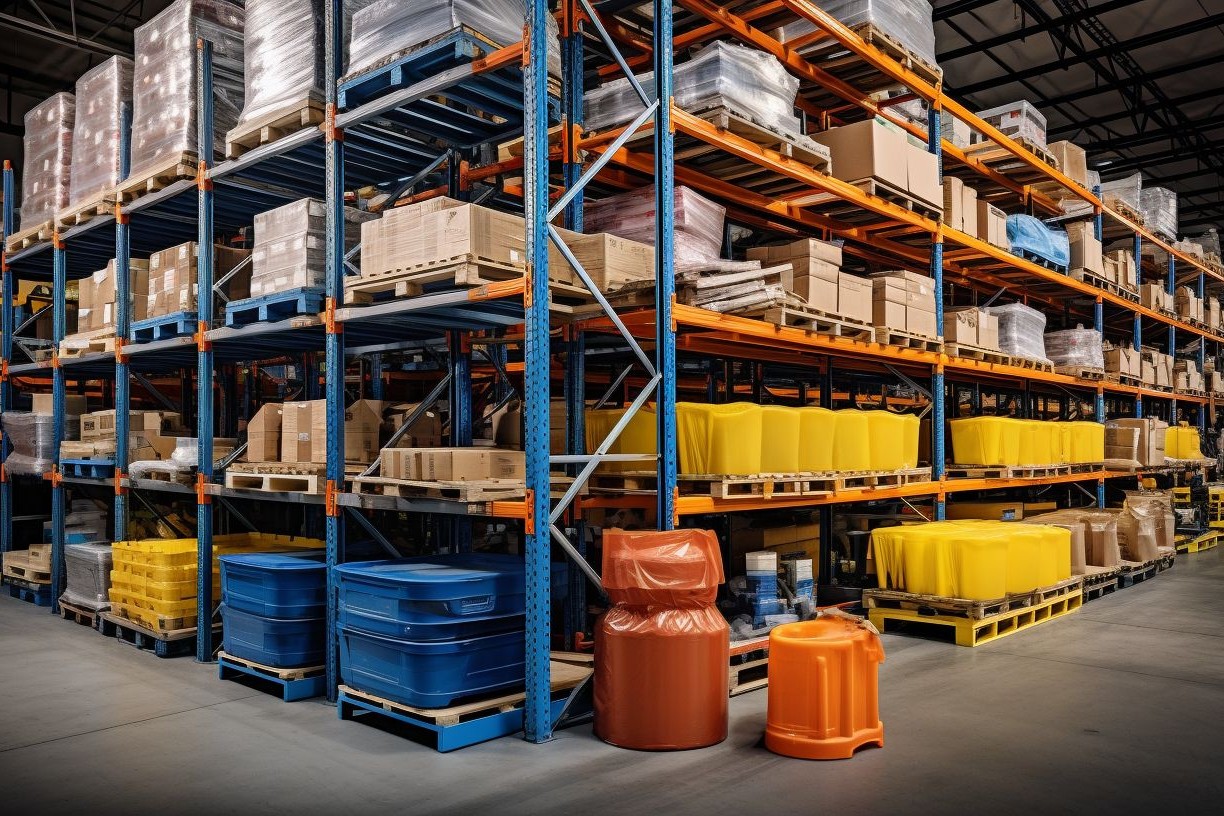
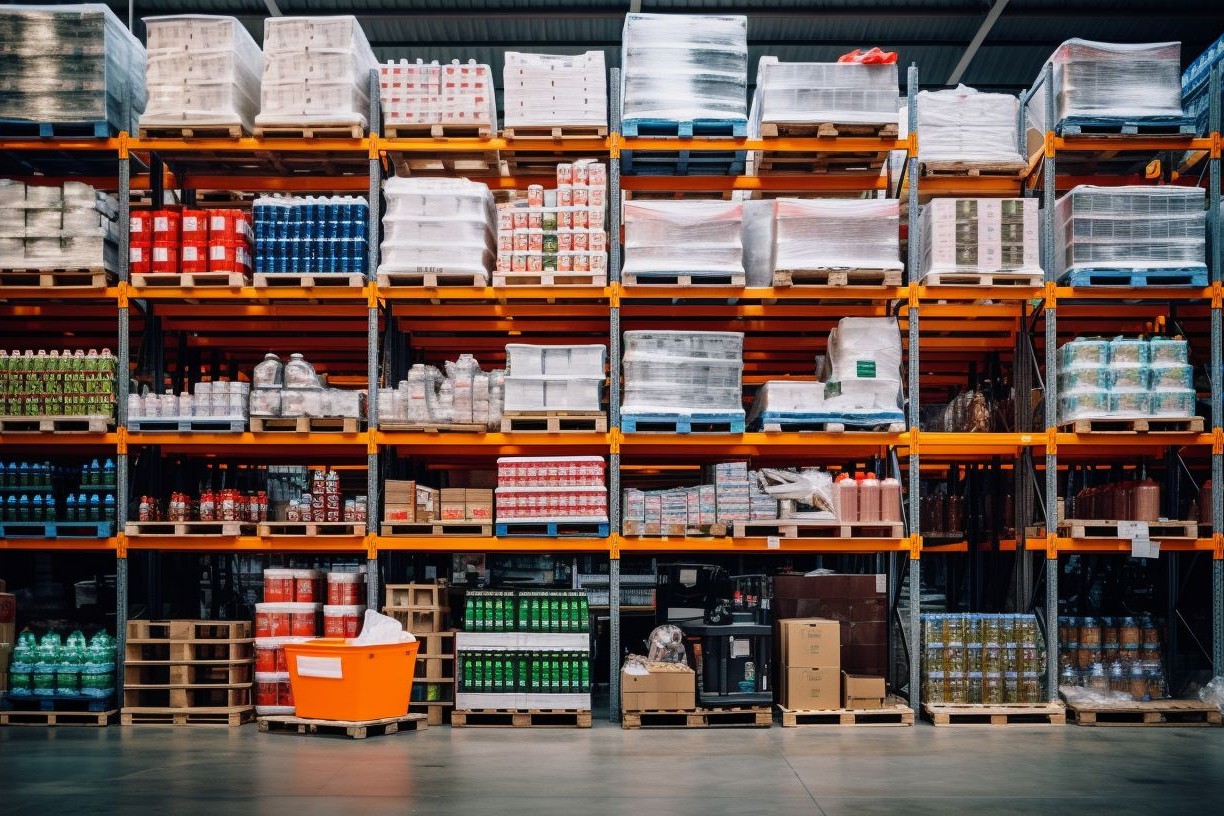
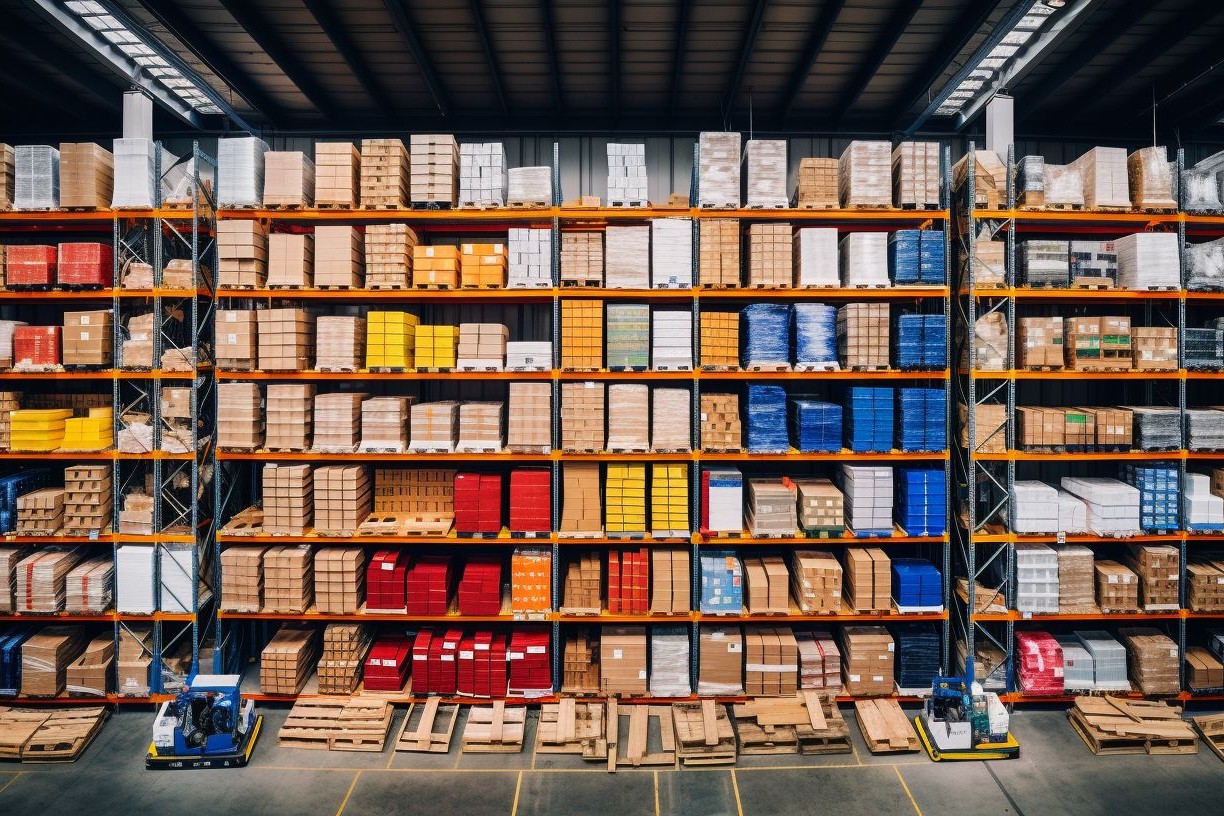
Warehouses are bustling hubs, yet managing them efficiently remains a challenge for many businesses. The latest in warehouse automation technology is redefining traditional methods to boost productivity and streamline operations.
Our article delves into cutting-edge tools customised solutions and techniques that promise to revolutionise your warehousing strategies. Discover the future of logistics – continue reading for insights into smart warehouse technologies that could reshape your storage solutions.
Key Takeaways for Warehouse Technology
AI and machine learning are transforming warehouse operations by predicting demand patterns, optimising stock levels, and guiding autonomous machines to improve inventory management.
The use of AGVs (Automated Guided Vehicles) and AMRs (Autonomous Mobile Robots) is increasing in warehouses to transport goods efficiently, enhancing productivity while alleviating manual workload on staff.
Predictive analytics leverage past data trends to forecast future needs accurately, ensuring that warehouses can respond dynamically to supply and demand changes.
IoT devices equipped with smart sensors provide real-time tracking of inventory movement and environmental conditions for advanced traceability within the supply chain.
Blockchain technology introduces a new level of transparency in warehouse management with its ability to maintain an immutable record of every item’s history through the supply chain.
Understanding Warehouse Technology

Warehouse technology has evolved into a dynamic array of systems and tools designed to streamline the many layers of operational processes. Management systems, often driven by cutting-edge software, work in tandem with advanced equipment like autonomous mobile robots (AMRs) and radio-frequency identification (RFID) tags to modernise inventory tracking data management and handling.
These technologies promote the seamless flow of goods through warehouses, ensuring that orders are picked, packed, and shipped with unparalleled efficiency.
Embracing these advancements allows for precise demand forecasting and real-time monitoring of stock levels. Incorporating artificial intelligence (AI) fine-tunes decision-making processes while machine learning algorithms continuously optimise operations based on new data.
As warehousing facilities become more complex, employing sophisticated tech solutions simplifies tasks ranging from order processing to space management – crucial considerations for any business aiming to stay competitive in today’s fast-paced market.
Top Innovations in Warehouse Technology

The landscape of warehouse technology is witnessing a seismic shift, driven by cutting-edge innovations poised to redefine efficiency and productivity. As we forge ahead into 2025, these technological advancements are not mere incremental upgrades but transformative tools that promise to usher in a new era for the warehousing and logistics industry everywhere.
Warehouse Management Systems
Warehouse Management Systems (WMS) are at the heart of modernising warehouse operations, offering seamless integration with various automation technologies. They stand as a pillar for warehouses that aim to achieve new peaks in productivity and cost-effectiveness.
With WMS, real-time inventory visibility becomes the norm rather than the exception, empowering businesses with timely insights into stock levels and locations. This centralised task management ensures not only improved operational efficiency but also significant customer satisfaction gains.
Such systems have become synonymous with driving technological innovation within warehousing environments. Key features new warehouse technology like RFID tagging, barcode scanning and predictive analytics work hand-in-hand under the umbrella of advanced WMS to streamline processes from order picking to shipping.
Central to ensuring correct product flow in the warehouse, these systems minimise risk by providing accurate data for inventory control and significantly reduce downtime due to misplaced or mismanaged goods.
Moving through our exploration of technology’s frontier within the warehousing industry, let’s direct our attention towards Mobile Robots such as AGVs and AMRs next – another key player ushering in a new era of smart warehousing and agility.
Mobile Robots (AGVs and AMRs)
Mobile robots like AGVs and AMRs are at the forefront of transforming warehousing and logistics operations. They carry out the critical task of moving goods efficiently throughout warehouse facilities, eliminating much of the manual strain involved in transporting products.
While AGVs stick to fixed routes often determined by tracks or wires embedded in the floor, AMRs boast advanced navigation capabilities allowing them to understand and manoeuvre around their environment independently.
This independence means AMRs can optimise their paths in real-time, avoiding obstructions and adjusting to changes within the warehouse layout without human intervention.
These intelligent machines work tirelessly, ensuring that product flow is seamless from one end of a warehouse to another. They’re not just making jobs easier for warehouse staff but also significantly boosting productivity levels.
As they take over more repetitive and physically demanding tasks, workers can focus on more complex problem-solving activities, enhancing overall operational efficiency. Moving forward into our discussion about predictive analytics will illustrate how data-driven decision-making further complements these robotic advancements.
Predictive Analytics
Predictive analytics is transforming the efficiency and foresight of warehouse operations, harnessing vast amounts of data to foretell demand patterns and pinpoint maintenance requirements.
Utilising advanced algorithms, this technology scrutinises past trends to accurately project future needs, ensuring warehouses meet fluctuating demands while optimising inventory levels.
It forms an integral part of a strategic approach that allows for more streamlined and informed business decisions, and better resource allocation.
Leveraging solutions like Modula Cloud enhances predictive analytics by using business intelligence and providing an accessible online platform that monitors automated storage systems from anywhere in the world. This capability ensures directors have all critical information at their fingertips, enabling swift reactions to changing market conditions and maintaining continuous improvement in warehousing processes.
With real-time access to data-analytics dashboards, decision-makers can drive operations towards maximum productivity and minimise downtime through predictive maintenance strategies.
Internet of Things (IoT)
The Internet of Things (IoT) is transforming warehouse operations with its ability to track inventory seamlessly without relying on barcode scanners. Smart sensors, wearables, and RFID tags integrated into IoT devices provide a constant stream of data to warehouse employees, monitoring conditions like temperature and the real-time movement of goods.
This technological ecosystem offers directors unprecedented levels of traceability and visibility within their supply chain networks.
Embracing IoT technology equips your warehouse with tools for improved accuracy in inventory management while minimising overstock and eliminating stockouts. The sharing of information between connected systems is seamless, enabling a comprehensive view transaction data that enhances control over inventory levels.
Real-time visibility not only improves auditing processes but also ensures that every item’s location is accounted for at all times, driving efficiency across the board in warehousing practices.
Artificial Intelligence (AI) and Machine Learning (ML)
Artificial Intelligence (AI) and Machine Learning (ML) stand at the forefront of revolutionising warehouse operations. These technologies transform vast amounts of data into actionable insights, streamlining repetitive tasks and minimising errors.
Robots enhanced with AI handle complex processes effortlessly, from sorting inventory to packing orders, ensuring that warehouses run with unprecedented efficiency.
Inventories are now smarter; thanks to ML algorithms predicting product flow and optimising stock levels. Real-time tracking has never been more precise, enabling directors to make informed decisions that drive business success without the need for complete warehouse overhauls.
Adopting these smart warehouse warehousing technologies significantly boosts ROI while paving the way for a more cost-effective, productive future in warehousing logistics.
Blockchain Technology
Moving from the realm of AI and machine learning, blockchain technology sets a new pace in warehouse and transport management systems by offering a level of transparency that was previously unattainable.
This cutting-edge system shines as a beacon for robust inventory tracking, providing directors like you with real-time insight into every item moving through the supply chain. Imagine having an immutable digital ledger that records the history and journey of each product; this is what blockchain brings to your operations.
The implementation of smart contracts within blockchain can significantly streamline warehouse processes, slashing the time spent on paperwork while ensuring that transactions are executed flawlessly once predetermined conditions are met.
Managers gain accurate inventory management capabilities and can conduct transparent audits effortlessly. With this innovation, businesses are poised to see marked improvements in efficiency and risk assessment – ultimately enhancing overall warehousing effectiveness without compromising on record-keeping integrity or security.
Inventory Scanning Technology
Inventory Scanning Technology is streamlining the way warehouses operate, offering unparalleled control and visibility over inventory. Gone are the days of manual counts and paper trails; RFID tags and barcode scanners now provide instant data capture, enhancing efficiency across the board.
Real-time updates feed into warehouse management systems, allowing for swift decision-making based on accurate stock levels. This advancement not only bolsters inventory accuracy but also speeds up the order fulfillment process.
Embracing this technology allows directors to monitor every item as it moves through the supply chain, from receiving to shipping. Blockchain integration takes it a step further by securing a transparent trail of product movements, ensuring authenticity and compliance at every turn.
The fusion of these technologies enables businesses to stay ahead in a dynamic market with ever-increasing demands for speed and reliability in logistics and distribution networks.
Automated Document Insertion
Automated document insertion is revolutionising the way warehouses manage their paperwork. This advanced technology swiftly matches and places documents such as invoices and return forms into the correct packages, streamlining operations like never before.
By automating what was once a tedious manual process, efficiency soars while human error plummets.
Warehouses equipped with these automated systems for document insertion experience a notable uptick in productivity; there’s no longer a need for workers to spend time sorting and stuffing paper slips by hand.
Integration of this system allows for real-time updates and coordination with other various warehouse management system technologies, ensuring fluidity throughout the packaging and distribution stages.
With accuracy at the forefront, customer satisfaction inevitably follows due to precise information reaching its destination every single time.
3D Bin Packing
3D Bin Packing technology stands at the forefront of revolutionising how warehouses utilise space. This innovative tool employs sophisticated algorithms to determine the most efficient way to organise items within bins or boxes.
By considering the exact three-dimensional size and shape of each product, 3D bin packing algorithms can dramatically enhance a warehouse’s storage density. Such precision not only streamlines inventory control but also drastically advances order fulfilment processes.
Directors seeking to boost their warehousing efficiency will find that integrating 3D bin packing solutions into their operations is key. The capacity for these systems to reduce wasted storage space often translates directly into cost savings and a streamlined workflow.
Furthermore, by utilising wearable technologies mobile robot-assisted packing alongside these spatial algorithms, businesses are able to minimise labour costs while simultaneously using labour costs and ramping up operational productivity in this competitive sector.
The Impact of Future Technologies on Warehousing

Emerging technologies in warehousing are set to revolutionise the industry by streamlining operations and setting new benchmarks for efficiency, signalling a transformative era that demands closer examination to fully grasp its potential.
Enhanced Productivity
Technological advancements in warehouses are revolutionising how we manage stock and fulfil orders. With RFID technology, inventory visibility improves dramatically, with inventory records allowing for faster decision-making and reducing instances of theft.
This leads directly to a more productive warehouse environment where staff can locate items quickly and with greater accuracy, thus speeding up the customer experience entire supply chain process.
Incorporating AI and machine learning into warehouse operations streamlines tasks that were once time-consuming. Predictive analytics anticipate stock levels and customer demand, ensuring that warehouses are always prepared for what comes next.
Voice-activated tools enable workers to perform their duties hands-free, enhancing their efficiency on the floor. These intelligent systems work together seamlessly to boost productivity in every aspect of warehousing from inventory management to order dispatching.
Improved Employee Safety
Recent advancements in smart warehouse and technology have significantly heightened workplace safety standards. Wearable devices that monitor vital signs and IoT systems designed to detect hazardous conditions are keeping employees out of harm’s way.
Real-time data analytics forecast potential incidents, allowing for proactive measures rather than reactive responses to accidents.
Furthermore, by automating repetitive tasks with AI and robotics, the physical strain on workers is greatly reduced. Predictive maintenance ensures machinery runs smoothly, decreasing the chance of malfunctions that could pose risks.
Such technologies not only safeguard well-being but also foster an environment where employee health is paramount, offering peace of mind alongside efficiency gains.
Optimised Warehouse Space
Maximising warehouse space is crucial for cost efficiency and operational agility. Smart use of various technology solutions, like Warehouse Management Systems (WMS) and assisted picking tools, transforms cluttered storage areas into optimally used spaces.
This strategic approach minimises wasted floor space, allowing for more products in the same square footage. It’s about making intelligent decisions on where to place items based on size, frequency of access, and compatibility with other stored goods.
Solutions such as Modula WMS contribute significantly to this end by providing scalable management software that streamlines product flow within warehouses. Utilising high-density storage systems and automated solutions like AGVs or AMRs can further enhance spatial optimisation.
These technologies ensure efficient material handling whilst reducing the need for extensive physical infrastructure changes. The result? A smart warehouse system that operates at peak performance with minimal spatial constraints and reduced labour costs.
Advanced Inventory Control and Visibility
Advanced automated inventory control platforms and visibility represents a game-changing leap in how warehouses operate. With real-time tracking systems like RFID, businesses gain unparalleled insights into their stock levels.
This technology ensures that orders are fulfilled accurately and swiftly, slashing the time spent on manual checks. In integrating these high-tech solutions, directors can witness a substantial uptick in operational efficiency.
Imagine an automated warehouse where every item’s location is known at any given moment — – this is the reality with advanced warehouse management software powered by AI and machine learning techniques.
Such systems not only streamline product flow but also provide predictive analytics to anticipate demand surges or supply shortfalls. They allow for a more dynamic response to changing market conditions, keeping your business one step ahead of the competition.
Future Trends in Warehouse Technology

Integrating AI and other machine learning algorithms into warehouse operations is a game-changer on the horizon, promising major strides in inventory management and other logistics processes. These intelligent systems can predict demand trends, optimise stock levels, and even guide autonomous vehicles to streamline product flow within warehouses.
Directors should especially note the potential for AI-driven collaborative robots to work alongside human staff, enhancing efficiency without replacing valuable manpower.
Drones are set to take inventory auditing to new heights by quickly scanning items located at towering levels of storage racks with pinpoint accuracy. This trend not only accelerates stocktaking processes but also reduces the risks associated with manual retrieval.
With real-time data feeding directly into enterprise resource planning (ERP) systems, decision-makers will gain an unprecedented level of control over their warehouse’s minute-to-minute operations.
Investing in these forward-looking technologies equips businesses with the tools they need for future scalability and competitive edge in an evolving market landscape.
Conclusion
The future shines bright for warehouse technology as 2025 approaches, with innovations poised to redefine efficiency multiple logistics processes and management. These advancements promise safer, faster, and smarter warehousing operations, meeting the growing demands of a digital world.
Expectations are high for technologies like AI and IoT to streamline processes further and enhance real-time decision-making. Eagerly anticipating these developments, industry leaders prepare to embrace change that could revolutionise how our warehouses operate.
The journey towards an automated and interconnected warehousing environment is well underway, marking a thrilling era for the logistics sector.
FAQs
1. What new technology is changing warehouses in 2025?
Innovative warehousing technology trends include automated storage and retrieval systems, radio frequency identification, advanced barcodes, pick-to-light systems, and unmanned aerial vehicles, all streamlining warehouse operations.
2. How do automated guided vehicles improve warehouse efficiency?
Automated guided vehicles transport goods swiftly around the warehouse without human intervention, cutting down on time and errors for more efficient product flow.
3. Can information technology transform how I manage my inventory?
Yes, with inventory management software and AI chatbots implementing real-time tracking and database updates ensures precise control over stock levels.
4. Are there any advancements that help with packing products in warehouses?
Certainly! Vertical lift modules and palletising systems are engineering marvels making product packaging faster while maintaining accuracy in today’s warehouses.
5. Do predictive models have a role in warehousing operations?
Predictive models use data mining to forecast future demands enabling businesses to plan better for transportation needs and materials handling – reducing waste and increasing productivity.
6. Will ecommerce businesses benefit from these new technologies?
Absolutely! Ecommerce businesses can optimise their in-house processes or outsourcing strategies through electronic data interchange (EDI) tools offering an always-on approach business data and to handle customer orders efficiently.
And there's more...