In today’s competitive market, manufacturers face the challenge of boosting productivity while keeping costs down. Automation in manufacturing is revolutionising how factories operate, with around 3.5 million industrial robots now active worldwide.
This guide will unlock the potential of automation for your business, showcasing its uses, benefits and the latest trends to keep you ahead of the curve. Discover smarter manufacturing – read on!
Key Takeaways – Automation in Manufacturing
Automation in manufacturing incorporates technologies like robots, PLCs, and CNC machines to increase precision and speed up production. This results in improved product consistency and quality while supporting large-scale operations.
Various types of automation, including CIM, IIoT, fixed automation, programmable automation and flexible automation offer diverse benefits such as heightened productivity, cost savings on labour and materials, enhanced product quality and greater operational flexibility.
Examples of automated systems used in factories include the use of robots for repetitive tasks or intricate assemblies; 3D printing for producing complex components quickly; CNC machining for precise material shaping; and sophisticated inventory management software for efficient stock handling.
Increasing connectivity through advancements such as 5G is set to further revolutionise manufacturing by enhancing communication between devices. This will optimise processes like predictive maintenance and resource allocation even more effectively.
Manufacturers that adopt these cutting – edge technologies not only achieve superior production outcomes but also secure substantial competitive advantages by being able to respond swiftly to market changes with minimal disruption.
Understanding Automation in Manufacturing

Automation in manufacturing harnesses sophisticated machinery and advanced computing to streamline production processes. Factories employ robots, programmable logic controllers (PLCs), and computer numerical control (CNC) machines to carry out tasks with high precision and at speeds unmatchable by manual efforts.
This integration of technology effectively transforms how products are made, from single components to complex goods.
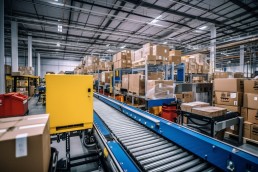
Manufacturers adopt automation technologies not only for their speed but also for their reliability. Automated systems work tirelessly, free from the constraints of human endurance, making them indispensable for large-scale production runs or intricate procedures like microchip stamping and welding.
These innovations ensure that every product meets stringent quality standards while providing data collection capabilities that inform continuous improvement strategies.
Types of Automation in Manufacturing
In the realm of manufacturing, automation presents a diverse array of systems and technologies each tailored to streamline specific facets of the production process. From intricate computer-integrated solutions that harmonise entire operations to specialised robotics engineered for precise tasks, these innovations are reshaping how manufacturers approach efficiency and scalability.
Computer-Integrated Manufacturing (CIM)
Computer-Integrated Manufacturing, or CIM, serves as the bedrock of modern manufacturing automation systems. It seamlessly integrates production, management, and support functions through computerisation.
Imagine a factory where all equipment communicates in real-time, ensuring efficiency and accuracy from design to delivery. With CIM, computers control everything from machine tools to handling systems within an integrated network – cutting down on human intervention and streamlining processes.
This fusion of computational power with physical machinery allows for superior oversight across various stages of the automated manufacturing system and process. Think of it as giving machines their own brainpower to optimise operations while providing crucial data back to managers for strategic decisions.
As directors overseeing complex production lines, embracing CIM means leveraging technology for more reliable outputs and sharper competitive edges in your industry. Moving onto Industrial Internet of Things (IIoT), let’s explore how this connectivity further amplifies the benefits manufacturing businesses can glean from advanced manufacturing technologies.
Industrial Internet of Things (IIoT)
Transitioning from the precision of Computer-Integrated Manufacturing, the Industrial Internet of Things (IIoT) elevates factory automation to new heights by harnessing the power of connected devices.
This digital network transforms traditional manufacturing floors into smart factories where machinery communicates seamlessly, using embedded sensors and real-time data to optimise production processes.
By implementing IIoT technologies, manufacturers gain unparalleled visibility into every aspect of their operations – from machine performance metrics to energy consumption – enabling proactive maintenance and improved resource allocation.
Such innovations are driving an industrial automation revolution that promises extraordinary productivity gains. As directors overseeing complex operations, investing in IIoT solutions means equipping your plants with tools that minimise complexity while boosting production capabilities.
The future is spelt out in a language of efficiency and sustainability; embracing these advanced automations ensures you’re not only keeping pace but setting the standards in today’s ever-evolving manufacturing landscape.
Fixed Automation or Hard Automation
Fixed automation, also known as hard automation, stands out for its specialised production equipment designed to streamline production. Consider the hobbing machine – a prime example that efficiently churns out gears with precision and speed.
This type of automation is custom-built for manufacturing specific products, ensuring each piece produced meets exact specifications without variation.
Incorporating fixed automation into your operations can significantly enhance efficiency on particular tasks or product lines. It represents a commitment to consistency where the volume justifies the initial investment in dedicated machinery.
Directors should recognise this form of process automation as a robust solution for long runs of unaltered products, offering reliability and unparalleled productivity in many instances within the manufacturing sector.
Programmable Automation
Programmable automation gears up manufacturing for exceptional versatility, especially where batch production is the norm. It lets manufacturers switch from making one product to another with minimal downtime.
This adaptability opens doors to producing a wider array of parts or products without constant supervision. A computer program commands the machinery involved, carrying out precise operations that can be reprogrammed for different tasks.
Changeovers, however necessary during programmable automation, used to mean halting production–a costly pause in throughput. Enter flexible automation systems which drastically reduce this idle time by automating the changeover process itself.
These advanced setups connect to networks allowing remote modifications and monitoring, ensuring machines keep up with varying demands seamlessly and maintain steady production flows.
Directors should note that embracing such technology could revolutionise efficiency on their factory floors.
Flexible Automation
Flexible automation stands out in the manufacturing landscape as a dynamic solution designed to cut downtime and ensure maintenance is both predictable and streamlined. This form of automation thrives on adaptability, permitting manufacturers to swiftly reconfigure their systems for different tasks with minimal transition time.
By integrating network connectivity, it offers remote monitoring capabilities that allow for instant adjustments and troubleshooting from afar, reducing interruptions to production cycles.
With an emphasis on agility, flexible automation leverages modern technologies such as AI and machine learning algorithms which enable machines to take on complex tasks with precision.
The value lies in its capacity to evolve alongside shifting market demands or operational changes within the manufacturer’s environment. It empowers facilities with the capability of quick adaptation without significant overhauls – ensuring they stay competitive as consumer needs and technology landscapes shift.
Benefits of Automation in Manufacturing

Automation in manufacturing propels industries forward by unlocking unparalleled efficiencies and quality control, setting the stage for competitive edge and sustainability. It’s a transformation that not only boosts operational performance but also redefines the very economics of production.
Increased productivity
Harnessing automation technologies catapults manufacturing productivity to new heights. Computerised machinery and industrial robots streamline complex tasks, dramatically reducing the time it takes to complete them.
This efficiency boost enables a factory to ramp up production without compromising on quality or requiring additional human labour.
Implementations such as computer-aided design (CAD) and programmable logic controllers (PLCs) have shown remarkable impacts on overall equipment effectiveness. They expedite processes from design through to assembly, allowing manufacturers to meet growing consumer demands swiftly.
Moreover, with cutting-edge AI applications analysing performance data in real-time, businesses optimise operations for peak output continuously.
Cost reduction
Cutting costs is paramount in any manufacturing business, and automation stands as a proven ally in this battle. By introducing automated systems manual processes into your production line, you can significantly slash labour expenses.
Robots don’t demand salaries, benefits, or breaks; they work tirelessly around the clock, ensuring that human capital can be redirected towards more strategic tasks where creativity and decision-making are essential.
Embracing automation also minimises errors associated with manual operations which often lead to costly waste and rework. Amazon’s model of using sophisticated inventory management systems highlights how efficiency breeds savings.
These automated processes ensure materials are ordered just-in-time and products reach customers swiftly without excess spending on storage or overproduction risks. It’s not magic; it’s smart application of technology reducing operational overheads while boosting the bottom line for savvy directors who know that investing in automation today translates to significant financial gains tomorrow.
Improved quality
Automation transforms the manufacturing landscape by enhancing product quality. Sophisticated robotics and computer-aided design software streamline production lines, ensuring precision and consistency.
This allows manufacturers to meet stringent quality standards and reduce defects in their products. Automated systems are equipped with advanced sensors that meticulously monitor production processes, catching errors before they become costly recalls.
Incorporating AI into manufacturing goes beyond mere efficiency; it brings innovation that sets a new benchmark for excellence. Machine-learning algorithms predict potential issues and offer solutions to improve product specifications.
With these technologies at their disposal, directors can expect not only increased throughput but also superior end products that stand out in today’s competitive markets. By leveraging 3D printing techniques, companies produce parts with complex geometries and excellent material properties without compromising on quality or speed of delivery.
Enhanced flexibility
Shifting from the rigours of quality to the dynamism of adaptation, enhanced flexibility in manufacturing automation marks a significant leap for production strategies. Industrial automation now provides directors with tools that mould to varying production demands effortlessly, enabling them to adjust operations on-the-fly and respond quickly to market changes or customer preferences.
By integrating flexible applications into their systems, manufacturers can monitor real-time production data, optimise processes, and predict maintenance issues before they escalate.
This level of adaptability extends beyond mere machinery adjustments; it includes making swift decisions based on accurate information gleaned from connected ‘smart’ devices. As a result, companies enjoy unprecedented levels of operational agility – capable of pivoting with minimal disruption while maintaining high productivity levels.
With IIoT at the forefront empowering this new wave of flexible solutions through advanced sensors and embedded software, manufacturers are well-equipped to tackle dynamic automotive industry’ challenges head-on.
Examples of Automation in Manufacturing

Discover the transformative impact of automation within the manufacturing sector through real-world examples, where innovative technologies are revolutionising traditional production lines and establishing new benchmarks for efficiency and precision.
From robotic arms seamlessly assembling parts to intricate computer systems managing entire supply chains, these instances showcase the tangible benefits that automation brings to modern manufacturing practices.
Use of robots – Automation in Manufacturing
Robots are transforming the automation manufacturing industry with precision and efficiency. In advanced facilities, they handle tasks that range from straightforward stacking to the complex assembly of intricate components.
Companies like Tesla have integrated these mechanical marvels into their production lines, reaping significant benefits in productivity and consistency. The use of robotics ensures that each manufactured item meets high standards while reducing human errors and labour costs and enhancing workplace safety.
Automation technology has become crucial for leading manufacturers seeking a competitive edge. Robots excel in repetitive, monotonous jobs which allows employees to focus on more strategic tasks that require human insight.
Amazon’s deployment of robotics for labelling and managing their vast inventory serves as an excellent example of automation’s role in achieving remarkable delivery speeds and systemic efficiency.
As robots continue to evolve, they are set to become an even more integral part of modern automated manufacturing systems, pushing the boundaries of what is achievable on factory floors around the world.
3D printing – Automation in Manufacturing
3D printing revolutionises how manufacturers think about production. With this technology, companies like Volkswagen and L’Oreal are advancing beyond traditional methods by producing parts directly from digital designs.
This leap in manufacturing automation software allows for complex geometries and customised components to be created with unprecedented speed and precision.
Embracing 3D printing leads to significant cost savings as it minimises material waste and reduces the need for inventory storage. Rapid prototyping becomes a reality, accelerating the development cycle of new products.
For directors seeking innovative solutions within their factories, integrating 3D printing presents an opportunity to redefine efficiency, tailor products more closely to market demands, and strengthen competitive advantage in an increasingly dynamic industry landscape.
CNC Machining – Automation in Manufacturing
Moving beyond the possibilities of 3D printing, CNC machining stands as a cornerstone of modern manufacturing automation. This process harnesses advanced computer programming and mechanical systems to carve, mill, and shape materials with exceptional precision.
Directors should note that CNC machines significantly reduce human error and ensure consistent quality across thousands of parts.
Employing CNC technology aligns perfectly with the goals of Industry 4.0 by streamlining production workflows and cutting down on manual labour. With these machines, complex designs turn into tangible products efficiently, bolstering productivity while slashing operational costs.
Automation champions like CNC machining not only transform raw materials but also redefine how manufacturers approach their craft in an ever-competitive landscape.
Inventory management automation
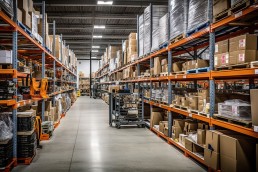
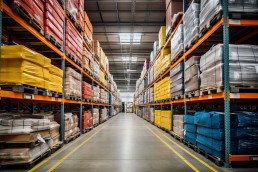
Inventory management automation streamlines the more complex tasks that that come with handling stock in manufacturing. It employs advanced software and machinery to oversee inventory levels, track goods through production cycles, and manage storage facilities efficiently.
Notable examples include Amazon’s sophisticated systems that automate their vast warehouses, ensuring products are received, stored, shipped, and restocked with remarkable accuracy.
Manufacturers can leverage powerful inventory management software like Microsoft Dynamics 365 cloud-based system to simplify their operations. These systems offer real-time tracking of deliveries; they also provide insightful forecasting and demand planning tools.
With such technology at your fingertips, you can predict market trends more accurately and make informed decisions about procurement, which directly contributes to reducing carrying costs and optimising the entire supply chain for efficiency.
Inventory Management Automation for Manufacturers
Discover how automation is revolutionising inventory management for manufacturers, streamlining operations and propelling businesses into a new era of efficiency that you’ll want to explore further.
Inventory management software
Inventory management software revolutionises the efficiency of stocking and tracking products in the manufacturing sector. Microsoft Dynamics 365 cloud-based system, a prime example, automates vital processes such as maintaining inventory levels, real-time updates on stock status, and managing orders.
This automation ensures that manufacturers can avoid overstocking or under-stocking situations which can lead to decreased productivity and increased waste.
Embracing this technology translates into tangible benefits for your manufacturing operations. It minimises complexity within supply chains by providing a singular point of control for all inventory-related and manual data collection.
Real-time insights into stock movement allow for informed decision-making, ensuring that production lines remain uninterrupted by sudden shortages or surpluses. With features designed to assist with forecasting and demand planning, such software supports manufacturers in meeting customer requirements more efficiently while reducing operational costs linked to excess inventory storage.
Inventory delivery tracking
Inventory delivery tracking is a cornerstone of efficient manufacturing operations. Automated inventory systems are designed to track shipments every step of the way, from supplier dispatch through to customer delivery.
This real-time visibility empowers manufacturers with critical information to manage supply chains effectively and meet demand without delay.
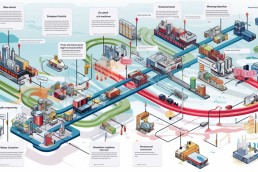
Modern technology integrates seamlessly with e-commerce platforms, ensuring that products move swiftly through each phase – procurement, storage, and distribution. Directors overseeing production can rely on this automation for precise coordination between different stages, reducing risks of stockout or overstock situations and optimising the overall workflow in their factories.
Forecasting and demand planning
Seamlessly moving from ensuring timely delivery to predicting future needs, forecasting and demand planning stand as critical components for modern manufacturing success. Automated systems leverage vast datasets and past demand patterns to provide manufacturers with accurate predictions of future product requirements.
This strategic foresight allows production lines to adjust seamlessly, maintaining an optimal balance between supply and demand. Such precision planning minimises waste, reduces costs associated with overproduction or stock shortages, and keeps the manufacturer a step ahead in a dynamic market.
Harnessing the power of automation for demand planning doesn’t merely streamline operations; it revolutionises them. Manufacturers can now anticipate market changes with greater confidence, allocating resources more efficiently than ever before.
The ability to predict surges in demand ensures that production meets customer needs without delay – making data-driven forecasting an indispensable tool in the arsenal of savvy directors who strive for efficiency and competitiveness in their factories’ operation.
Trends in Manufacturing Automation
As we move forward, the landscape of manufacturing automation is being reshaped by pioneering trends that promise to redefine industry standards. Among these emergent developments are enhanced connectivity solutions, which are fostering unprecedented levels of collaboration between machines and humans in the factory setting.
Increased connectivity
The arrival of 5G technology marks a turning point for manufacturing automation, bringing the promise of unparalleled connectivity to factories and automating production processes and lines. This next-generation network enhances machine-to-machine communication, enabling manufacturers to harness the power of real-time data transfer across devices.
With faster download speeds and reduced latency, factory automation software can operate with greater efficiency and accuracy.
Smart devices equipped with advanced sensors seamlessly integrate into the Industrial Internet of Things (IIoT), revolutionising how manufacturers monitor production processes and manage supply chains.
This increased interconnectivity facilitates predictive maintenance, ensuring machines run optimally while minimising downtime. Manufacturers leveraging these connected technologies gain a competitive edge in economic growth by streamlining their business processes and elevating overall productivity levels.
The Industrial Internet of Things
The Industrial Internet of Things (IIoT) is revolutionising manufacturing by connecting smart devices with advanced sensors, fundamentally changing how factories operate. Through this complex network, machines communicate and analyse data in real time, allowing for unprecedented levels of productivity.
Imagine a production line where every piece of equipment speaks the same digital language; IIoT turns that idea into reality.
Manufacturers embracing IIoT are setting new benchmarks in throughput and cost efficiency. With 5G technology poised to enhance connectivity further, facilities equipped with IoT technologies stand on the brink of exceptional productivity gains.
This interconnectedness not only streamlines operations but also enables predictive maintenance, reducing downtime and extending machinery life spans. Directors understand that investing in IIoT infrastructure is essential to staying competitive as it catalyses continuous improvement throughout their processes.
Artificial Intelligence
Artificial intelligence (AI) is transforming the landscape of manufacturing automation, offering unprecedented opportunities for growth and innovation. As a significant driver of the future, AI applications are not just enhancing productivity but also redefining the capabilities of machinery and processes.
A staggering 93% of companies recognise AI’s role in achieving competitive advantage as it propels equipment to operate with superior precision, speed, and efficiency.
Employing machine learning algorithms, AI systems continuously learn from data to optimise performance without human intervention. They tackle complex tasks across various facets of production – from predictive maintenance that foresees machine failures before they occur to advanced robotics capable of intricate assembly work previously done by skilled workers.
This shift towards smart factories revolutionises how manufacturers approach challenges such as material handling, quality control with machine vision technology, and supply chain management through intelligent forecasting.
In harnessing artificial intelligence, manufacturer automation becomes more than an array of machines; it evolves into an integrated network that thrives on continuous improvement and adaptation.
Upskilled labour
As we harness artificial intelligence in our industrial automation manufacturing strategies, it becomes crucial to focus on the human element. Upskilling labour is an essential step to ensure employees can manage and work alongside new technologies effectively.
The rapid advancement of tools like augmented reality (AR), virtual reality (VR), and digital twins demands a workforce that is proficient in these areas. Providing training for staff not only enhances their skillset but also prepares your entire business, to fully utilise advancements such as digital twin technology and mechatronics.
Investing in continuous professional development helps create a dynamic team capable of programming logic controllers (PLCs) and interpreting complex data-capture insights. It empowers workers by giving them the necessary skills to operate advanced machinery, troubleshoot issues, and contribute to lean manufacturing processes.
This investment leads to growth in both the capabilities of individuals and the productivity of automated systems, driving innovation within labour markets tied closely with process industry automation.
Future of Manufacturing Automation
Manufacturing automation is heading towards a smarter and more connected era, with 5G technology driving unprecedented levels of communication across systems. This breakthrough enables real-time data exchanges, enhancing machine learning algorithms and paving the way for more intelligent decision-making on the production floor.
Factories are now harnessing these advancements to increase efficiency, reduce waste, and deliver products faster than ever before.
Robots in manufacturing continue to evolve beyond simple repetitive tasks; they gain agility and problem-solving abilities from AI integration. With 93% of manufacturers acknowledging AI’s significance for competitive advantage, it’s clear that future manufacturing facilities will lean heavily on these smart machines.
They’ll collaborate closely with human workers, complementing their skills while handling dangerous or complex operations safely and precisely – revolutionising productivity in factories worldwide.
Conclusion
Embrace the future where automation propels production to remarkable heights. As directors, acknowledging the power of smart machines and interconnected systems will set your operations apart.
Stay ahead by leveraging cutting-edge technologies and manufacturing leaders that promise a blend of efficiency and precision in every task. Your leadership is pivotal in steering the industry towards smarter manufacturing landscapes marked by innovation and growth.
Lean into automation as it reshapes traditional practices, fostering environments where productivity thrives alongside human ingenuity.
FAQs
1. What is manufacturing automation?
Manufacturing automation refers to the use of technology, like programmable logic controllers (PLCs) and Internet of Things (IoT), to control production processes in factories.
2. How does automation improve the process industry?
Automation in the manufacturing process improves efficiency by using computer systems to perform tasks like milling, packaging, and tooling without needing human help.
3. Can suppliers benefit from IoT industry automation?
Yes, suppliers gain a competitive edge with IoT industry automation tools as it streamlines their operations and connects various components of the supply chain for better coordination and growth rates.
4. What are some examples of how robotics change workplace cultures in manufacturing?
Robotics bring changes to workplace cultures by altering working hours and employment needs; they also introduce new aspects such as ergonomics that prioritise comfort while working with automated tools.
5. Does automation only involve software or does it include hardware too?
Manufacturing automation includes both software programmes that provide assembly language instructions and physical hardware which perform actual manufacturing tasks on factory floors.
And there's more...